1
Stay out of unsafe water
Do not enter standing water near outlets, cords, appliances, breaker panels, sagging ceilings, unstable floors, sewage, floodwater, or unknown hazards.
Water extraction guide
A safety-first homeowner guide to when water extraction may be needed, what extraction usually includes, what drying still requires, and what to document before approving work.

Water extraction services remove standing water and excess water from affected materials before drying decisions. They may be needed after flooded basements, soaked carpet, burst pipes, appliance overflows, sewage backups, crawl-space water, or water under flooring. Extraction is usually only one part of mitigation. It can reduce water volume and help prepare the area for moisture checks, air movement, dehumidification, and structural drying. It does not automatically mean carpet, pad, drywall, subfloor, cabinets, or framing are dry.
Start with safety, source control, and documentation. Skip any step that requires crossing unsafe water, touching electrical equipment, entering a contaminated area, or walking under a ceiling that may be unstable.
Do not enter standing water near outlets, cords, appliances, breaker panels, sagging ceilings, unstable floors, sewage, floodwater, or unknown hazards.
Close a supply valve, stop using the fixture, or shut off the main water valve only when you can do it without entering unsafe water.
Photograph water depth, the likely source, wet flooring, walls, baseboards, cabinets, furniture, appliances, and contents from a safe location.
Children, pets, older adults, and health-sensitive people should stay away from wet rooms, sewage, floodwater, mold concerns, and unstable areas.
Sewage, stormwater, floodwater, and unknown water can change protective equipment, extraction method, disposal, cleaning, and drying decisions.
Extraction removes water, but moisture readings, drying logs, photos, and written scopes help show what was wet and what happened next.
Extraction is more likely when water is visible, trapped, spreading, or sitting in materials that can hold moisture. The first step is still safety, not equipment.
| Situation | Why extraction may be needed | First step | More serious when |
|---|---|---|---|
| standing water | Pooled water can keep soaking flooring, walls, trim, contents, and subfloor materials. | Avoid electrical hazards and photograph water depth. | Water reaches outlets, appliances, drywall, or multiple rooms. |
| soaked carpet | Carpet and pad can hold water below the surface after visible water is gone. | Stop the source and document wet carpet, pad edges, and walls. | Padding is saturated, water is contaminated, or odor appears. |
| flooded basement | Basements can collect deeper water and hide electrical, appliance, foundation, and contamination risks. | Do not enter until power and structure are considered safe. | Water is deep, outside water entered, or finished walls are wet. |
| appliance overflow | Water can spread under cabinets, appliances, flooring, and nearby walls. | Stop the appliance or supply line if safe. | Water reached cabinets, hardwood, drywall, or lower levels. |
| burst pipe | Pressurized water can spread quickly through rooms, ceilings, cavities, and flooring. | Shut off water if safe and photograph affected rooms. | The leak ran for hours or affected ceilings, walls, or multiple rooms. |
| sewage backup | Contaminated water may require containment, PPE, extraction, removal, disposal, and cleaning decisions. | Stay out and document from a safe distance. | Sewage touches carpet, porous materials, HVAC areas, or contents. |
| stormwater or floodwater | Outdoor water can contain sewage, soil, chemicals, debris, and other contaminants. | Follow local safety guidance and avoid contact. | Water is muddy, odorous, widespread, or entered from outside. |
| water under flooring | Water can hide beneath planks, tile, vinyl, carpet, or subfloor areas. | Photograph edges, seams, buckling, staining, and water paths. | Flooring cups, buckles, traps water, or mold odor appears. |
| water in crawl space | Crawl spaces can have access risks, wiring, pests, insulation, ducts, and poor ventilation. | Do not enter unless conditions are safe. | Water touches insulation, ductwork, joists, subfloor, or electrical components. |
A water extraction scope should explain what will be removed, what will be checked, and what happens after extraction. Homeowners should ask for a written scope before approving work when conditions allow.
Water extraction removes water. Water mitigation limits additional damage and starts the drying process. Structural drying uses air movement, dehumidification, moisture readings, and monitoring to reduce moisture in affected materials. Restoration repairs or replaces damaged materials after mitigation. Every project does not need every scope, and separate trades may handle source repair, mold remediation, or rebuild work.
Equipment choice depends on water amount, material, access, electricity, safety, and contamination. Stronger equipment is not always the only issue. The plan should also cover moisture checks and drying after extraction.
| Equipment | How it may be used |
|---|---|
| wet vacuum | May remove limited clean water when electricity is safe and contamination is not suspected. |
| portable extractor | Often used for carpet, stairs, tight spaces, and areas where truck access is limited. |
| truck mounted extraction | May provide stronger extraction capacity when hose access and site conditions allow. |
| submersible pump | May be used for deeper standing water, especially basements or low areas. |
| weighted carpet extraction tool | May help remove water from carpet and pad when the water category and material condition allow. |
| moisture meter | Helps document wet materials and drying progress after extraction. |
| thermal imaging where appropriate | May help locate temperature patterns that suggest moisture, but findings need confirmation. |
| air movers | Support drying when electricity, water category, and material conditions allow safe airflow. |
| dehumidifiers | Help reduce humidity and support structural drying after extraction. |
Water Mitigation Hub does not arrange or provide services. If a homeowner contacts a water mitigation company or water extraction provider, the written scope should explain what was checked, what is included, and what is separate. The contractor checklist can help organize questions before signing.
DIY water removal may be reasonable only for small clean-water situations when electricity is safe and moisture has not spread. Avoid DIY work when conditions are uncertain or contaminated.
There is no guaranteed price for water extraction services. Cost may depend on water amount, water category, affected rooms, materials, access, equipment, demolition, drying, documentation, and whether restoration is separate.
| Factor | Why it matters |
|---|---|
| water amount | More water can require longer extraction, more labor, and different equipment. |
| water category | Clean water, gray water, sewage, floodwater, and unknown water require different precautions. |
| room count | More rooms, closets, halls, and levels usually expand the scope. |
| flooring type | Carpet, hardwood, tile, vinyl, concrete, and subfloor materials dry differently. |
| carpet and pad | Soaked pad can add extraction, removal, disposal, and replacement questions. |
| basement or crawl-space access | Tight, below-grade, or unsafe areas can add access planning and labor. |
| extraction equipment | Wet vacuums, pumps, portable extractors, and truck mounted extraction can affect the work plan. |
| drying equipment | Air movers, dehumidifiers, and monitoring may be listed separately from extraction. |
| demolition or material removal | Wet drywall, pad, insulation, trim, or cabinets can change the scope. |
| sewage or contamination | Contaminated water can require PPE, containment, disposal, and cleaning steps. |
| emergency timing from actual providers | After-hours, weekend, storm demand, or priority response may affect provider pricing. |
| documentation and monitoring | Photos, readings, drying logs, estimates, and invoices take time but may support claim review. |
| restoration separate from mitigation | Repairs, finishes, flooring, paint, and rebuild work are often separate from extraction and drying. |
Insurance may review documentation, but coverage is not guaranteed. Ask your insurer what to document before materials are removed when it is safe to wait and photograph first.
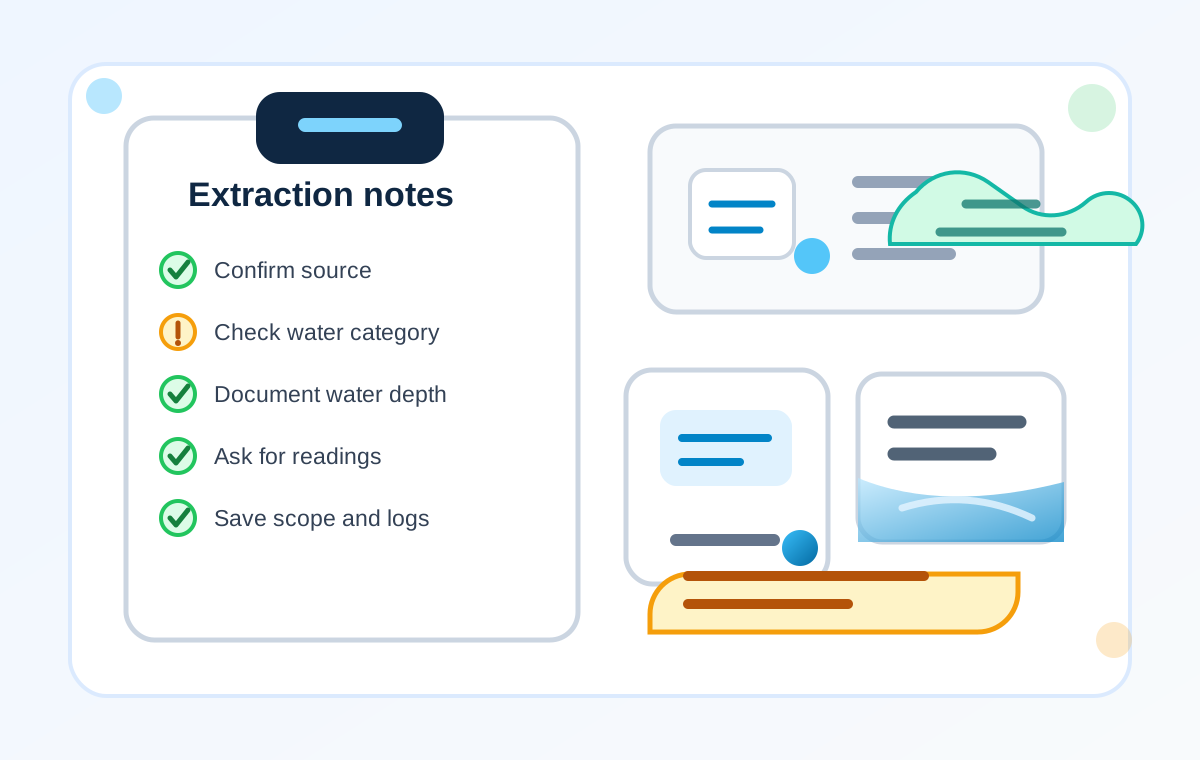
Ask clear questions before signing a work authorization, extraction scope, drying scope, demolition approval, or restoration estimate. The answers should separate extraction, drying, mitigation, remediation, repairs, and insurance documentation.
| Question | Why to ask |
|---|---|
| What caused the water damage? | The source affects safety, coverage review, drying access, and repair needs. |
| What water category is involved? | Clean water, gray water, sewage, floodwater, and unknown water change the work plan. |
| Is it safe to enter? | Electrical, structural, sewage, floodwater, and mold concerns can make areas unsafe. |
| What areas are affected? | Rooms, closets, walls, cabinets, basement areas, and crawl spaces should be identified. |
| What extraction method will be used? | The method should match the water amount, material, access, and contamination risk. |
| Will carpet pad or subfloor be checked? | Pad and subfloor can remain wet after surface extraction. |
| Will moisture readings be documented? | Readings help show what was wet and how drying progress was monitored. |
| Is drying included or separate? | Extraction removes water, but drying may be a separate scope or line item. |
| Is demolition included or separate? | Material removal should be explained before work begins. |
| What equipment will be placed? | Ask for equipment type, room location, expected duration, and monitoring schedule. |
| What is excluded? | Source repair, mold remediation, contents, restoration, and rebuild may be separate. |
| What documentation goes to insurance? | Photos, readings, drying logs, estimates, invoices, and notes should be organized. |
These references are included for general homeowner education about cleanup safety, moisture, extraction, drying, flood recovery, and documentation. They are not advertisements, contractor recommendations, legal advice, insurance advice, or guarantees.
Start with the Water Mitigation Hub homepage, water damage cleanup, emergency water mitigation, and the what happens after water extraction. Compare costs, providers, and paperwork with water mitigation cost, water mitigation company, the contractor checklist, and the insurance checklist.
Water extraction often connects to flooded basement cleanup, burst pipe water damage, appliance overflow water damage, sewage backup cleanup, carpet water damage, hardwood floor water damage, drywall water damage, mold after water damage, and crawl space water damage. Browse every published guide in the sitemap.