Colorado homeowner guide
Water Mitigation in Colorado: Cost, Cleanup and Company Checklist
A safety-first Colorado guide to emergency steps, mitigation and drying records, cost factors, insurance documentation, regional concerns, and careful provider comparison.
After water damage in Colorado, first avoid electrical hazards, contaminated water, unstable flooring, and sagging ceilings. Stop the source only when safe, document the water path, protect unaffected belongings, and ask the insurer what records may be needed. A qualified local provider may be needed when water spreads or hidden drying is uncertain. Water Mitigation Hub is an online homeowner resource and does not provide service, dispatch, quotes, inspections, cleanup, drying, restoration, or repairs.
What this Colorado guide is and is not
This is an independent informational state hub. It is not a restoration company, dispatch service, contractor matcher, insurer, public adjuster, attorney, claim service, or quote page. It does not rank or endorse Colorado companies, determine coverage, or promise local availability or outcomes.
Common Colorado Water Damage Situations
Colorado conditions include snowmelt, freeze and thaw cycles, flash flooding, hail or wind roof leaks, frozen pipes, wildfire burn scar runoff, basement water, mountain drainage, sewage backups, and power outages that may delay drying. Source, contamination, terrain, access, and affected materials shape the immediate safety and drying questions.
| Situation | Common sign or concern | First documentation step | More serious when |
|---|---|---|---|
| Severe storm or heavy rain | Wind-driven rain, drainage overflow, roof damage, or power loss | Follow official instructions and photograph visible water paths when safe | Utilities, access, ceilings, or multiple rooms may be unsafe |
| Flash flooding | Fast-rising outdoor water may carry sewage, debris, fuel, and other contaminants | Avoid contact and document the flood line from a safe location | Water is rising, roads are flooded, or the structure and utilities may be unsafe |
| Snowmelt and drainage problems | Thawing snow, blocked drainage, grading, or foundation entry may wet basements and crawl spaces | Record thaw timing, snow conditions, and visible water paths | Standing water, wall cavities, insulation, or electrical systems are affected |
| Wind or hail roof leak | Roof damage, wet attic insulation, ceiling stains, or dripping near fixtures | Protect the area below and photograph visible signs safely | The roof is damaged, fixtures are wet, or the ceiling sags |
| Frozen or burst pipe | Cold events may split plumbing and release water as pipes thaw | Stop the supply only when safely reachable and document freeze timing | Water reaches electricity, ceilings, walls, cabinets, or several rooms |
| Freeze and thaw cycles | Repeated temperature changes may affect plumbing, roofs, exterior drainage, and foundations | Save temperature and leak timing with source photos | Water returns, materials remain wet, or the source is hidden |
| Appliance overflow | Water near a washer, dishwasher, refrigerator, or water heater | Turn off the appliance supply if safe and save model details | Toe kicks, subfloor, walls, or the ceiling below may be wet |
| Sewage backup | Drain overflow, sewage odor, or visibly contaminated water | Avoid contact and isolate the area | Porous materials, HVAC pathways, or several rooms are affected |
| Crawl-space or foundation moisture | Standing water, damp insulation, odors, or perimeter seepage | Do not enter automatically; document visible conditions at access points | Electrical, structural, pest, or contamination concerns exist |
| Wildfire burn scar runoff | Heavy rain over burned slopes can carry fast runoff, sediment, and debris | Follow official alerts and document runoff from a safe location | Mud, structural movement, utilities, or several rooms are involved |
| Mountain cabin or slope drainage | Snowmelt, roof runoff, steep terrain, remote access, and delayed discovery may overlap | Record access conditions, slope drainage, and the likely timeline | Utilities are off, access is unsafe, or wet materials were hidden |
| Mold risk after moisture and humidity | Wet materials may dry slowly in enclosed or unconditioned areas | Record indoor humidity, odors, and delayed access or power restoration | Odor, hidden cavities, or multiple porous materials remain damp |
| Power outage delays drying | Extraction, dehumidification, and monitoring may be interrupted | Document outage timing and equipment interruptions | Cold conditions, standing water, contamination, or limited access increases risk |
First Steps After Water Damage in Colorado
Do not enter a room just to complete a checklist. Photograph from a safe location and follow local emergency instructions during flash floods, winter storms, wildfire runoff, or other severe weather.
Colorado Water Mitigation Process
A written process helps separate source repair, extraction, drying, monitoring, and later repairs. Read the full water mitigation process, water extraction, structural drying, moisture readings, drying logs, and mitigation report guides for the records behind each step.
| Stage | What may happen | Record to request |
|---|---|---|
| Source control | Stop or isolate the cause when safe | Source notes and repair record |
| Water extraction | Remove standing water with methods suited to the surface | Areas extracted and equipment used |
| Moisture inspection | Map affected and nearby materials | Initial readings by room and material |
| Structural drying | Use planned airflow and moisture reduction | Drying goals and equipment placement |
| Dehumidification | Control moisture in the air as materials release water | Temperature and humidity records |
| Limited material removal | Open or remove materials that cannot safely dry in place | Reason, photos, and written scope |
| Drying monitoring | Recheck materials and adjust equipment | Dated readings and drying logs |
| Final documentation | Record final condition and remaining repair scope | Final readings, photos, invoices, and handoff notes |
What a company/professional may check
Water Mitigation Hub does not perform these checks, inspect Colorado properties, or arrange providers. A qualified professional may evaluate the following items based on the source, access, contamination, and materials involved.
| Check | Why it may matter |
|---|---|
| Water source and category | Where the water came from and whether contamination changes safety or disposal |
| Affected rooms and water path | Visible damage plus adjacent, upper, and lower areas |
| Moisture readings | Drywall, wood, flooring, and other materials compared with appropriate reference areas |
| Flooring, carpet pad, and subfloor | Water that may be trapped below a dry-looking surface |
| Drywall and ceiling cavities | Hidden moisture, wet insulation, and sagging material |
| Cabinets and toe kicks | Moisture behind backs, bases, and enclosed cavities |
| Crawl space and attic | Access safety, insulation, framing, roof leaks, and moisture below or above living areas |
| Humidity and temperature | Conditions that affect the drying plan and monitoring |
| Drying equipment | Type, count, placement, operating days, and electrical load |
| Material removal decisions | What may dry in place and what may require controlled removal |
| Sewage, floodwater, stormwater, or mold concerns | Containment, PPE, disposal, and specialist evaluation needs |
| Documentation package | Photos, readings, logs, scope, equipment records, notes, and invoices |
Colorado Water Mitigation Cost Factors
No single statewide number can describe a project. Review the water mitigation cost guide and emergency water mitigation cost guide before comparing itemized scopes. Prices and insurance reimbursement are not guaranteed.
| Factor | Why it may affect cost or scope |
|---|---|
| Affected square footage | Larger or disconnected areas may require more labor, readings, and equipment |
| Water category | Contaminated water can change PPE, handling, removal, and disposal needs |
| Standing water depth | Greater volume may increase extraction time and equipment needs |
| Time water sat | Longer dwell time can increase absorption and hidden moisture |
| Materials affected | Drywall, insulation, carpet, wood, cabinets, and subfloor respond differently |
| Extraction requirements | Access, water volume, and surface type affect the method |
| Drying equipment and days | Type, count, monitoring, and operating duration may affect charges |
| Demolition and disposal | Controlled removal and contaminated waste can add labor and disposal scope |
| Access difficulty | Basements, crawl spaces, attics, slopes, mountain properties, and multi-story paths may take added time |
| Sewage, floodwater, stormwater, snowmelt, wildfire runoff, or mold concerns | Special safety, containment, and evaluation may be needed |
| Local labor differences | Rates and availability can vary across Colorado regions |
| Emergency timing from actual providers | After-hours or disaster conditions may affect provider pricing |
| Demand after storms, snowmelt, or freeze events | Actual provider availability, travel, labor, and equipment demand may affect timing and price |
| Restoration after mitigation | Repairs and rebuilding may be a separate estimate from extraction and drying |
Colorado Insurance Documentation Checklist
Coverage depends on policy terms, cause of loss, exclusions, endorsements, deductible, limits, timing, records, and insurer review. The Colorado Division of Insurance is a public consumer resource. Flood insurance may be separate from homeowners insurance, and wind, hail, flood, freeze, sewer backup, or deductible questions may require insurer clarification. Use the insurance checklist and water damage documentation guide to organize records without assuming coverage.
Colorado City and Region Checklist
This table provides regional planning context only. It does not represent service areas, provider availability, local rankings, or city-specific inspections. City names remain plain text because separate city guides have not been published.
| City or region | Common concern | First documentation step | Question for a qualified local provider |
|---|---|---|---|
| Denver | Snowmelt, freeze-thaw plumbing failures, hail roof leaks, and basement seepage | Record weather timing, water paths, and affected levels | How will roof, plumbing, foundation, and hidden moisture be separated in the scope? |
| Colorado Springs | Frozen pipes, hail, flash flooding, slope drainage, and basement water | Photograph entry points, affected rooms, and recent weather | Will drainage, wall, floor, and ceiling moisture be mapped separately? |
| Aurora | Hail roof leaks, burst pipes, appliance overflows, and basement seepage | Save storm or freeze notes and room-by-room photos | What readings will be provided for flooring, walls, cabinets, and ceilings? |
| Fort Collins | Snowmelt, river flooding, frozen pipes, hail, and crawl-space moisture | Document snow or river conditions and interior water paths | How will outdoor water and indoor plumbing sources be distinguished? |
| Lakewood | Foothill runoff, hail roof damage, sewer backup, and foundation moisture | Photograph drainage, roof signs, and affected finishes | Will roof, foundation, sewage, and cavity risks be scoped separately? |
| Thornton | Heavy rain, hail, frozen pipes, basement water, and appliance leaks | Record source clues and visible moisture by room | How will subfloor, drywall, and cabinet moisture be documented? |
| Arvada | Snowmelt runoff, hail, roof leaks, burst pipes, and basement seepage | Save weather timing and photograph the water path | What drainage, roofing, and material checks may be needed? |
| Westminster | Hail roof leaks, frozen pipes, sewer backup, and foundation moisture | Document the source area and all affected materials | Will the scope separate mitigation, source repair, and restoration? |
| Pueblo | Flash flooding, hail, roof leaks, plumbing failures, and high-plains storms | Record rainfall or hail timing and visible entry points | How will stormwater and indoor sources be distinguished? |
| Boulder | Flash flooding, creek overflow, snowmelt, slope runoff, and wildfire burn scar runoff | Follow official alerts and document flood lines from a safe place | What contamination, structural, and hidden moisture checks may be needed? |
| Greeley | River flooding, snowmelt, frozen pipes, sewer backup, and basement water | Photograph flood depth, source clues, and affected rooms | How will river water, sewer water, and indoor sources be classified? |
| Longmont | Creek flooding, snowmelt, hail roof leaks, and freeze-related plumbing damage | Save weather context and room-by-room documentation | Will adjacent rooms, insulation, and floor assemblies be checked? |
| Loveland | Snowmelt, river flooding, frozen pipes, hail, and crawl-space moisture | Record outdoor conditions and visible interior water paths | How will crawl-space, subfloor, and wall moisture be monitored? |
| Castle Rock | Slope drainage, hail roof damage, frozen pipes, and basement seepage | Photograph grading clues, roof signs, and affected finishes | Will drainage, foundation, attic, and ceiling areas be included? |
| Grand Junction | Snowmelt, flash flooding, irrigation leaks, roof damage, and crawl-space moisture | Document runoff, source timing, and affected rooms | What source, access, and drying records will be provided? |
| Centennial | Hail roof leaks, burst pipes, appliance overflows, and basement water | Save storm or repair notes and photograph affected materials | How will roof, plumbing, cabinet, and subfloor moisture be separated? |
| Douglas County | Slope runoff, hail, snowmelt, frozen pipes, and basement seepage | Document terrain, weather timing, and interior water paths | What access and foundation checks may affect the drying plan? |
| Jefferson County | Foothill runoff, wildfire burn scar runoff, hail, snowmelt, and roof leaks | Follow alerts and photograph safe exterior and interior clues | How will runoff, roof entry, and hidden moisture be evaluated? |
| El Paso County | Flash flooding, hail, frozen pipes, slope drainage, and basement water | Record official weather context and affected areas | What stormwater, foundation, and material checks may be needed? |
| Boulder County | Creek flooding, snowmelt, wildfire burn scar runoff, and slope drainage | Document flood lines and runoff paths without entering unsafe areas | What contamination, structural, and cavity checks may be required? |
| Larimer County | River flooding, snowmelt, wildfire runoff, frozen pipes, and mountain access | Save alerts, access delays, and room-by-room evidence | How will water category, access, and drying interruptions be documented? |
| Weld County | River flooding, snowmelt, agricultural runoff, sewer backup, and frozen pipes | Photograph flood depth and note the suspected source | How will contamination and indoor versus outdoor sources be classified? |
How to Compare Water Mitigation Companies in Colorado
Requirements can vary by trade and location. Verify claims independently, obtain written terms, and use the contractor checklist before authorizing work. Water Mitigation Hub does not rank, endorse, or match companies.
| Check | What to compare | Record to keep |
|---|---|---|
| License or registration where applicable | Verify requirements for the trade and location | Legal business name and license details |
| Insurance | Ask for current proof appropriate to the work | Certificate and named insured |
| Written scope | Affected rooms, tasks, exclusions, and payment terms | Dated copy before authorization |
| Moisture readings | How readings are taken, mapped, and shared | Initial and follow-up records |
| Drying logs | How often conditions are checked | Dated logs and final readings |
| Equipment list | Type, count, placement, and daily tracking | Placement photos and equipment days |
| Clear exclusions | Source repair, contents, mold work, reconstruction, or permits may be separate | Written exclusions |
| Change orders | How added work and cost are approved | Written approval process |
| Pre-demolition photos | Why material removal is proposed | Photos and written reason |
| Separate invoices | Mitigation and restoration can be different scopes | Mitigation invoice and repair estimate |
| Reputation checks | Confirm identity, complaints, references, and contract terms | Independent verification notes |
| Storm contractor scam awareness | Avoid pressure, large unexplained deposits, and unsupported insurance promises | Identity checks, written estimates, and contract copies |
Questions to Ask Before Authorizing Work
| Question | Why it matters |
|---|---|
| What is included? | Ask for tasks, rooms, equipment, monitoring, and documentation. |
| What is excluded? | Clarify source repair, contents, mold work, reconstruction, and permits. |
| What water category is involved? | Ask what source evidence supports the classification. |
| What materials are wet? | Request a room and material moisture map. |
| Will moisture readings be provided? | Ask for initial, follow-up, and final readings when available. |
| Will drying logs be provided? | Confirm the monitoring schedule and record format. |
| How are equipment days tracked? | Ask how placement, operation, and removal dates are recorded. |
| What demolition may be needed? | Request the reason, photographs, and approval process. |
| What records will I receive? | List photos, scope, readings, logs, invoices, and completion notes. |
| How are change orders approved? | Require a written explanation and authorization method. |
Questions to Ask Insurance After Colorado Water Damage
Use the insurance question guide to prepare for a policy-specific conversation. Water Mitigation Hub does not file, negotiate, approve, or decide claims.
| Question | What to clarify |
|---|---|
| Is this cause of loss reviewed under my policy? | Ask which policy terms, exclusions, and endorsements may apply. |
| What deductible applies? | Confirm the amount and whether separate policies may be involved. |
| Is flood insurance separate? | Standard homeowners and flood policies are different products. |
| Does sewer backup coverage apply? | Ask whether an endorsement or exclusion affects review. |
| Are wind, hail, freeze, flood, snowmelt, or stormwater issues reviewed separately? | Ask which policy, deductible, exclusion, or endorsement may apply to each cause. |
| Can mitigation begin before adjuster inspection? | Ask how to protect the property while preserving documentation. |
| What photos are needed? | Confirm room, source, contents, and material documentation expectations. |
| Should damaged materials be kept? | Ask about samples, disposal, and immediate safety exceptions. |
| How should logs and invoices be submitted? | Confirm format, contact, deadline, and claim number requirements. |
Common Mistakes to Avoid
Colorado Water Damage Priority Checker
Select only conditions you can identify without entering an unsafe area. The result is general education, not a diagnosis, inspection, service offer, claim decision, or substitute for professional evaluation.
Educational result
Document, monitor, and ask a qualified provider or insurer if conditions change.
Colorado Water Damage Scenarios
| Situation | First step | Professional check | Record to save | Insurance question |
|---|---|---|---|---|
| Snowmelt basement water | Avoid electrical hazards and stop indoor sources when safe | Drainage, foundation, wall, flooring, and contamination | Snow depth, thaw timing, flood line, and room photos | Is snowmelt treated as surface water under the policy? |
| Frozen or burst pipe | Shut off water when safely reachable | Pipe source, cavities, insulation, flooring, and drying needs | Freeze timing, plumber note, and room photos | How should freeze damage and resulting water be documented? |
| Hail roof leak | Stay out from under wet or sagging ceilings | Roof opening, attic, insulation, ceiling, and electrical risk | Hail timing, roof notes, and interior photos | Are roof damage and resulting interior water reviewed separately? |
| Flash flooding | Follow official instructions and avoid floodwater | Utilities, contamination, structure, and affected materials | Flood line, alerts, exterior, and interior photos | Is flood insurance separate from homeowners insurance? |
| Wildfire burn scar runoff | Avoid moving water, mud, and unstable slopes | Contamination, structure, drainage, cavities, and utilities | Official alerts, runoff path, mud line, and room photos | Which policy or exclusion may apply to runoff and mudflow? |
| Appliance overflow | Turn off the appliance supply if safe | Cabinets, toe kicks, subfloor, walls, and ceiling below | Model, repair note, and water path | Is appliance repair separate from resulting damage? |
| Sewage backup | Avoid contact and isolate the area | Contamination, porous materials, containment, and disposal | Source notes and pre-cleanup photos | Does a sewer backup endorsement or exclusion apply? |
| Wet drywall or ceiling | Avoid wet fixtures and sagging material | Cavity moisture, insulation, framing, and electrical concerns | Stains, readings, and source notes | What may dry in place and what repair scope may follow? |
| Crawl-space or foundation moisture | Avoid unsafe access and document from the opening | Drainage, utilities, insulation, framing, subfloor, and contamination | Weather timing, visible water line, odors, and photos | How should seepage, snowmelt, or floodwater be documented? |
Helpful References
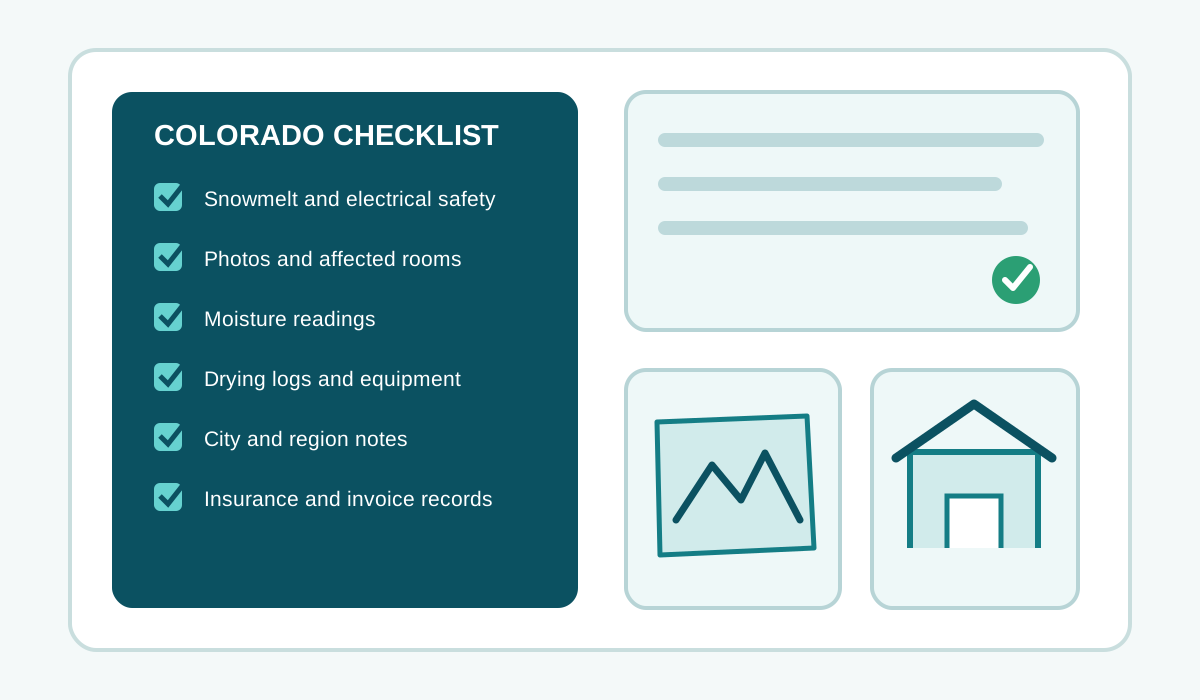
These public references support safety, moisture control, claim documentation, flood recovery, and contractor comparison. They are not provider recommendations or coverage guarantees.
Frequently Asked Questions
Colorado water mitigation questions
- Put safety first. Avoid standing water near electricity, sagging ceilings, sewage, floodwater, and unstable areas. Stop a known source only when safe, photograph the damage, note the time and likely cause, protect unaffected belongings when possible, and ask qualified providers and the insurer what documentation may be needed.
- A provider's scope may include source review, water extraction, moisture mapping, structural drying, dehumidification, limited material removal, monitoring, drying logs, and final documentation. Source repairs and restoration may be separate. The exact work depends on the water source, category, materials, access, and safety conditions.
- There is no dependable statewide price. Cost may depend on affected square footage, water category, water depth, dwell time, materials, extraction, equipment type and days, monitoring, demolition, disposal, access, contamination, local labor, and whether restoration is a separate scope. Ask actual providers for written, itemized estimates.
- Standard homeowners policies and flood insurance are different products. Coverage depends on the cause of loss, policy wording, exclusions, endorsements, deductible, limits, documentation, and insurer review. Ask the insurer which policy may apply. Water Mitigation Hub does not decide coverage.
- Save wide and close photos, videos, source notes, the discovery date and time, affected room and contents lists, receipts, temporary repair records, source repair notes, written scopes, moisture readings, drying logs, equipment records, invoices, the claim number, adjuster instructions, and a communication log.
- Safety and reasonable steps to limit additional damage may not be able to wait, but claim procedures vary. Ask the insurer how to document urgent work, whether samples should be kept, and how scopes and invoices should be submitted. Do not remain in an unsafe area to wait for an inspection.
- Verify the legal business identity, applicable license or registration, insurance, written scope, exclusions, readings, drying logs, equipment records, demolition approval, change order process, payment terms, and whether mitigation and restoration invoices are separated. Confirm claims independently and avoid pressure tactics.
- Usually not. Mitigation is intended to limit additional damage and dry affected materials. Restoration repairs, replaces, or rebuilds after drying. One company may offer both, but the scopes, estimates, authorizations, and insurance review can still be separate.
- The guide provides informational context for Denver, Colorado Springs, Aurora, Fort Collins, Lakewood, Thornton, Arvada, Westminster, Pueblo, Boulder, Greeley, Longmont, Loveland, Castle Rock, Grand Junction, Centennial, Douglas County, Jefferson County, El Paso County, Boulder County, Larimer County, and Weld County. It does not claim service availability in any location.
- No. Water Mitigation Hub is an independent online homeowner resource. It does not provide, dispatch, quote, inspect, clean, dry, restore, repair, rank, or match Colorado water mitigation services, and it does not provide insurance or claim advice.
Related Guides
Use the related guides to compare emergency steps, drying records, cost factors, insurance documentation, source-specific cleanup, and contractor questions. Every link points to an existing Water Mitigation Hub resource.
Colorado homeowner resources
- Water mitigation in California
- Water mitigation in Florida
- Water mitigation in Texas
- Water mitigation in Washington
- Water mitigation in Wisconsin
- Water mitigation in Virginia
- Water mitigation in North Carolina
- Water mitigation cost
- Emergency water mitigation cost
- Emergency water mitigation
- Emergency water removal
- Water extraction services
- Water mitigation process
- Structural drying after water damage
- Moisture readings after water damage
- Drying logs after water damage
- Water mitigation report
- Water damage cleanup
- Water damage restoration
- Water mitigation company
- Contractor checklist
- Insurance checklist
- How to document water damage
- What to ask insurance after water damage
- Water damage adjuster inspection
- Water damage claim denied
- Flooded basement cleanup
- Burst pipe water damage
- Appliance overflow water damage
- Sewage backup cleanup
- Ceiling water damage
- Drywall water damage
- Crawl space water damage
- Mold after water damage
- Sitemap