Local water restoration guide
Water Restoration Near Me: How to Compare Help
A safety-first homeowner guide to comparing local restoration options, written scopes, moisture documentation, fees, exclusions, and repair planning without assuming every provider offers the same work.
Trust notice
Quick answer
Searching for water restoration near me usually means a homeowner needs to compare local companies for water removal, mitigation, drying, cleanup, repair planning, or reconstruction after a water event. First, stay safe, document damage, identify the water source if possible, and avoid electricity, sewage, floodwater, unstable floors, or sagging ceilings. Before signing, ask for a written scope, moisture readings, drying plan, exclusions, fees, and what is included or separate. Water Mitigation Hub does not provide or dispatch local service.
Key-points checklist
When local water restoration help may be needed
Local restoration help may be useful when water is unsafe, spreading, trapped, hidden, or connected to repairs. The first step is safety and documentation, not choosing the closest search result.
| Situation | Why local help may be needed | First step | What to ask |
|---|---|---|---|
| standing water | Standing water can keep soaking flooring, trim, drywall, cabinets, contents, and subfloor materials. | Stay out if electricity or contamination may be present and photograph from a safe place. | Ask how water depth, affected rooms, extraction, drying, and moisture readings will be documented. |
| flooded basement | Basements can involve electrical equipment, finished walls, stored contents, foundation openings, and contaminated water. | Do not enter until electrical safety and water source concerns are understood. | Ask whether outside water, sump failure, finished walls, carpet, or contents change the scope. |
| burst pipe | Pressurized water can spread quickly into walls, ceilings, floors, cabinets, and rooms below. | Shut off the water source if safe and document the pipe area. | Ask what source repair, extraction, drying, demolition, and reconstruction are separate. |
| appliance overflow | Water can travel under appliances, cabinets, flooring, baseboards, and nearby walls. | Stop the appliance or supply valve if safe. | Ask whether cabinets, toe kicks, subfloor, walls, and rooms below will be checked. |
| sewage backup | Contaminated water can require PPE, containment, removal, disposal, cleaning, and separate remediation decisions. | Stay out and document from a safe distance. | Ask what water category is involved and whether porous materials or HVAC areas are affected. |
| wet drywall | Drywall can wick water above the visible line and hide moisture in cavities or insulation. | Avoid pushing on soft or sagging drywall. | Ask how wall moisture, drying access, and possible removal will be documented. |
| wet carpet | Carpet and pad can hold water after the surface looks better. | Photograph the wet area, edges, pad exposure if visible, and nearby baseboards. | Ask whether pad, tack strip, subfloor, odor, and water category affect drying or removal. |
| wet insulation | Insulation can hold moisture in walls, ceilings, attics, and crawl spaces. | Do not disturb hidden or contaminated insulation. | Ask what type of insulation is affected and whether drying or removal can be verified safely. |
| water under flooring | Water can stay trapped under hardwood, laminate, vinyl, tile assemblies, and subfloor. | Photograph seams, buckling, cupping, edges, and water paths. | Ask how hidden water will be located and how flooring decisions will be documented. |
| ceiling leak | A wet ceiling can hide water, insulation, wiring, and structural concerns above the surface. | Stay out from under sagging, bulging, or dripping areas. | Ask whether ceiling below, room above, attic, insulation, and electrical fixtures will be checked. |
How to compare a local water restoration company
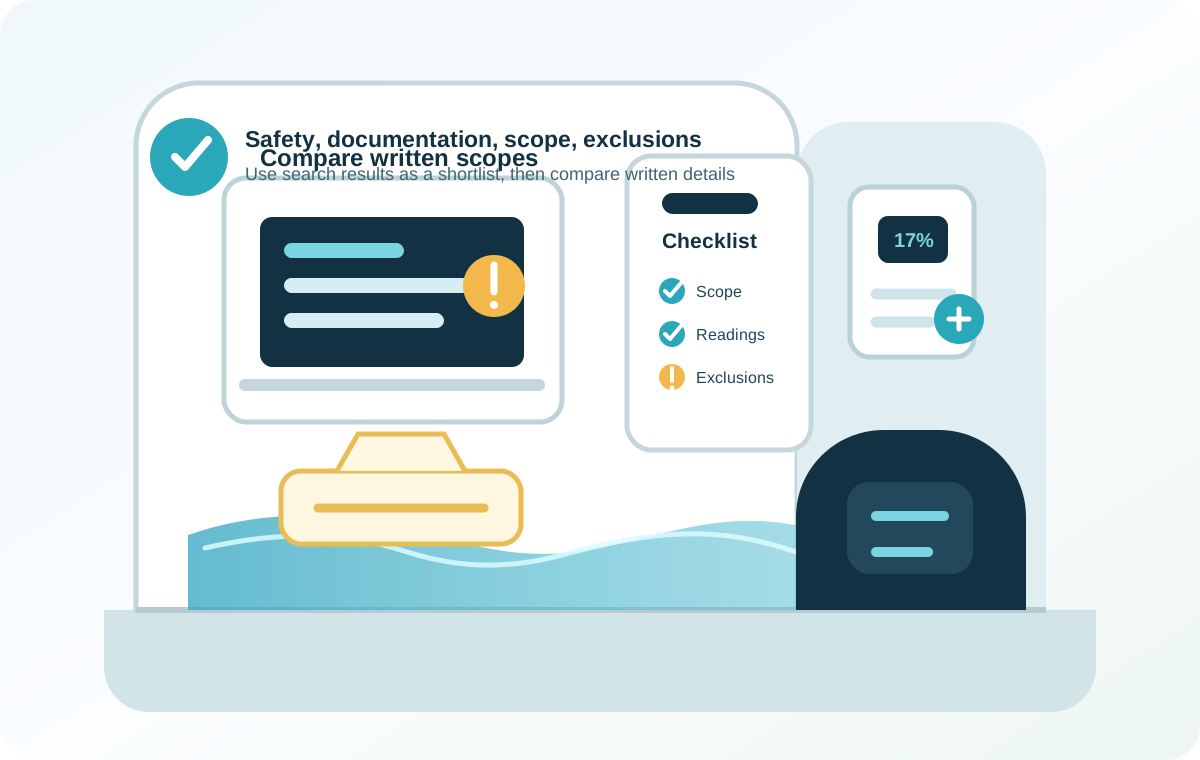
Search results can help build a shortlist, but they do not prove fit, scope, safety, or documentation quality. Compare actual providers by what they put in writing and how they explain the water damage process.
Review star ratings with caution. Look for recent, specific reviews, consistent business identity, complaint patterns, and written answers that match the scope. Water Mitigation Hub does not create local contact details, rank local providers, or match homeowners with companies.
Water restoration near me vs mitigation vs extraction vs restoration
Extraction removes standing or absorbed water. Mitigation limits further damage and starts drying decisions. Restoration repairs or rebuilds affected materials after water is removed and moisture is addressed. Reconstruction may be separate from mitigation and may involve drywall, flooring, paint, trim, cabinets, and finish repairs. Mold-related work may also be separate. Insurance documentation can support claim review, but it does not guarantee coverage.
What a local water restoration company may check
Water Mitigation Hub does not arrange or provide services. If a homeowner contacts a water mitigation company or local restoration provider, the written scope should explain what was checked, what is included, and what is separate. The contractor checklist can help organize questions before signing.
Warning signs before hiring
A warning sign does not always mean a provider is unsafe. It does mean the homeowner should slow down, ask more questions, and get written answers before approving work when conditions allow.
Cost factors for water restoration near me searches
There is no guaranteed price for local water restoration work. Actual cost depends on the source, water category, affected rooms, materials, equipment, timing, demolition, repairs, and documentation. Compare written scopes, not only the lowest headline number.
| Factor | Why it matters |
|---|---|
| water source | A pipe, appliance, roof, drain, sewage, floodwater, or unknown source can change safety, repair, and cleanup decisions. |
| water category | Clean water, gray water, sewage, floodwater, and unknown water require different precautions and material decisions. |
| amount of water | Standing water, soaked carpet, and trapped water can change extraction, labor, and equipment needs. |
| affected rooms | More rooms, closets, halls, cabinets, and levels usually increase inspection, drying, and documentation work. |
| materials affected | Drywall, flooring, insulation, cabinets, contents, trim, and subfloor can each need separate decisions. |
| emergency timing from actual providers | Night, weekend, holiday, storm-event, or priority response may affect actual provider pricing. |
| extraction | Standing water removal, wet carpet extraction, and water under flooring may be listed separately. |
| drying equipment | Air movers, dehumidifiers, monitoring, and drying logs may affect the scope and invoice. |
| demolition | Material removal may be needed for access, contamination, saturation, mold concerns, or damaged materials. |
| mold or sewage concerns | Containment, PPE, cleaning, disposal, remediation, and documentation can change the work plan. |
| repairs and reconstruction | Drywall, flooring, paint, trim, cabinets, and rebuild work may be separate from mitigation. |
| documentation and monitoring | Photos, readings, logs, estimates, invoices, and change orders take time and may support claim review. |
Insurance documentation checklist
Insurance may review documentation, but coverage is not guaranteed. Ask your insurer what to document before materials are removed when it is safe to wait and photograph first.
Mistakes to avoid
Questions to ask before choosing local water restoration help
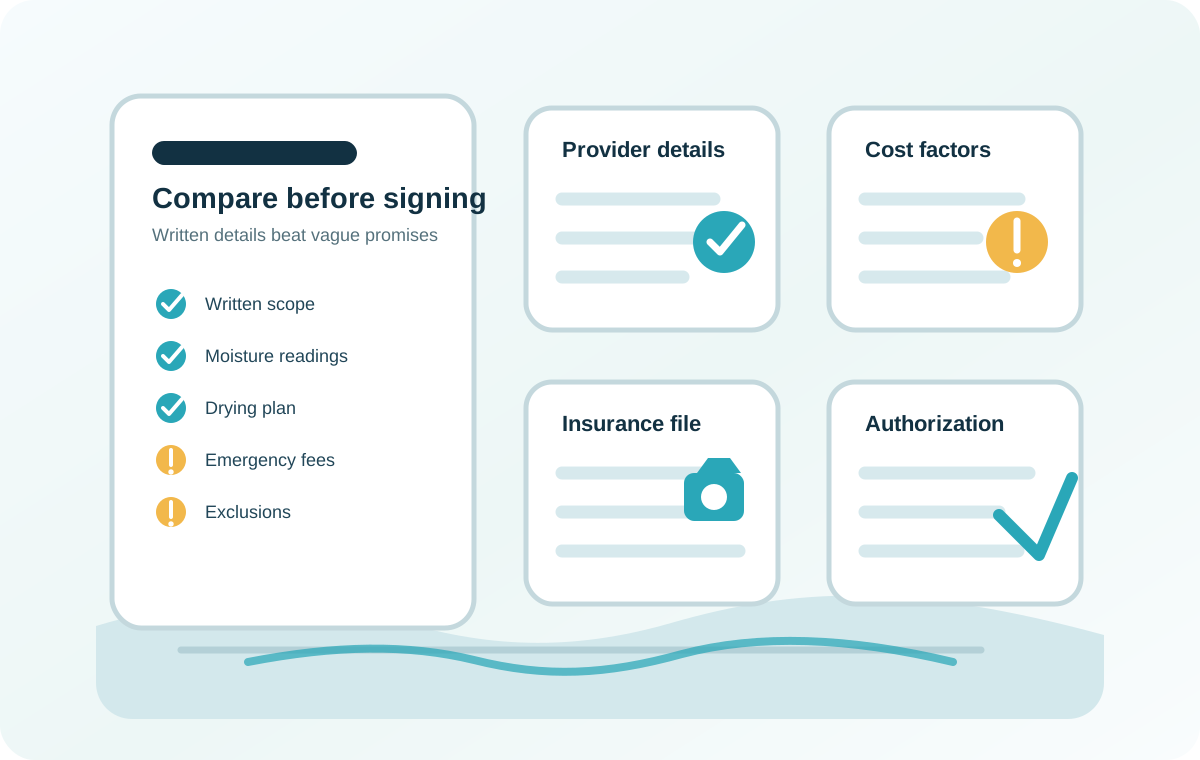
Ask clear questions before signing a work authorization, drying scope, demolition approval, repair estimate, or reconstruction contract. The answers should separate urgent mitigation from repair and rebuild work.
| Question | Why to ask |
|---|---|
| What caused the water damage? | The source affects water category, source repair, drying access, repair planning, and claim review. |
| What water category is involved? | Clean water, gray water, sewage, floodwater, and unknown water can change PPE, cleaning, removal, and disposal. |
| Has the source been stopped? | Drying and repairs can fail if the leak, backup, or moisture source continues. |
| What work is mitigation and what work is restoration? | Ask the provider to separate extraction, drying, cleaning, removal, repair, reconstruction, and documentation. |
| What services are included? | The written scope should list the work, rooms, materials, equipment, monitoring, and documentation being authorized. |
| What services are separate? | Source repair, mold-related work, contents, repairs, reconstruction, permits, or upgrades may be separate. |
| What materials can dry in place? | Drying decisions should depend on water category, material type, access, and moisture readings. |
| What materials may need removal? | Removal may be needed for saturated, contaminated, damaged, hidden, or mold-concern materials. |
| Will moisture readings be documented? | Readings and drying logs help show what was wet and how drying progress was evaluated. |
| Are repairs and reconstruction separate? | Some providers separate mitigation from drywall, flooring, cabinets, paint, and finish repairs. |
| What is excluded? | Exclusions help avoid confusion about source repair, contents, mold, permits, upgrades, or rebuild work. |
| What documentation goes to insurance? | Ask for photos, readings, drying logs, estimates, invoices, receipts, and signed scopes. |
Helpful references
These references are included for general homeowner education about cleanup safety, moisture, drying, flood recovery, documentation, contractor comparison, and restoration context. They are not advertisements, contractor recommendations, legal advice, insurance advice, or guarantees.
Frequently asked questions
Water restoration near me FAQ
- Use search results, insurer guidance, referrals, and consumer protection checks as a shortlist. Then compare actual providers by written scope, insurance, license or registration where applicable, moisture documentation, drying plan, emergency fees, exclusions, and work authorization terms.
- Ask what caused the water damage, what water category is involved, what services are included, what is separate, whether moisture readings will be documented, what can dry in place, what may need removal, how repairs are handled, what is excluded, and what documentation goes to insurance.
- No. Mitigation usually limits further damage through extraction, drying, moisture monitoring, cleaning when appropriate, and documentation. Restoration usually refers to repair or rebuild work after mitigation. Some companies offer both, but the scopes should still be written separately.
- Stay out of unsafe water, avoid wet electrical equipment, stop the source if safe, keep people away from sewage or floodwater, and photograph damage from a safe location. Do not delay urgent safety steps only to take photos.
- Read the authorization first. In an active emergency, urgent safety or extraction work may need to start quickly, but you can still ask what is being authorized, what is excluded, how changes are approved, how fees work, and whether repairs are separate.
- Sometimes. Some providers include drywall, flooring, paint, trim, cabinets, and reconstruction. Others only provide mitigation or drying. Ask whether repairs and reconstruction are included, separate, or handled by another provider.
- Coverage depends on the policy, cause of loss, timing, water source, exclusions, endorsements, deductible, documentation, and insurer review. Sudden indoor water damage may be reviewed differently from floodwater, groundwater, sewage, maintenance issues, or long-term leaks. Coverage is not guaranteed.
- Be cautious with pressure to sign immediately, no written scope, vague pricing, no insurance proof, no moisture readings, unclear demolition permission, unsupported reviews, and promises that insurance will cover everything. Get details in writing when conditions allow.
- Keep photos, videos, source repair notes, date and time discovered, estimates, work authorizations, moisture readings, drying logs, invoices, receipts, change orders, claim number, and adjuster instructions. Keep your own copies even if a provider communicates with insurance.
- No. Water Mitigation Hub is an independent informational homeowner resource. It does not provide local water restoration services, water damage restoration, water mitigation, water extraction, cleanup, drying, mold remediation, repairs, reconstruction, inspection, quotes, dispatch, emergency service, contractor ranking, local service matching, or insurance guarantees.
Related guides
Start with the Water Mitigation Hub homepage, water damage restoration, water damage restoration services, water damage cleanup, water extraction services, emergency water removal, and emergency water mitigation. Compare process, cost, providers, and paperwork with the water mitigation process, water mitigation cost, water mitigation company, the contractor checklist, and the insurance checklist.
Local restoration decisions often connect to flooded basement cleanup, burst pipe water damage, appliance overflow water damage, sewage backup cleanup, drywall water damage, and mold after water damage. Browse every published guide in the sitemap.