Bathroom water damage guide
Bathroom Water Damage: What to Do First
Safety-first guidance for toilet, shower, tub, sink, vanity, drain, flooring, subfloor, hidden moisture, drying, repair, cost, and insurance records.
Safety first
If there is standing water near electricity, a sagging ceiling, sewage, fuel, structural damage, or any situation that feels unsafe, leave the area and contact emergency services, your utility provider, a plumber, or qualified local cleanup help as appropriate. Do not enter contaminated or electrically unsafe areas to take photos.
Important
Water Mitigation Hub is an informational homeowner resource, not a restoration company. We do not inspect homes, dispatch crews, guarantee emergency availability, or verify every local contractor. Use this guide to understand your options, document damage, and compare local help before signing work authorizations.
Updated July 27, 2026

Independent information only
Bathroom Water Damage Quick Answer
Bathroom water damage requires fast source control, safe documentation, and checks for hidden moisture under flooring, baseboards, vanities, drywall, subfloor, and the room below. Avoid wet electrical fixtures, toilet waste, sewage, sagging ceilings, and unstable flooring. Stop the source only when safely accessible. Do not assume tile or vinyl prevents hidden moisture. Qualified help may be needed when water enters cavities, porous materials, or another level.
When Not to Enter or Use the Bathroom
Do not enter, touch electrical equipment, walk through sewage, stand below a wet ceiling, or use a bathroom when electrical, structural, sewage, gas, or contaminated-water hazards may exist. Contact emergency services, the utility provider, a plumber, an electrician, or other qualified local help as appropriate. Never cross water to reach an electrical panel or appliance.
| Condition | Why it may be unsafe | Safer next step |
|---|---|---|
| Standing water near outlets or electrical equipment | Electric shock may be possible | Stay out and seek qualified electrical or emergency help |
| Water near a bathroom fan or light fixture | Wiring and electrical boxes may be wet | Do not touch or test the fixture |
| Water coming through the ceiling below | Water may be near wiring and weakened drywall | Keep clear and stop use of fixtures above when safe |
| Ceiling below is sagging or bulging | Wet material may fall without warning | Do not stand below, touch, cut, or drain it |
| Toilet overflow contains waste | Wastewater can contain harmful contamination | Keep people and pets out and seek qualified cleanup help |
| Sewage is entering a toilet, tub, shower, or floor drain | The backup may spread contaminated water | Stop using connected fixtures and avoid contact |
| Floor feels soft or unstable | Subfloor or framing may be weakened | Do not walk across the affected area |
| Tile is loose or lifting | Water may be trapped below and footing may be unstable | Avoid the area and document from a safe location |
| Water is rapidly spreading | More rooms, cavities, or electrical components may be affected | Stop the source only when safely accessible and seek qualified help |
| Strong sewer, gas, fuel, or chemical odor | A hazardous release or contamination may be present | Leave the area and contact the appropriate emergency or utility provider |
| Water source is unknown | Electrical, contamination, and hidden-source risks are uncertain | Restrict access until the source is evaluated |
| Several rooms or levels are affected | Damage and hidden moisture may be widespread | Seek qualified evaluation and document only from safe areas |
What to Do First After Bathroom Water Damage
- 1Keep people and pets out of unsafe or contaminated areas
- 2Avoid wet outlets, cords, fans, switches, and light fixtures
- 3Stop the water source only when it is safely accessible
- 4Stop using the affected toilet, sink, tub, shower, or nearby appliance
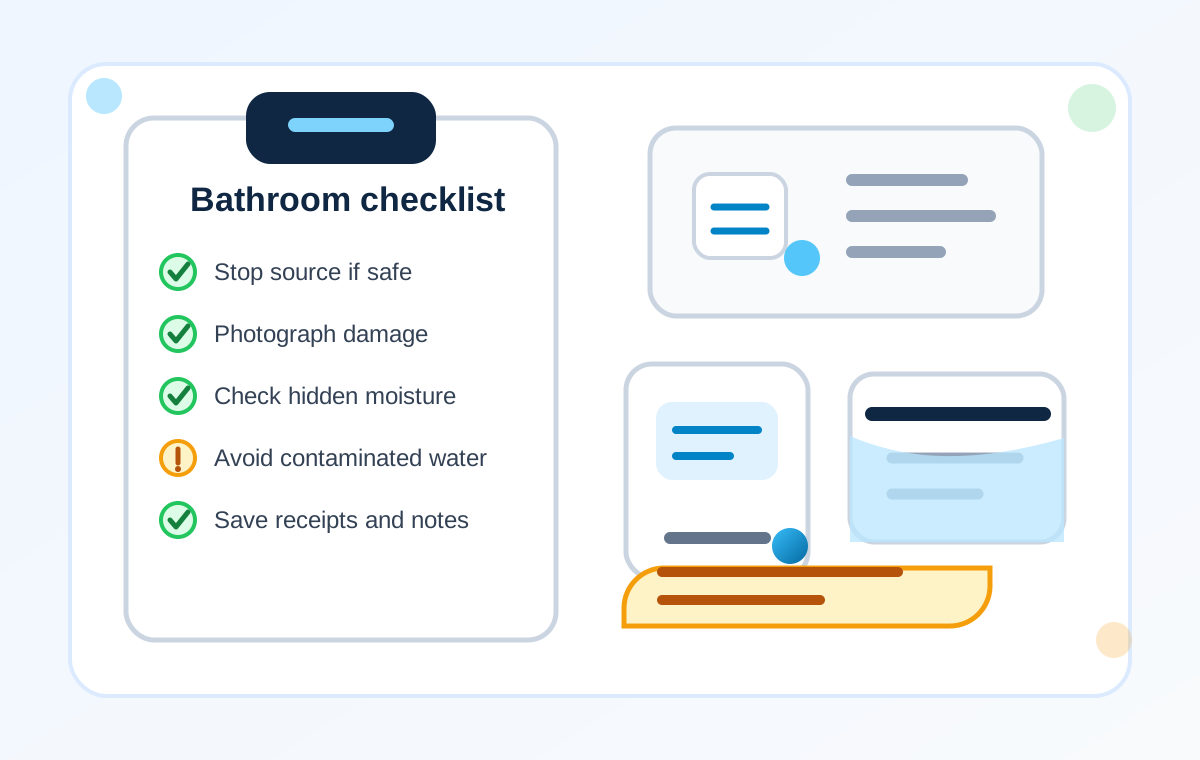
- 5Photograph the source, water path, flooring, vanity, walls, and room below when safe
- 6Note the date, time, suspected source, and affected rooms
- 7Move unaffected contents only when this can be done safely
- 8Remove small amounts of clean standing water only when electrical and contamination risks are absent
- 9Contact the appropriate plumbing, electrical, mitigation, or other qualified professional
- 10Notify the insurer when damage may be significant
- 11Save reports, moisture readings, drying logs, estimates, invoices, and receipts
- 12Plan repairs only after the source and moisture conditions are evaluated
Common Bathroom Water Damage Sources
A visual clue does not confirm the exact source or full damage extent. Grout or caulk appearance alone may not identify whether the issue is a plumbing leak, enclosure problem, waterproofing failure, or another source.
| Possible source | Common clue | Hidden moisture concern | Who may need to evaluate it |
|---|---|---|---|
| Toilet supply-line leak | Water beside or behind the toilet | Subfloor, wall, and ceiling below | Plumber and mitigation professional |
| Toilet tank or connection leak | Drips at bolts, tank, or connections | Flooring and toilet base | Plumber |
| Toilet flange or seal leak | Moisture around the base, often after flushing | Flooring and subfloor around the flange | Plumber and flooring or mitigation professional |
| Toilet overflow without visible waste | Water over the bowl edge | Floor seams, baseboards, and subfloor | Plumber; contamination evaluation may still be needed |
| Toilet overflow with waste | Wastewater or solids outside the bowl | Porous flooring, walls, contents, and cavities | Plumber and qualified contaminated-water cleanup help |
| Sewer or floor-drain backup | Wastewater entering multiple fixtures or a floor drain | Widespread contaminated materials | Drain or sewer professional and qualified cleanup help |
| Bathtub overflow | Water over the tub edge | Flooring, vanity base, walls, and ceiling below | Plumber or mitigation professional |
| Shower enclosure leak | Water outside the enclosure during use | Perimeter joints, flooring, and wall | Plumber or qualified building professional |
| Shower pan or waterproofing failure | Recurring stain or moisture below the shower | Subfloor, framing, and ceiling below | Plumber and qualified restoration professional |
| Failed grout or caulk area | Cracks or gaps near wet areas | Waterproofing assembly and wall behind finishes | Qualified plumbing or building professional |
| Sink supply-line leak | Water inside the vanity or below connections | Cabinet base, toe kick, wall, and floor | Plumber |
| Sink drain or trap leak | Water appears while the sink drains | Vanity, wall, and floor | Plumber |
| Vanity plumbing leak | Swollen cabinet base or recurring dampness | Toe kick, wall cavity, and subfloor | Plumber and mitigation professional |
| Plumbing leak inside a wall | Stain, soft drywall, or unexplained meter activity | Wall cavity, insulation, framing, and floor | Plumber and mitigation professional |
| Washing machine near the bathroom | Water near hoses or during a cycle | Flooring, walls, and adjacent rooms | Appliance or plumbing professional |
| Water heater or HVAC equipment nearby | Water near equipment, drain, or pan | Walls, floor, and adjacent cavities | Appropriate HVAC, plumbing, or mitigation professional |
| Roof or attic leak above the bathroom | Staining worsens after weather | Ceiling, insulation, framing, and walls | Roofer and mitigation professional |
| Unknown bathroom-area leak | Odor, stain, or moisture with no clear source | Any concealed cavity or adjoining room | Qualified source and moisture evaluation |
Toilet Overflow and Sewage Safety
A toilet overflow without visible waste still requires source and contamination evaluation. An overflow containing waste, a sewer backup, or wastewater from a floor drain should be approached cautiously as contaminated. Keep children and pets out. Do not use household fans across wastewater, use a wet vacuum on sewage, mix cleaning chemicals, or continue flushing connected fixtures during an active backup.
Porous materials may require professional evaluation. Plumbing source repair and contaminated-water cleanup are separate scopes. Review the sewage backup cleanup guide, the broader water damage cleanup guide, and flooded basement safety when the backup extends beyond the bathroom.
Clean Supply Water vs Drain Water vs Sewage
Supply-line water may begin relatively clean, but it can become less clean after contact with flooring, drain residue, building materials, dirt, or stored products. Water condition can worsen with time. Visual appearance alone may not establish contamination, so unknown water should be approached cautiously.
| Water source | Possible contamination concern | Homeowner caution | When qualified help may be needed |
|---|---|---|---|
| Toilet supply line | May begin relatively clean | Avoid electrical exposure and document the spread | When water entered cavities or remained |
| Sink supply line | May begin relatively clean | Stop use and inspect vanity and floor edges | When cabinets, walls, or subfloor are wet |
| Tub or shower supply line | May begin relatively clean | Stop fixture use and check the room below | When the leak is concealed or widespread |
| Bathtub overflow | Can collect soap, dirt, and surface residue | Limit contact and document the path | When porous materials or another level are affected |
| Shower runoff | Can contain soap, body residue, and drain-area contamination | Do not assume it remains clean | When trapped below flooring or walls |
| Sink drain water | May contain drain residue and contaminants | Avoid direct contact | When it reaches porous materials |
| Toilet overflow without visible waste | Contamination still depends on bowl and drain conditions | Approach cautiously and stop toilet use | When source or contamination is uncertain |
| Toilet overflow with waste | Significant contamination concern | Keep people and pets out | Qualified contaminated-water cleanup may be needed |
| Floor drain or sewer backup | Significant sewage concern | Do not walk through it or use household fans | Qualified sewer and cleanup help is usually appropriate |
| Water mixed with cleaning products | Chemical exposure may be possible | Do not mix or add chemicals | When odor, irritation, or unknown products are involved |
| Water present for an extended period | Condition can worsen with time and material contact | Avoid assuming it remains clean | When odor, growth, or porous materials are involved |
| Unknown or mixed water | Contamination cannot be judged by appearance alone | Restrict access and use caution | Professional evaluation may be needed |
Signs of Hidden Bathroom Water Damage
One sign does not confirm the source or full extent. Document patterns and changes, then use source evaluation and moisture information to guide decisions.
| Sign | What it may indicate | Where moisture may be hiding | What to document |
|---|---|---|---|
| Swollen baseboard | Water may have wicked from the floor | Behind trim and lower drywall | Wide and close photos |
| Loose or lifting tile | Bonding or material below may be affected | Setting bed and subfloor | Location, movement, and nearby source |
| Cracked grout | A movement or moisture path may exist | Below tile or near waterproofing | Pattern and nearby fixtures |
| Peeling caulk | A perimeter joint may have failed | Behind enclosure edges | Joint and water-use conditions |
| Soft flooring | Underlayment or subfloor may be wet | Below the finish floor | Area and how it feels without testing unsafe spots |
| Floor movement around the toilet | Flange area or subfloor may be damaged | Around toilet base and joists | Movement location and toilet-use history |
| Stained or swollen vanity | Cabinet material may have absorbed water | Cabinet base, toe kick, and wall | Staining, swelling, and plumbing connections |
| Damp cabinet base | A supply or drain leak may be active or recent | Below stored items and cabinet floor | Water path and affected contents |
| Musty odor | Hidden damp material or microbial growth may be present | Cabinets, walls, flooring, or ceiling | When and where odor is strongest |
| Peeling paint or soft drywall | Moisture may be behind the finish | Wall cavity or ceiling | Shape, color, and changes over time |
| Recurring stain | The source may be intermittent | Plumbing wall, subfloor, or ceiling below | Dates and conditions when it returns |
| Bubbling ceiling below | Water may be trapped above drywall | Ceiling cavity and insulation | Photo from a safe distance |
| Active drip below the bathroom | The source may still be releasing water | Ceiling, framing, and wall cavities | Drip path and fixture use above |
| Discolored trim | Moisture may have reached edges and joints | Behind trim and adjacent drywall | Color change and affected length |
| Moisture in an adjacent room | Water may have traveled under flooring or through walls | Transitions, wall cavities, and subfloor | Both rooms and the connecting path |
What a Company or Professional May Check
Water Mitigation Hub does not inspect bathrooms, test plumbing, classify water onsite, measure moisture, extract water, remove materials, dry structures, clean sewage, or perform restoration. A qualified professional may check the following items and usually documents findings that affect the scope.
Where Bathroom Water May Hide
Water can remain under tile, beneath perimeter joints, under vinyl or laminate seams, around the toilet flange and base, beneath the vanity, behind cabinet toe kicks and baseboards, inside drywall and plumbing walls, in insulation, beneath the subfloor, around pipe penetrations, under a tub or shower, inside the ceiling below, or in an adjacent room. A dry visible surface does not confirm that concealed materials are dry.
Learn how moisture readings, structural drying, drying logs, and a water mitigation report may document these conditions.
Bathroom Materials After Water Damage
A material may dry, may require access, may require removal, or may need specialist inspection. The decision depends on contamination, saturation, construction, condition, and time wet. No material can be guaranteed salvageable or automatically replaceable.
| Material | Common concern | What may be checked | Possible next step |
|---|---|---|---|
| Ceramic or porcelain tile | Water may travel through edges or damaged joints | Bond, hollow or loose areas, and moisture below | May dry in place or require access depending on conditions |
| Grout | Cracks do not prove the full source | Adjacent waterproofing and moisture path | May need repair after source and moisture evaluation |
| Vinyl flooring | Water can enter seams and perimeter edges | Underlayment and subfloor | May require access if water is trapped |
| Laminate flooring | Edges can swell and delaminate | Seams, underlayment, and subfloor | Damaged sections may require removal |
| Hardwood flooring | Cupping, swelling, or finish damage may develop | Moisture gradient and subfloor | Drying or replacement depends on condition |
| Subfloor | Strength, swelling, and prolonged moisture are concerns | Readings, condition, contamination, and access | May dry or may require repair |
| Toilet flange area | Repeated leakage can affect the floor system | Flange, seal, subfloor, and movement | Plumbing and floor evaluation may be needed |
| Baseboards and trim | They can wick water and conceal damp drywall | Back surface and wall edge | May dry or require removal for access |
| Drywall | Paper facing and cavities can retain moisture | Readings, softness, contamination, and insulation | May dry or require controlled removal |
| Insulation | Performance and drying vary by type and contamination | Saturation, access, odor, and water source | May require specialist evaluation or removal |
| Vanity cabinet and toe kick | MDF or particleboard can swell or delaminate | Cabinet base, wall, and floor below | May dry, require access, or need replacement |
| Ceiling drywall and insulation below | Wet materials can weaken or conceal moisture | Sagging, fixtures, cavity moisture, and framing | Keep clear and seek qualified evaluation |
| Rugs, bath mats, and nearby carpet | Padding and backing can retain water | Contamination, saturation, and floor below | Cleaning, drying, or disposal depends on conditions |
| Stored bathroom contents | Porous items can absorb contaminated water | Material, water source, and time wet | Document before safe cleaning or disposal decisions |
Upstairs Bathroom Water Damage
An upstairs bathroom leak can affect subfloor, framing, joists, wall cavities, wet insulation, the ceiling below, flooring in the room below, nearby contents, and electrical fixtures. Source tracing between floors may require a plumber and moisture evaluation. Do not stand below a sagging or actively dripping ceiling. Do not touch wet lights, fans, switches, fixtures, or electrical boxes.
See the guides to ceiling water damage, wet insulation, and drywall water damage.
Bathroom Cleanup and Drying Process
The exact sequence may vary with the source, contamination, materials, access, electrical concerns, and professional findings. Water removal does not by itself confirm that the structure is dry.
- 1. Restrict access and review safety hazards
- 2. Identify and control the water source
- 3. Document initial conditions
- 4. Evaluate contamination concerns
- 5. Remove standing water when safe and appropriate
- 6. Inspect flooring, vanity, walls, subfloor, and the level below
- 7. Record baseline moisture readings
- 8. Decide what may dry and what may require controlled access or removal
- 9. Set and monitor appropriate drying equipment
- 10. Record follow-up moisture readings and drying logs
- 11. Repair the plumbing or building source
- 12. Complete restoration after moisture conditions are evaluated
Plumber vs Mitigation vs Restoration vs Remodeling
Source repair, drying, reconstruction, and elective remodeling may be separate work. Insurer review is also separate from performing the work.
| Professional or work type | Main role | Examples | Important question |
|---|---|---|---|
| Plumber | Finds or repairs plumbing sources | Supply line, drain, flange, valve, or fixture repair | Is source diagnosis and repair documented? |
| Electrician | Evaluates electrical exposure | Wet lights, fans, outlets, switches, or wiring | What must remain off or unused? |
| Sewage or drain professional | Addresses active backup or drain source | Main line, branch drain, or floor drain | Is fixture use restricted while the backup is active? |
| Water mitigation company | Limits spread and manages moisture | Extraction, readings, drying, and logs | What materials and areas are included? |
| Water extraction company | Removes standing or absorbed water | Pumping or extraction | Are drying and monitoring separate? |
| Restoration contractor | Repairs damaged building materials after drying | Drywall, paint, trim, flooring, and cabinets | Has moisture condition been evaluated first? |
| Flooring or cabinet contractor | Evaluates and repairs finish materials | Tile, vinyl, subfloor access, vanity, or toe kick | What damage is repairable versus replaceable? |
| Bathroom remodeling contractor | Handles broader elective or reconstruction work | Layout, finishes, fixtures, and rebuild | Which work is water-damage repair and which is elective? |
| Insurance adjuster | Reviews claim information under the policy | Cause, documentation, estimates, and coverage review | What records and deadlines apply? |
DIY Activity vs Qualified Help
Keep homeowner activity limited to conditions that are clearly safe. Do not disturb suspected mold, contaminated materials, hidden electrical components, flooring, walls, ceilings, cabinets, or plumbing assemblies without understanding the hazards.
| Decision factor | Limited homeowner activity | When qualified help may be needed |
|---|---|---|
| Small amount of recent supply water on a sound hard surface | Limited cleanup may be reasonable when electricity and contamination risks are absent | Stop and seek help if water entered seams, walls, cabinets, or another level |
| Sewage, toilet waste, drain backup, or unknown water | Avoid DIY contact and household fans | Qualified contaminated-water evaluation may be needed |
| Wet lights, fans, outlets, switches, or electrical boxes | Do not touch or cross water to reach equipment | Qualified electrical help may be needed |
| Soft floor, loose tile, sagging ceiling, or structural movement | Do not enter or test unstable materials | Qualified structural or restoration evaluation may be needed |
| Hidden wall, flooring, vanity, or ceiling moisture | Do not open assemblies without understanding hazards | Moisture mapping and controlled access may be needed |
| Musty odor or visible growth | Do not disturb suspected growth | Professional evaluation may be safer |
Bathroom Water Damage Cost Factors
No guaranteed price applies. Cost depends on the actual source, contamination, affected materials, access, drying, repair scope, local labor, and provider timing. Compare written scopes and review the broader water mitigation cost guide.
| Factor | Why it matters | What to ask |
|---|---|---|
| Source and water category | Supply water, drain water, and sewage can require different controls | How was the source and contamination concern documented? |
| Affected area and levels | Water may extend beyond the bathroom or into the ceiling below | Which rooms and cavities are included? |
| Materials affected | Flooring, subfloor, drywall, insulation, and cabinets behave differently | What may dry and what may require access or removal? |
| Time wet and access | Longer exposure and concealed areas can increase scope | How will hidden moisture be checked? |
| Extraction and drying equipment | Equipment count, type, and monitoring affect the scope | Is equipment placement and daily monitoring documented? |
| Demolition and disposal | Contamination or material damage may require controlled removal | What removal is authorized and why? |
| Plumbing or electrical work | Source repair and electrical evaluation are usually separate | Which trade and cost are excluded? |
| Restoration and remodeling | Repair work may be separate from mitigation | Is reconstruction or elective remodeling included? |
| Local labor and emergency timing | Actual provider rates and timing can vary | Are emergency fees shown in writing? |
| Documentation and insurance review | Reports, photos, readings, and estimates may add work | What records will the homeowner receive? |
Insurance Documentation Checklist
Coverage depends on policy terms, cause, exclusions, deductible, endorsements, documentation, and insurer review. Use the insurance checklist, the water damage insurance claim guide, and safe documentation steps to organize records.
- wide and close photos of the bathroom, adjacent rooms, and room below when safe
- photos or video of the source and water path
- date and time discovered and the last known dry condition
- affected fixtures, flooring, vanity, walls, baseboards, ceiling, and contents
- plumber, electrician, roofer, appliance, or drain professional report
- mitigation scope, moisture readings, moisture map, and drying logs
- equipment list, placement, monitoring dates, and change orders
- restoration estimate separated from mitigation charges
- receipts, invoices, temporary repair records, and signed paperwork
- claim number, adjuster instructions, and communication notes
Questions Before Approving Work
| Question | Why it matters |
|---|---|
| What caused the bathroom water damage, and has the source stopped? | Active or uncertain sources can change every later step |
| What water category or contamination concern is involved? | Safety and material decisions depend on the actual water condition |
| Which rooms, cavities, and materials are affected? | The visible bathroom surface may not show the full moisture path |
| Are the subfloor, vanity base, walls, or ceiling below wet? | These areas can stay damp after the visible floor looks dry |
| What can dry in place, and what evidence supports that decision? | Material type, contamination, condition, and readings should support the scope |
| What may need controlled removal, and why? | Removal should be tied to access, contamination, damage, or drying needs |
| How will readings and drying logs be recorded? | Written records help explain progress and completion |
| Which plumbing, mitigation, restoration, or remodeling work is separate? | Clear scope boundaries reduce billing confusion |
| What equipment will be used and monitored? | Equipment should match the moisture pattern and safety conditions |
| What is excluded, and how are change orders approved? | Written exclusions and approvals help prevent surprises |
| What records will I receive for insurer review? | Coverage still depends on policy terms and insurer review |
Bathroom Water Damage Mistakes to Avoid
- entering water near electrical fixtures or walking through sewage
- continuing to flush or use connected fixtures during an active backup
- using household fans or a wet vacuum on sewage or unknown water
- standing below a wet, sagging, bulging, or actively dripping ceiling
- assuming tile, grout, or vinyl prevents hidden moisture
- diagnosing the source from one stain, grout crack, or caulk gap
- removing a toilet, flooring, drywall, or cabinets without evaluating hazards and documentation needs
- mixing cleaning chemicals or using unsupported disinfectant recipes
- approving repairs before moisture conditions are evaluated
- assuming every bathroom loss is covered by insurance
- signing vague scopes, open-ended authorizations, or undocumented change orders
Prevention After the Source Is Confirmed
Prevention can reduce risk but cannot guarantee that another leak will not occur. Source diagnosis should come before cosmetic repairs.
- inspect visible supply lines, valves, drains, and fixture connections periodically
- respond to recurring toilet movement, stains, odors, or damp cabinet bases
- maintain shower and tub perimeter joints as appropriate for the assembly
- avoid treating grout or caulk as proof that waterproofing is intact
- address slow drains and repeated backups through qualified source evaluation
- keep insurer, plumber, and home maintenance records organized
When Qualified Help May Be Needed
Seek qualified help when water is sewage or unknown, electrical components may be wet, the floor is soft or tile is loose, cabinets are swollen, subfloor, drywall, or insulation may be wet, water reached another room or the ceiling below, several rooms or levels are affected, the source is hidden, water remained, musty odor or visible growth is present, or professional moisture and insurance records may be needed.
Helpful References
Bathroom Water Damage FAQ
Bathroom water damage questions
- Keep people and pets out of unsafe areas, avoid wet electrical fixtures and contaminated water, stop the source only when safely accessible, stop using affected fixtures, and photograph the source and water path when safe. Check flooring edges, the vanity, walls, baseboards, adjacent rooms, and the room below.
- It can be. An overflow without visible waste can still contact bowl residue, drain material, flooring, and other contaminants. An overflow containing waste or caused by a sewer backup should be approached as contaminated. Keep people and pets out, stop using connected fixtures, and do not use household fans or a wet vacuum on wastewater.
- Some flooring may dry when relatively clean water is caught quickly, the material remains sound, and readings can verify moisture reduction. Drying or removal depends on flooring construction, water source, contamination, saturation, seams, subfloor condition, and time wet. Tile or vinyl on the surface does not confirm the material below is dry.
- Yes. Water can enter around toilet bases, perimeter joints, transitions, damaged grout, loose tile, and vinyl seams. It may spread through underlayment or subfloor while the visible surface appears dry. Moisture readings and safe access decisions may be needed.
- Possible signs include swollen baseboards, loose tile, cracked grout, peeling caulk, soft flooring, movement around the toilet, a swollen vanity, musty odor, soft drywall, recurring stains, and bubbling or dripping in the ceiling below. One sign does not confirm the source or full extent.
- Qualified help may be needed when electricity, sewage, unknown water, unstable flooring, a sagging ceiling, hidden moisture, wet subfloor, multiple rooms, another level, strong odor, or suspected growth is involved. The appropriate help may include a plumber, electrician, drain professional, mitigation company, or restoration contractor.
- Do not stand below a sagging, bulging, or actively dripping ceiling, and do not touch wet lights, fans, switches, fixtures, or electrical boxes. Stop using the bathroom fixtures above when safe, document from a safe location, and seek appropriate source, electrical, and moisture evaluation.
- Not always. The decision depends on the water source, contamination, subfloor type, swelling, loss of strength, delamination, access, time wet, and verified moisture conditions. A qualified professional may need to determine whether it can dry or requires controlled repair.
- Removal is not automatic. It may be considered when access is needed, contamination is present, the flange or subfloor is damaged, cabinet materials have swollen, or moisture remains trapped. Plumbing, safety, documentation, and material conditions should be evaluated before removal.
- Coverage depends on the policy terms, cause of loss, exclusions, deductible, endorsements, maintenance history, documentation, and insurer review. Sudden water release may be reviewed differently from repeated seepage, wear, flood, or sewer backup. No coverage outcome is guaranteed.
- Usually. Plumbing work identifies or repairs the source. Mitigation may address extraction, moisture readings, drying, material decisions, and documentation. Ask for written scopes showing who performs each part.
- It can be. Restoration repairs damaged materials after moisture conditions are addressed. Remodeling may include elective layout, fixture, or finish changes beyond the water-damage repair. Ask for separate scopes and costs.
- When safe, take wide and close photos, record the date, time, suspected source, affected rooms, materials, and contents, and save plumber or other source reports. If mitigation starts, request the written scope, moisture readings, moisture map, drying logs, equipment records, change orders, estimates, invoices, and receipts.
- No. Water Mitigation Hub is an independent informational homeowner resource. It does not provide bathroom cleanup, plumbing, inspection, mitigation, extraction, drying, sewage cleanup, restoration, remodeling, repairs, quotes, dispatch, contractor matching, or insurance guarantees.
Related Guides
The broader water mitigation process explains professional drying steps. Related guides cover water extraction, water damage mitigation, possible mitigation services, appliance overflows, kitchen water damage, hardwood flooring, wet carpet, mold concerns, and restoration after drying. Before approving work, use the contractor checklist.
Insurance support pages include mitigation claim records, cleanup coverage questions, and adjuster inspection preparation. Review the site home page and full disclaimer for the resource scope.