Company guide
Water Mitigation Company: What They Do and How to Choose One
A water mitigation company may help limit damage after leaks, floods, overflows, or other water events. Compare identity, insurance, scope, equipment, readings, and payment terms before signing.
Short answer
A water mitigation company helps limit damage after leaks, floods, overflows, or other water events by inspecting, extracting water, drying affected areas, monitoring moisture, and documenting the job. Before hiring one, confirm the company identity, insurance, written scope, equipment plan, and how changes will be approved.
Important
Water Mitigation Hub is an informational homeowner resource, not a restoration company. We do not inspect homes, dispatch crews, guarantee emergency availability, or verify every local contractor. Use this guide to understand your options, document damage, and compare local help before signing work authorizations.
Updated July 8, 2026
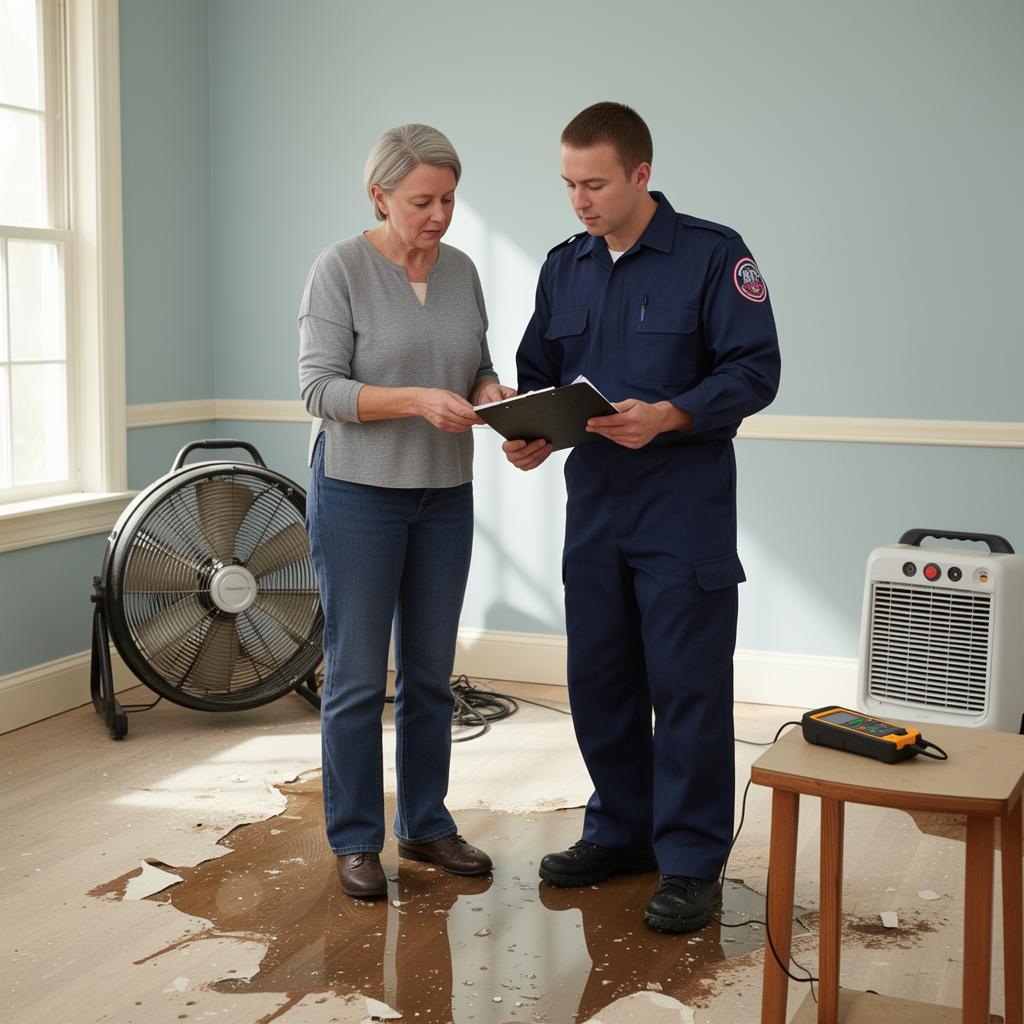
A water mitigation company helps limit damage after leaks, floods, overflows, or other water events by checking safety, extracting standing water, drying affected areas, monitoring moisture, and documenting the job. Before hiring one, homeowners should verify identity, insurance, written scope, equipment plan, moisture readings, and change order terms.
Quick answer
A water mitigation company usually focuses on limiting further water damage, not guaranteeing repairs, insurance coverage, or drying outcomes. Ask what the company will check, what equipment may be used, how moisture readings will be documented, and what is excluded before signing.
If you need the concept before comparing providers, read what water mitigation means. This page focuses on evaluating the company itself, including identity, credentials where applicable, insurance, scope, equipment, documentation, payment terms, exclusions, and warning signs before signing.
What this page is, and is not
What a Water Mitigation Company Usually Does
A typical water mitigation company may provide the services below, scaled to the size, water category, safety concerns, and materials affected by the loss.
- Inspection and safety review
- Water source and water category check
- Standing water extraction
- Moisture mapping
- Drying equipment setup
- Dehumidification
- Controlled demolition when needed
- Drying logs
- Photos and documentation
- Insurance documentation support
- Restoration handoff
For a step-by-step breakdown of how this work unfolds from inspection through drying, see the process a mitigation company may follow guide.
What a Company May Check During the First Visit
A qualified company may start with safety, source, and moisture checks before deciding what can dry in place and what may need removal. Water Mitigation Hub does not inspect homes or arrange services.
| What may be checked | Why it matters |
|---|---|
| water source | The company may ask where the water came from and whether the source has been stopped. |
| affected rooms | The first visit usually maps rooms, levels, and nearby spaces that may hold hidden moisture. |
| water category | Clean water, gray water, sewage, floodwater, or unknown water can change safety steps. |
| electrical or structural safety concerns | Water near outlets, panels, sagging ceilings, or unstable flooring may require caution first. |
| drywall, flooring, carpet, cabinets, insulation, ceilings | Layered and porous materials can hold moisture after the visible water is gone. |
| moisture readings | Readings may help show what is wet, what is drying, and what needs monitoring. |
| equipment needs | Air movers, dehumidifiers, extraction tools, and containment needs usually depend on site conditions. |
| documentation needed for insurance | Photos, readings, drying logs, invoices, and written notes may support insurer review. |
When Should You Call a Water Mitigation Company?
Not every water issue needs a professional crew. The situations below are common reasons homeowners search for a water mitigation company, either because the volume is high, the materials are at risk, or the area is unsafe.
Burst pipe
Sudden volume can spread quickly across rooms and into walls.
Flooded basement
Multiple materials and concrete hold moisture for a long time.
Appliance overflow
Dishwasher, washer, or water heater failures can hide damage behind cabinets.
Wet drywall
Saturated drywall often needs targeted drying or controlled removal.
Water in ceiling
Ceiling leaks may signal damage in framing, insulation, or the floor above.
Sewage backup
Category 3 water needs containment, PPE, and specialized cleaning.
Water near electrical areas
Standing water near outlets or panels is a serious safety risk.
Multiple rooms affected
Larger scopes need more equipment, monitoring, and documentation.
Water sitting more than 24 hours
Longer dwell time raises microbial risk and secondary damage.
Unsure source of water
An inspection can identify the source before the rebuild starts.
If water is near electricity, sewage, a gas smell, or visible structural damage, stay out of the area and call emergency services or a qualified professional. See the emergency water mitigation guide for first steps.
Water Mitigation Company Services
The table below lists water mitigation services most water damage companies offer. Not every job needs every service, and a written scope should explain which apply to your loss.
| Service | What it means | Why it matters |
|---|---|---|
| Inspection | On-site review of the source, water category, and affected materials. | Sets the safety steps and the written scope of work. |
| Water extraction | Removal of standing water using truck mounted or portable equipment. | Limits saturation depth and shortens drying time. |
| Moisture mapping | Meter readings and sometimes thermal imaging across affected areas. | Finds hidden moisture inside walls, under flooring, and above ceilings. |
| Structural drying | Targeted airflow to evaporate moisture from framing and finishes. | Helps materials reach a dry standard before repairs begin. |
| Dehumidification | Refrigerant or desiccant units sized to the affected space. | Pulls moisture out of the air so it does not redeposit on surfaces. |
| Air movement | Air movers placed by room size and material type. | Speeds evaporation and supports the dehumidifier plan. |
| Controlled demolition | Removing saturated drywall, pad, or insulation when needed. | Sometimes faster and safer than extended in-place drying. |
| Antimicrobial cleaning when appropriate | Application on materials that contacted contaminated water. | Used when category and conditions support it, not on every job. |
| Drying logs | Daily moisture readings, equipment counts, and notes. | Documents that the structure actually reached a dry standard. |
| Insurance documentation | Photos, scope notes, and a written package for the claim. | Helps the adjuster review without slowing the work. |
| Restoration handoff | Transition to the rebuild scope once drying is complete. | Keeps mitigation and rebuild clearly separated. |
Water Mitigation Company vs Restoration Company vs Contractor
These terms are often used interchangeably, but the work and the scopes are different. Knowing which role you actually need keeps the claim and the rebuild on a clean track.
- A water mitigation company focuses on stopping further damage and drying the property.
- A water damage restoration company may handle mitigation plus repairs and rebuild work after drying is complete.
- A general contractor may perform repairs but may not specialize in water extraction or drying documentation.
| Role | Main focus | What to ask |
|---|---|---|
| Water mitigation company | Extraction, drying, dehumidification, moisture monitoring, and documentation. | What drying equipment, readings, and documentation will be used on this loss? |
| Water damage restoration company | Repairs, rebuild work, finishes, and replacement after drying. | Will mitigation and restoration be billed and scoped separately? |
| General contractor | Repairs and rebuild work, sometimes without water mitigation focus. | Do you bring in a qualified mitigation crew, or do I hire that separately? |
| Plumber | Locates and repairs the water source, such as a burst pipe or fitting. | Will you provide a written cause-of-loss note I can share with my insurer? |
| Mold remediation company | Containment and cleanup when mold growth is found or suspected. | When do you recommend remediation, and when is drying enough? |
How to Compare Water Mitigation Companies
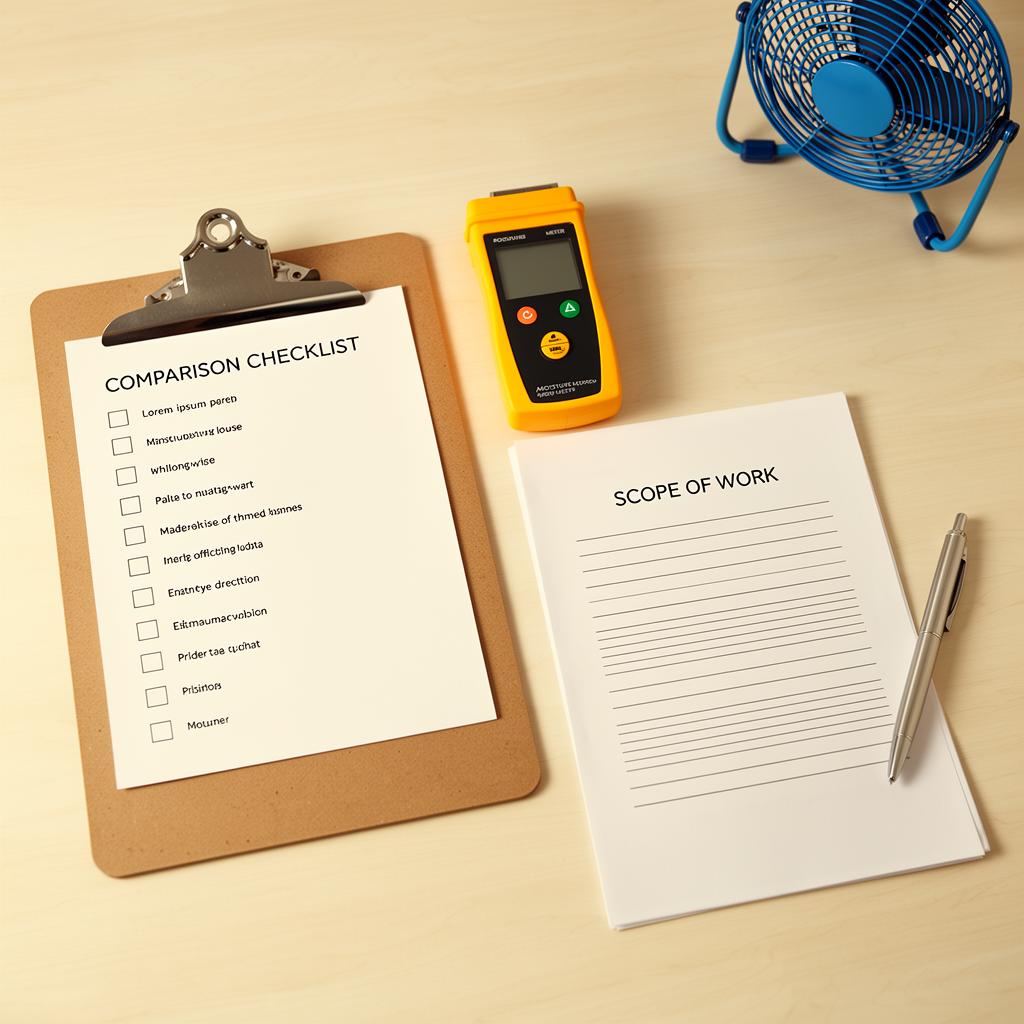
A simple comparison checklist makes it easier to choose between local options without getting lost in marketing copy. The items below are reasonable to expect from any qualified company on a residential loss.
- Legal business name
- License or registration where required
- Proof of liability and workers compensation insurance
- Written estimate or scope
- Equipment plan
- Daily moisture readings
- Drying logs and equipment dates
- Photos and documentation
- Insurance documentation process
- Emergency response terms and availability
- Sewage or category 3 process if relevant
- Written change order process
- Payment terms
- Exclusions
For a deeper review, see the water damage contractor checklist and the find local help guide.
Cost Factors to Ask About
Water mitigation cost depends on the source, category, size, materials, equipment, monitoring, and timing. The water mitigation cost guide explains these factors in more detail, but the table below can help you ask clearer questions before approving work.
| Cost factor | Why it matters | What to ask |
|---|---|---|
| affected square footage | Larger affected areas can require more labor, equipment, and monitoring. | How did you measure the affected area? |
| water category | Sewage, floodwater, or unknown water can change safety controls and disposal decisions. | What category is being used, and why? |
| materials affected | Drywall, carpet, hardwood, cabinets, insulation, and subfloor can dry differently. | Which materials are included in the mitigation scope? |
| drying days | Longer drying can affect equipment days and monitoring visits. | How will drying days be tracked? |
| equipment count | Air movers and dehumidifiers may be billed by type, count, and days used. | Can I see the equipment plan and placement? |
| emergency timing | Actual providers may charge differently for after-hours, storm-demand, or urgent response. | Are any emergency timing charges included? |
| controlled demolition | Removing pad, drywall, trim, insulation, or cabinets can change the scope. | What removal needs written approval? |
| documentation and monitoring | Readings, drying logs, photos, and reports take time to prepare. | What records will I receive? |
Questions to Ask Before Signing a Work Authorization
A work authorization gives a company permission to start mitigation and, in some cases, to bill insurance on your behalf. Read it carefully and ask the questions below before signing.
| Question | Why it matters | Good answer looks like |
|---|---|---|
| Are you licensed or registered where required? | Confirms legal authority to perform the work in your area. | A specific license number or registration with the agency named. |
| Can you provide proof of insurance? | Protects you if something is damaged during the work. | A current certificate of insurance available before work begins. |
| What category of water is this? | Category drives safety steps, disposal, and cleaning. | A clear category with reasoning, not a guess. |
| What rooms and materials are affected? | Sets the size of the job and the materials in the plan. | A specific list with approximate square footage by room. |
| Will I get a written scope? | A written scope keeps the job and the invoice predictable. | Yes, before demolition starts and in plain language. |
| What will be dried in place? | Drying in place can save materials and lower total cost. | Specific materials named, with reasoning tied to the readings. |
| What will be removed? | Controlled demolition is sometimes faster and safer than extended drying. | Specific materials named, with photos before removal. |
| Will you record daily moisture readings? | Readings show the structure actually reached a dry standard. | Yes, with a log shared at the end of the job. |
| Who communicates with insurance? | A clear point of contact keeps the claim moving. | A named person at the company, with their contact method. |
| What is excluded from the estimate? | Knowing exclusions prevents surprise charges or coverage gaps. | A short written list of items not in the mitigation scope. |
| How are change orders approved? | A written change order process protects you and the contractor. | Written approval required before extra work begins. |
Industry training such as IICRC Water Damage Restoration Technician and Applied Structural Drying covers the kind of inspection and drying knowledge that good answers usually reflect.
Insurance Documentation Checklist
A good water mitigation company usually documents photos, daily moisture readings, equipment days, affected rooms, demolition notes, and a written scope of work. That documentation may support insurer review, but it does not guarantee coverage.
- photos and videos when safe
- cause and source of water
- date discovered
- affected rooms
- damaged materials
- moisture readings
- drying logs
- equipment days
- written scope
- invoices and estimates
- adjuster communication notes
For claim organization, use the insurance checklist and the water damage insurance claim guide.
Coverage depends on your policy, the cause of loss, exclusions, and your insurer’s review. National Association of Insurance Commissioners guidance encourages homeowners to document damaged property, take photos and videos, and contact their insurer with policy information. Keep your own copies of every document the company shares, even when they communicate directly with your insurer.
Company Red Flags and Mistakes to Avoid Before Signing
These mistakes can make scope, cost, and documentation harder to review later. Slow down and ask for clarification when conditions are safe enough to compare options.
- signing before written scope
- accepting guaranteed insurance promises
- not asking for moisture readings
- not verifying insurance proof
- ignoring water category
- unclear assignment of benefits
- vague equipment charges
- no change order process
What a Water Mitigation Company May Not Include
Mitigation has clear limits. The items below are often handled by someone else, even when the same company is involved in the rebuild. Confirm in writing which items are included and which are not.
- Final rebuild work such as drywall, paint, flooring, and trim
- Contents cleaning and restoration of personal items
- Mold remediation beyond limited antimicrobial treatment
- Plumbing repair to fix the original water source
- Roof repair when the source is a roof leak
- Hotel costs or temporary housing
- Full insurance claim management or legal representation
- Permanent fixes to appliances that caused the loss
EPA mold and moisture guidance notes that wet materials should be dried quickly to limit microbial growth. Knowing what is not in the mitigation scope helps you plan the next step before mold or repair work becomes its own project.
Sources used for general guidance
These references are used for general education about water damage, structural drying, moisture, mold prevention, and claim preparation. They are not contractor recommendations or guarantees of coverage.
Frequently Asked Questions
What does a water mitigation company do?
A water mitigation company usually helps limit damage after leaks, floods, overflows, or other water events by checking safety, extracting standing water, drying affected areas, monitoring moisture, and documenting the work.
When should I call a water mitigation company?
A water mitigation company may be needed when water is actively spreading, multiple rooms are affected, materials are wet behind surfaces, sewage or floodwater is involved, or water is near electricity. Stay out of unsafe areas and seek qualified help when conditions are hazardous.
Is a water mitigation company the same as a restoration company?
Not exactly. A water mitigation company focuses on extraction, drying, dehumidification, moisture monitoring, and documentation. A restoration company may repair or replace damaged materials after drying. Some companies do both, but homeowners should ask which scope is included.
How do I choose a water mitigation company near me?
Use local results as a shortlist, then verify the legal business name, license or registration where required, proof of insurance, written scope, equipment plan, daily moisture readings, documentation process, payment terms, and exclusions before signing.
Should a company provide moisture readings?
Yes, moisture readings are usually an important part of drying documentation. Ask how readings will be taken, how often they will be recorded, and whether you will receive drying logs or other written records.
Should I get a written estimate?
When safe and practical, ask for a written estimate or scope before approving demolition or extended equipment placement. In an active emergency, urgent safety steps may come first, but the scope should still be documented as soon as possible.
Will insurance pay the water mitigation company?
Insurance coverage depends on your policy, cause of loss, exclusions, deductible, documentation, and insurer review. A mitigation company may provide documentation, but that does not guarantee payment or claim approval.
Does Water Mitigation Hub recommend specific companies?
No. Water Mitigation Hub is an independent informational homeowner resource. It does not recommend specific companies, rank contractors, dispatch crews, provide quotes, perform mitigation, or guarantee any contractor or insurance outcome.
Related reading on Water Mitigation Hub
- Water Mitigation Hub home
- Water mitigation process
- Water mitigation services
- Water mitigation service
- Water mitigation companies near me
- Water mitigation near me
- Water mitigation cost
- Emergency water mitigation
- Water damage cleanup
- Water damage restoration
- Water damage contractor checklist
- Water damage insurance checklist
- Water damage insurance claim guide
- Disclaimer
- Site map