Checklist
Water Mitigation Contractor Checklist
Print this, screenshot it, or work through it on the phone before you hire a water damage company.
Short answer
Before hiring a water damage contractor, ask for the legal business name, proof of insurance, licensing where required, a written scope, equipment plan, moisture-reading process, payment terms, and change-order rules. Do not rely on a verbal promise when water damage costs and insurance paperwork are involved.
Important
Water Mitigation Hub is an informational homeowner resource, not a restoration company. We do not inspect homes, dispatch crews, guarantee emergency availability, or verify every local contractor. Use this guide to understand your options, document damage, and compare local help before signing work authorizations.
Updated July 15, 2026
Contractor Checklist Quick Answer
Before signing, verify the legal business name, current insurance, licensing where required, written inspection findings, written scope, water category, equipment plan, moisture readings, drying logs, exclusions, payment terms, and change orders. Water Mitigation Hub does not inspect homes, verify every contractor, rank companies, dispatch crews, or provide mitigation or restoration services.
Safety Before Contractor Comparison
Hiring a water damage company under stress is hard. The good news is that most of the right questions are simple. The list below is built around what reputable mitigation companies expect to be asked. If a company gets defensive or vague when you ask these questions, treat that as useful information.
Before you call
Five minutes of preparation with a water mitigation company checklist makes contractor conversations faster and the quotes you receive easier to compare. Review the water mitigation services guide so you know what to expect in a written scope.
- Walk through the affected area with your phone. Take wide shots of each room and close-ups of damaged materials, electronics, and furniture.
- Note the approximate start time. "Sometime overnight" is fine if you do not know exactly.
- Identify the water source if it is safe to do so. Supply line, appliance, roof, foundation, sewer.
- Decide what is non-negotiable. A safe bedroom for tonight. A working kitchen by the weekend. Pet access to certain rooms.
- Have your insurance policy number ready if you plan to file a claim.
- Prepare a list of affected rooms, materials, and household priorities.
- Save emergency repair receipts and source-repair notes.
- Gather policy and claim information when appropriate.
- Prepare questions about scope, equipment, readings, exclusions, and payment.
- Do not discard damaged materials before documentation when it is safe to wait.
Contractor Verification Checklist
Use this primary checklist before approving a water mitigation or restoration authorization. It is designed to be screenshot-friendly and printable without relying on color alone.
What this page is, and is not
Questions to ask every company
These ten questions cover the basics. Ask them in any order. The goal is not to interrogate the contractor but to understand whether their process is professional and documented.
- What is your legal business name?
The legal name should match the website, written scope, invoice, insurance certificate, and any licensing record. Ask who is responsible for the work before signing.
- Are you licensed or registered where required?
Licensing rules vary by state and city. Ask for the contractor's license number or registration and confirm it on your state or local licensing board. If a license is not required in your area, ask what training or certifications the company holds instead.
- Can you provide current insurance certificates?
Reputable companies carry general liability and, where required, workers compensation. Ask for a current certificate of insurance and confirm the dates and coverage amounts. Hiring an uninsured contractor can leave you exposed if a worker is injured on your property.
- Who will perform the work?
The company that answers the phone may be a referral source, franchise, or lead-generation site. Ask which legal entity will inspect, extract, dry, remove materials, and invoice you.
- What water category may be involved?
The source, dwell time, and contamination affect safety, containment, cleaning, disposal, and equipment. Ask for the reasoning in writing and ask what changes if the category changes.
- Which rooms and materials are affected?
The scope should identify rooms, floors, drywall, flooring, carpet and padding, cabinets, insulation, contents, and hidden areas that may need checking.
- Will I receive a written scope?
A clear written estimate protects both sides. It should list the rooms and materials affected, the work to be performed, the equipment to be used, and how change orders will be handled.
- What will be extracted?
Ask which standing or absorbed water will be removed, which equipment may be used, and whether carpet, padding, subfloor, cabinets, or other materials are included.
- What may be dried in place?
Some materials may dry in place when conditions allow, while others may need controlled removal. Ask for the decision criteria and documentation rather than assuming every material can be saved.
- What may require removal?
Ask which drywall, insulation, padding, flooring, or contents may require removal and why. Demolition should be described, photographed, and authorized in writing.
- What equipment may be used?
Ask about air movers, dehumidifiers, extractors, containment, placement, rates, and how equipment selection relates to the water category and affected materials.
- How will equipment days be tracked?
Ask how equipment start dates, daily counts, monitoring visits, removal dates, and billing rates will be recorded. A written process helps prevent scope confusion.
- Will moisture readings be recorded?
Reputable mitigation companies record moisture readings on affected materials before, during, and after drying. Ask whether daily readings are recorded and shared with you and your insurance company.
- Will drying logs be provided?
Ask whether the company will provide equipment records, humidity notes, moisture readings, progress photographs, and drying logs. These records may support insurer review but do not guarantee coverage or a particular result.
- How often will monitoring occur?
Follow-up readings may change equipment placement, equipment days, or material decisions. Ask for an expected monitoring schedule and how changes will be recorded.
- How will change orders be approved?
Ask whether extra work requires a written change order and your approval before it begins. Avoid open-ended authorization for work you do not understand.
- What services are excluded?
Ask whether plumbing or roof repair, mold remediation, contents work, reconstruction, temporary housing, disposal, and insurance claim handling are separate or excluded.
- Who communicates with insurance?
Ask what records the company will provide and who sends them to the insurer. Keep your own copies and remember that policy terms and insurer review control coverage decisions.
- Are mitigation and restoration scopes separate?
Mitigation usually focuses on limiting further damage and drying. Restoration usually focuses on repair and rebuilding. Ask which company handles each scope and how billing is separated.
- What payment terms apply?
Ask about deposits, deductibles, equipment rates, invoice timing, payment responsibility for work not covered by insurance, and how disputed charges are handled.
| Question | Why it matters | What a clear answer may include |
|---|---|---|
| What is your legal business name? | The legal name should match the website, written scope, invoice, insurance certificate, and any licensing record. Ask who is responsible for the work before signing. | A clear written explanation in the scope, estimate, records, or contract terms. |
| Are you licensed or registered where required? | Licensing rules vary by state and city. Ask for the contractor's license number or registration and confirm it on your state or local licensing board. If a license is not required in your area, ask what training or certifications the company holds instead. | A clear written explanation in the scope, estimate, records, or contract terms. |
| Can you provide current insurance certificates? | Reputable companies carry general liability and, where required, workers compensation. Ask for a current certificate of insurance and confirm the dates and coverage amounts. Hiring an uninsured contractor can leave you exposed if a worker is injured on your property. | A clear written explanation in the scope, estimate, records, or contract terms. |
| Who will perform the work? | The company that answers the phone may be a referral source, franchise, or lead-generation site. Ask which legal entity will inspect, extract, dry, remove materials, and invoice you. | A clear written explanation in the scope, estimate, records, or contract terms. |
| What water category may be involved? | The source, dwell time, and contamination affect safety, containment, cleaning, disposal, and equipment. Ask for the reasoning in writing and ask what changes if the category changes. | A clear written explanation in the scope, estimate, records, or contract terms. |
| Which rooms and materials are affected? | The scope should identify rooms, floors, drywall, flooring, carpet and padding, cabinets, insulation, contents, and hidden areas that may need checking. | A clear written explanation in the scope, estimate, records, or contract terms. |
| Will I receive a written scope? | A clear written estimate protects both sides. It should list the rooms and materials affected, the work to be performed, the equipment to be used, and how change orders will be handled. | A clear written explanation in the scope, estimate, records, or contract terms. |
| What will be extracted? | Ask which standing or absorbed water will be removed, which equipment may be used, and whether carpet, padding, subfloor, cabinets, or other materials are included. | A clear written explanation in the scope, estimate, records, or contract terms. |
| What may be dried in place? | Some materials may dry in place when conditions allow, while others may need controlled removal. Ask for the decision criteria and documentation rather than assuming every material can be saved. | A clear written explanation in the scope, estimate, records, or contract terms. |
| What may require removal? | Ask which drywall, insulation, padding, flooring, or contents may require removal and why. Demolition should be described, photographed, and authorized in writing. | A clear written explanation in the scope, estimate, records, or contract terms. |
| What equipment may be used? | Ask about air movers, dehumidifiers, extractors, containment, placement, rates, and how equipment selection relates to the water category and affected materials. | A clear written explanation in the scope, estimate, records, or contract terms. |
| How will equipment days be tracked? | Ask how equipment start dates, daily counts, monitoring visits, removal dates, and billing rates will be recorded. A written process helps prevent scope confusion. | A clear written explanation in the scope, estimate, records, or contract terms. |
| Will moisture readings be recorded? | Reputable mitigation companies record moisture readings on affected materials before, during, and after drying. Ask whether daily readings are recorded and shared with you and your insurance company. | A clear written explanation in the scope, estimate, records, or contract terms. |
| Will drying logs be provided? | Ask whether the company will provide equipment records, humidity notes, moisture readings, progress photographs, and drying logs. These records may support insurer review but do not guarantee coverage or a particular result. | A clear written explanation in the scope, estimate, records, or contract terms. |
| How often will monitoring occur? | Follow-up readings may change equipment placement, equipment days, or material decisions. Ask for an expected monitoring schedule and how changes will be recorded. | A clear written explanation in the scope, estimate, records, or contract terms. |
| How will change orders be approved? | Ask whether extra work requires a written change order and your approval before it begins. Avoid open-ended authorization for work you do not understand. | A clear written explanation in the scope, estimate, records, or contract terms. |
| What services are excluded? | Ask whether plumbing or roof repair, mold remediation, contents work, reconstruction, temporary housing, disposal, and insurance claim handling are separate or excluded. | A clear written explanation in the scope, estimate, records, or contract terms. |
| Who communicates with insurance? | Ask what records the company will provide and who sends them to the insurer. Keep your own copies and remember that policy terms and insurer review control coverage decisions. | A clear written explanation in the scope, estimate, records, or contract terms. |
| Are mitigation and restoration scopes separate? | Mitigation usually focuses on limiting further damage and drying. Restoration usually focuses on repair and rebuilding. Ask which company handles each scope and how billing is separated. | A clear written explanation in the scope, estimate, records, or contract terms. |
| What payment terms apply? | Ask about deposits, deductibles, equipment rates, invoice timing, payment responsibility for work not covered by insurance, and how disputed charges are handled. | A clear written explanation in the scope, estimate, records, or contract terms. |
What a Company or Professional May Check
A qualified company or professional may check the water source, category, safety risks, affected materials, moisture, equipment needs, and documentation. Water Mitigation Hub does not perform inspections, moisture testing, extraction, drying, demolition, mold assessment, or restoration.
| Area | What may be checked |
|---|---|
| Water source | Whether the source has stopped and whether source repair remains needed. |
| Water category | Whether the water is clean, gray, contaminated, or affected by dwell time. |
| Safety and structure | Electrical hazards, structural movement, unstable floors, and ceiling concerns. |
| Rooms and comparison areas | Affected rooms plus nearby unaffected areas used for comparison. |
| Building materials | Drywall, ceilings, flooring, carpet and padding, cabinets, baseboards, and insulation. |
| Attic or crawl space | Access, framing, insulation, subfloor, and hidden moisture where safe. |
| Moisture and humidity | Baseline readings, humidity, follow-up readings, and possible hidden moisture. |
| Equipment needs | Air movers, dehumidifiers, extraction equipment, placement, and monitoring. |
| Material removal | Materials that may require controlled removal and the reasons documented. |
| Insurance documentation | Photos, findings, readings, scope, equipment records, removal notes, and invoices. |
Estimate checklist
When a written estimate arrives, read it line by line. A complete estimate should include:
- The rooms and materials affected, listed by location.
- Water category (clean, gray, or black) and source.
- Extraction, drying, and dehumidification equipment to be used.
- An expected drying timeline with a range, not a single day.
- Daily monitoring and moisture documentation expectations.
- Demolition scope, if any, with the materials to be removed.
- Sanitization or antimicrobial steps, where appropriate.
- Content moving, packing, or storage if needed.
- How change orders are documented and approved.
- Payment terms, deposit, and final invoice timing.
Written Estimate and Scope Checklist
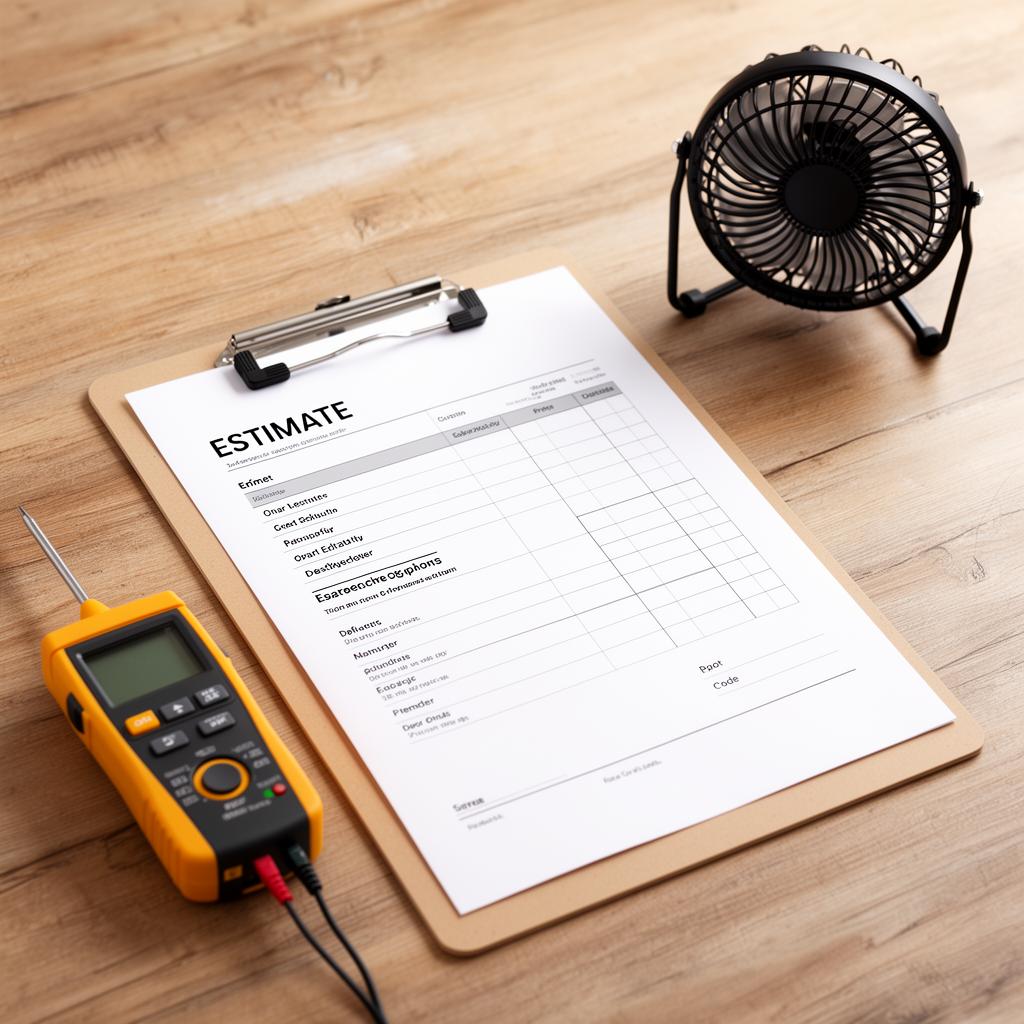
A complete scope should explain what is included, excluded, monitored, removed, billed, and handed off for restoration. Avoid fixed drying guarantees. Equipment days should be a documented range that can change with readings and site conditions.
Mitigation Contractor vs Related Professionals
Different professionals may handle different parts of a loss. Ask who is responsible for each scope rather than assuming one authorization includes everything.
| Professional | Main role | What to verify | Related guide |
|---|---|---|---|
| Water mitigation contractor | Limits additional damage and starts drying. | Scope, water category, readings, equipment, and logs. | Water mitigation company |
| Water damage restoration contractor | Repairs, rebuilds, and replaces affected finishes. | Repair scope, exclusions, handoff, and change orders. | Water damage restoration |
| Plumber | Repairs or identifies many water sources. | License, source repair, invoice, and follow-up needs. | Burst pipe water damage |
| General contractor | May handle reconstruction and broader repairs. | License, repair scope, permits, and payment terms. | Contractor checklist |
| Mold remediation company | May handle a separate mold-related specialty scope. | Assessment basis, containment, exclusions, and records. | Mold after water damage |
| Insurance adjuster | Reviews claim information for the insurer. | Claim instructions, documents requested, and communication notes. | Adjuster inspection |
Review the water mitigation company guide, mitigation versus restoration guide, and water damage restoration guide.
Insurance Documentation Checklist
Even when a contractor coordinates with your adjuster, you remain the policyholder. Keep your own copy of every document.
- Pre-work photos and video, organized by room.
- The signed scope of work and any change orders.
- Daily moisture logs, drying charts, and progress photos.
- The certificate of insurance for the contractor.
- Receipts for any out-of-pocket emergency expenses.
- All written communications with the contractor and the adjuster.
For more on the insurance side of the process, see our insurance checklist and the water mitigation insurance claim records guide. See the water damage insurance claim guide, how to document water damage guide, and adjuster inspection guide.
Assignment of Benefits and Authorization Forms
Forms may address authorization to perform work, assignment of benefits, direction to pay, responsibility for charges not paid by insurance, cancellation, access, demolition, and change order authority. Contract language and state rules vary. Ask questions or seek qualified legal advice before signing terms you do not understand.
Cost Factors to Review Before Signing
Do not rely on a firm phone price before the scope and conditions are understood. Costs may depend on the water category, materials, equipment, monitoring, access, local labor, and documentation requirements.
| Cost factor | Why it may affect the estimate | What to request in writing |
|---|---|---|
| Affected square footage | More area can require more labor and equipment. | Measurements and affected-area map. |
| Number of rooms | Separate rooms can increase setup and monitoring. | Room-by-room scope. |
| Water category | Contaminated water may require containment and disposal. | Source and category explanation. |
| Dwell time | Longer wet time may increase drying or removal needs. | Discovery time and baseline readings. |
| Extraction requirements | Volume, access, and surfaces affect equipment selection. | Method, equipment, and excluded work. |
| Materials affected | Drywall, flooring, insulation, cabinets, and contents differ. | Material condition and removal decisions. |
| Air mover count | Counts and placement can affect equipment billing. | Count, placement, and rates. |
| Dehumidifier count | Type and capacity can affect drying scope. | Type, count, placement, and rates. |
| Equipment days | Equipment may remain while monitoring shows materials are wet. | Start, daily records, and removal date. |
| Monitoring visits | Follow-up readings may change equipment and scope. | Schedule and drying logs. |
| Controlled demolition | Removal and disposal add work when materials cannot dry in place. | Items, reasons, photographs, and authorization. |
| Disposal | Contaminated or damaged materials may require different handling. | Disposal method and line items. |
| Emergency timing | Actual providers may use different after-hours rates. | Timing and written authorization. |
| Contaminated water handling | PPE, containment, cleaning, and disposal may add scope. | Category, safety, and disposal notes. |
| Local labor | Rates vary by location, access, and trade availability. | Line items and payment terms. |
| Documentation requirements | Detailed readings, logs, and photographs may require added work. | Records promised and delivery timing. |
Compare the water mitigation cost factors guide and emergency mitigation cost factors before approving additional work.
Warning signs
- Pressure to sign immediately without a written scope.
- Refusal to share licensing or insurance information.
- Estimates with no line items or no equipment plan.
- Promises about coverage before inspection, documentation, and insurer review.
- No daily moisture documentation or progress photos.
- Door-to-door solicitation immediately after a neighborhood event.
- Requests to sign a broad assignment of benefits before the scope is defined.
- Cash-only pricing with no written agreement.
- Broad demolition authority without itemized reasons or approval terms.
- A company name that does not match the invoice or scope.
- An unclear identity for the crew that will arrive.
- Suspiciously repeated reviews or unsupported local office claims.
- Verbal change orders only.
Final decision checklist
Before you sign, confirm each of these.
- The license and insurance details have been verified.
- The scope of work matches what you discussed verbally.
- The price reflects an itemized estimate, not a flat unknown.
- The change-order process is in writing and requires your approval.
- You have an understanding with your insurer about coverage and preferred contractor rules.
- You have a copy of every document you signed, not just the contractor's copy.
- You know the lead person on the job and how to reach them during work hours.
Mistakes to Avoid
When to Get Qualified Help
Professional evaluation may be needed when any of these conditions apply. Do not enter an unsafe area just to investigate or take photographs. Water Mitigation Hub does not arrange or provide contractor, mitigation, or restoration services.
Helpful References
These public references can help with certification checks, homeowner claim records, and disaster contractor safety. They are not contractor recommendations or rankings.
Frequently asked questions
- Verify the legal business name, website and contact information, license or registration where required, current insurance, written findings, written scope, water category, equipment plan, moisture readings, drying logs, exclusions, payment terms, and change order process. Water Mitigation Hub does not verify or recommend individual contractors.
- When conditions are stable and safety allows, comparing more than one written estimate can reveal differences in scope, equipment billing, monitoring, exclusions, and restoration responsibility. In an active emergency, source control and safety come first.
- Ask whether baseline and follow-up readings, equipment placement, humidity notes, progress photographs, and drying logs are included. These records may support documentation, but they do not guarantee drying results, payment, or coverage.
- Ask why removal is proposed, what alternatives were considered, and how the decision will be documented. Some materials may not be suitable for drying in place. Contract terms and state rules vary, so qualified legal advice may be appropriate when you do not understand the authorization.
- A written scope may identify affected rooms and materials, water source and category, extraction, drying-in-place decisions, removal, equipment counts and rates, monitoring visits, moisture readings, drying logs, cleaning, contents work, disposal, photographs, exclusions, change orders, payment terms, and restoration responsibility.
- Ask for a current certificate of insurance showing the legal business name, coverage type, dates, and relevant limits. Verify that the certificate matches the company on the scope and invoice. Requirements vary by location, and an insurance certificate is not a guarantee of workmanship.
- An assignment of benefits may transfer some rights to insurance payments or claim handling to a contractor. Read the assignment, direction to pay, access, demolition, cancellation, and change order terms carefully. Contract language and state rules vary, so consider asking your insurer or qualified legal help about terms you do not understand.
- Often, yes. Mitigation usually focuses on limiting additional damage and drying, while restoration usually focuses on repairs and rebuilding. Some providers handle both, but the scope should make responsibilities, exclusions, pricing, and handoff clear.
- No. A preferred vendor relationship does not guarantee coverage, reimbursement, or claim approval. Coverage depends on policy terms, cause of loss, exclusions, deductible, endorsements, documentation, and insurer review.
- No. Water Mitigation Hub is an independent informational resource. It does not inspect homes, verify every contractor, rank or recommend companies, provide mitigation or restoration, dispatch crews, provide estimates, or guarantee contractor quality, availability, pricing, or insurance outcomes.