Denied water damage claim guide
Water Damage Claim Denied: What to Review Next
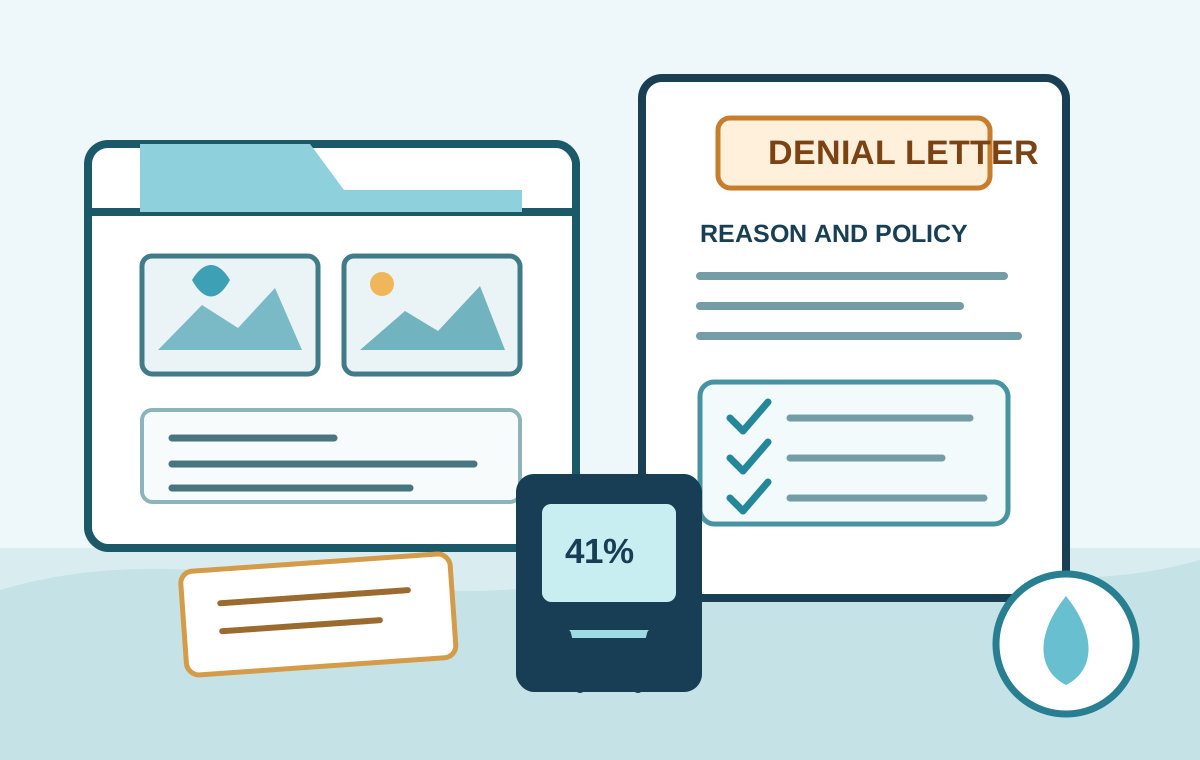
A careful homeowner guide to reviewing the denial reason, policy language, missing records, mitigation documentation, deadlines, and questions for the insurer.
Updated August 2, 2026
Answer-first intro
If a water damage claim is denied, start by reading the entire denial letter, identifying the stated reason and cited policy language, and recording every deadline. Gather missing photos, source repair records, estimates, mitigation scope, moisture readings, drying logs, receipts, and communication notes. Ask the insurer which additional information it would review and how to submit it. A claim may sometimes be reviewed again when relevant facts or records are clarified, but no outcome is guaranteed. Results depend on policy terms, facts, documentation, deadlines, applicable rules, and insurer review.
What this page is and is not
This page provides general education only. It is not legal advice, insurance advice, policy interpretation, claim filing, negotiation, property inspection, mitigation, restoration, contractor dispatch, provider matching, or a denial appeal service.
Identify what the letter actually says
A denial letter is not the only claim status. Before choosing a next step, distinguish a full denial from a partial denial, amount disagreement, continuing investigation, reservation of rights, request for information, or administrative closure. NFIP flood decisions and sewer-backup decisions can involve separate policy language and review paths.
| Letter or status | What it may mean | What to clarify |
|---|---|---|
| Full denial | The letter says no part of the submitted claim is payable. | Confirm the exact policy language, facts, and deadlines cited. |
| Partial denial | Some damage or cost may be accepted while another part is denied. | Separate covered, disputed, excluded, and still-pending items. |
| Amount disagreement | The insurer recognizes a covered loss but disputes quantity, price, or repair scope. | Compare line items, measurements, materials, depreciation, and estimates. |
| Continuing investigation or reservation of rights | The insurer has not necessarily issued a final coverage decision and may be preserving policy defenses. | Ask what remains under review, what records are needed, and when the next written update is expected. |
| Request for information | The insurer is seeking records or answers before completing review. | Respond through the stated channel, track the deadline, and keep proof of delivery. |
| Administrative closure | A file may be closed for inactivity or missing material without resolving every coverage issue. | Ask what closure means and whether the insurer will accept additional records. |
| NFIP flood denial | A Standard Flood Insurance Policy claim follows a federal process that is separate from homeowners insurance. | Use current official NFIP instructions and do not assume a state complaint or internal review pauses another deadline. |
| Sewer or drain backup decision | Coverage may depend on an endorsement, limit, exclusion, and the documented source. | Review declarations, endorsements, plumber findings, and the insurer's classification. |
Safety and documentation come first
Do not enter sewage, floodwater, electrically unsafe rooms, unstable floors, sagging ceiling areas, or spaces with suspected structural damage just to collect evidence. Photograph from a safe location when possible.
Qualified evaluation may be needed. Record what could not be accessed and why, then ask what alternative documentation the insurer will review.
Common reasons water damage claims may be denied
A denial reason is a starting point for review, not a universal rule. The policy, event facts, documentation, and insurer findings control the individual decision.
| Reason | What it may mean | Records to review |
|---|---|---|
| Floodwater or groundwater | A homeowners policy may treat outside rising water differently from an internal plumbing loss. | Denial letter, flood policy, photos of the entry point, and weather or flood records. |
| Long-term leak | The insurer may view the condition as repeated seepage or an ongoing problem rather than a sudden event. | Discovery timeline, prior photos, maintenance records, and plumber or contractor notes. |
| Wear and tear | The failed pipe, roof, appliance, seal, or material may be treated as worn or deteriorated. | Source report, failed-part photos, repair invoice, and policy wording about resulting damage. |
| Maintenance issue | The insurer may state that reasonable maintenance could have prevented the loss. | Maintenance history, inspection records, repair reports, and dated photos. |
| Sewer backup without endorsement | Backup coverage may depend on a separate endorsement and its limits. | Policy declarations, endorsements, plumber report, and backup source notes. |
| Mold limit or exclusion | Mold-related work may have a separate limit, exclusion, or condition. | Policy wording, moisture history, mitigation records, and any qualified evaluation. |
| Late notice | The insurer may state that delayed notice affected investigation or damage control. | Discovery date, notice date, communication log, and reason for any delay. |
| Insufficient documentation | The file may not clearly show the source, timing, water path, damage, or work performed. | Photos, timeline, source report, scope, readings, logs, receipts, and estimates. |
| Unclear cause of loss | The insurer may not have enough information to identify how water entered the property. | Plumber, roofer, HVAC, appliance, or other qualified source report. |
| Damage below deductible | The reviewed amount may not exceed the deductible that applies. | Written estimates, scope details, deductible page, and claim calculation. |
| Policy-specific exclusion | The denial may rely on wording that applies only to the individual policy. | Complete policy, declarations, endorsements, exclusions, and the cited letter section. |
First steps after a denial letter
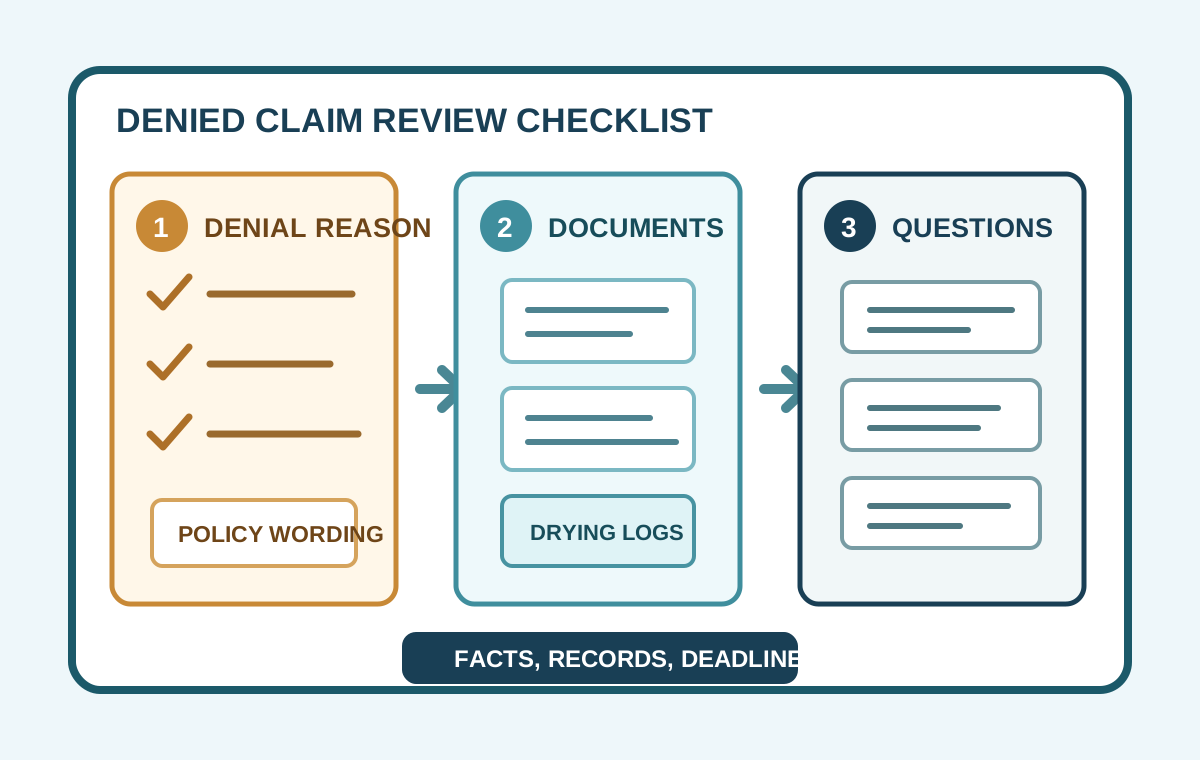
- Save the complete denial letter and every attachment.
- Confirm whether the letter is a full denial, partial denial, amount disagreement, information request, or another claim status.
- Mark the stated reason and every policy provision the insurer cites.
- Record each response, document, internal review, complaint, appraisal, or legal deadline mentioned.
- Request the complete policy, declarations, and endorsements if you do not already have them.
- Build a factual timeline from discovery through source control, mitigation, inspection, and the denial.
- Organize photos, videos, receipts, estimates, source repair notes, and contents records.
- Request the complete mitigation file, including moisture readings, drying logs, equipment records, and demolition notes.
- Separate mitigation invoices from restoration estimates and completed repair invoices.
- Ask the insurer which facts or records were missing and how additional material may be submitted.
- Save submission confirmations and keep a dated communication log.
- Consider qualified state, claim, or legal help when the role and deadline require it.
Keep the original letter unchanged. If part of the explanation is unclear, ask the insurer for the specific policy section and facts used rather than guessing what the decision means.
Denial letter review checklist
Review these items in the letter and policy file. This exact visible checklist is used for the page ItemList schema.
What a Company or Professional May Check
A qualified company or professional may check the water source, water category, affected rooms, moisture readings, drywall, flooring, carpet pad, insulation, cabinets, ceiling cavities, crawl space, attic, drying equipment, material removal decisions, and the documentation package. Water Mitigation Hub does not perform these checks, inspect property, arrange services, or send providers.
| Check item | Why it may matter | Record to request |
|---|---|---|
| Water source | Helps identify where the event began and whether source repair is separate. | Source photos, repair report, failed-part notes, and invoice. |
| Water category | Contamination can change safety, cleaning, removal, and disposal decisions. | Category notes and affected material documentation. |
| Affected rooms | Shows the visible water path and areas that may need evaluation. | Room list, wide photos, close photos, and videos. |
| Moisture readings | Can document moisture in materials that appear dry at the surface. | Initial, progress, and final readings with locations when available. |
| Drywall and ceiling cavities | Water can move behind finishes and into enclosed spaces. | Moisture map, cavity notes, access photos, and removal decisions. |
| Flooring and carpet pad | Finish flooring, padding, and subfloor can respond differently to water. | Material readings, extraction records, and dry-in-place or removal notes. |
| Insulation and cabinets | Absorbent or enclosed materials may hold hidden moisture. | Condition photos, readings, and written material decisions. |
| Crawl space and attic | Remote areas may contain the source or a hidden water path. | Safe access notes, photos, and readings. |
| Drying equipment | Equipment type, placement, and operating dates support the drying record. | Equipment list, placement notes, dates, and drying logs. |
| Material removal decisions | The reason and timing for removal can clarify the mitigation scope. | Before-removal photos, authorization, demolition notes, and disposal records. |
| Documentation package | A consistent package can explain the event and work performed. | Scope, readings, logs, photos, invoices, estimates, and completion notes. |
The contractor checklist can help you review written scopes, exclusions, documentation, and change-order terms.
Partial denials, resulting damage, and separate invoices
A decision may treat the failed pipe, appliance, roof component, or other source differently from resulting water damage. Mitigation, contents, mold-related work, and restoration can also be reviewed as separate scopes. Keep the mitigation invoice and drying file distinct from the restoration estimate so each decision can be traced.
| Claim record | What to review |
|---|---|
| Partial denial | Create separate lists for accepted damage, denied damage, pending items, and the reason given for each. |
| Resulting damage | Ask whether the letter treats the failed item separately from water damage caused by that failure. |
| Mitigation invoice | Compare line items with authorization, equipment records, monitoring visits, demolition notes, and the work actually documented. |
| Drying logs | Request initial, daily or progress, and final readings with material and location details when available. |
| Restoration estimate | Keep repair quantities, materials, depreciation, code items, exclusions, and change orders separate from emergency mitigation. |
For a deeper comparison, review the mitigation versus restoration insurance guide and the water mitigation report guide.
Documents that may help clarify a denied claim
Relevant records can clarify source, timing, water path, mitigation decisions, and costs. They do not guarantee coverage or a changed decision.
| Document | What it may show | Organization note |
|---|---|---|
| Photos and videos | Source, water path, affected rooms, materials, contents, temporary repairs, and conditions before removal. | Label by date and room. |
| Date and time discovered | When the water or damage was first observed and what happened next. | Use exact times when known and state when a time is estimated. |
| Source repair invoice | Diagnosis, work performed, failed part, repair date, and provider details. | Keep source repair separate from mitigation and restoration. |
| Plumber report | Pipe, drain, supply line, fixture, or sewer findings. | Ask for factual cause and repair notes without coverage opinions. |
| Roofer report | Roof, flashing, storm, penetration, or maintenance findings. | Save inspection photos and the repair scope. |
| HVAC notes | Condensate, drain pan, duct, or equipment findings. | Keep service dates and diagnosis details. |
| Appliance repair notes | Appliance, hose, valve, drain, or supply-line findings. | Photograph model and failed part when safe. |
| Mitigation scope | Extraction, drying, cleaning, containment, and material removal work. | Request inclusions, exclusions, rates, and signed authorizations. |
| Moisture readings | Measured locations and changes during drying. | Request the complete series when available. |
| Drying logs | Equipment, visits, environmental conditions, readings, and drying progress. | Keep every page, not only the final entry. |
| Equipment list | Equipment type, count, placement, start date, and removal date. | Compare it with the invoice and drying log. |
| Demolition photos | Materials before, during, and after controlled removal. | Keep authorization and disposal notes with the photos. |
| Receipts and estimates | Temporary measures, source repair, mitigation, restoration, and contents expenses. | Keep scopes separate and note exclusions. |
| Communication log | Names, dates, instructions, submissions, and follow-up questions. | Save confirmation numbers and upload receipts. |
| Prior maintenance records | Relevant service, repair, inspection, or replacement history. | Use only factual records related to the stated denial reason. |
Denial reason table
| Denial reason | What it may mean | Documents to review | Question to ask insurer |
|---|---|---|---|
| Floodwater | The event may be classified as outside rising water rather than an internal leak. | Homeowners policy, flood policy, entry-point photos, and flood records. | Which policy wording and facts support the floodwater classification? |
| Long-term leak | The insurer may believe seepage occurred over an extended period. | Timeline, plumber report, prior photos, moisture records, and maintenance history. | What evidence was used to determine the duration? |
| Wear and tear | The failed source may be treated as deterioration. | Failed-part photos, repair report, invoice, and resulting-damage wording. | Does the letter address resulting water damage separately from the failed item? |
| Maintenance | The insurer may state that upkeep or repair was delayed. | Maintenance records, prior service invoices, inspection notes, and dated photos. | Which maintenance condition is cited and what evidence supports it? |
| Sewer backup | A separate endorsement may be required or a limit may apply. | Declarations, endorsements, plumber report, and backup documentation. | Does the policy include a sewer or drain backup endorsement? |
| Mold | A separate exclusion, sublimit, or condition may be cited. | Policy wording, moisture history, mitigation records, and mold-related scope. | Which mold provision applies to the reviewed work? |
| Late notice | The insurer may say delayed reporting affected review. | Discovery date, notice date, communication log, and mitigation timeline. | What notice requirement and deadline does the insurer rely on? |
| Missing documentation | The current file may not explain source, timing, damage, or work. | Photos, source report, scope, readings, logs, invoices, and estimates. | What specific records would the insurer review if submitted? |
| Unclear source | The cause of loss may not be established. | Qualified source report, repair invoice, photos, and event timeline. | What source information is still needed? |
| Deductible | The reviewed amount may be lower than the applicable deductible. | Written estimate, calculation, declarations, and deductible terms. | How was the reviewed amount and deductible calculated? |
Questions to ask your insurer after denial
| Question | Why to ask |
|---|---|
| What specific policy language applies? | Request the exact section, endorsement, exclusion, condition, or deductible relied on. |
| What facts led to the denial? | Clarifies the source, timing, maintenance, contamination, documentation, or cost findings used. |
| Are any parts of the claim covered? | Some letters may separate source repair, mitigation, contents, or resulting damage. |
| What documents are missing? | Creates a specific record list instead of guessing what the file needs. |
| Can the claim be re-reviewed if new information is submitted? | Confirms whether the insurer has an internal process without promising a different outcome. |
| What deadlines apply? | Identifies policy, submission, internal review, complaint, or other time limits. |
| How should additional documents be submitted? | Confirms portal, email, file format, claim number, and confirmation method. |
| Is there an internal review or state complaint process? | Identifies the insurer's stated process and the appropriate state consumer resource. |
Questions to ask a mitigation or restoration company
| Question | Why to ask |
|---|---|
| Can I get copies of moisture readings? | Ask for dates, locations, materials, and the complete reading series when available. |
| Can I get complete drying logs? | Logs may show equipment, visits, environmental conditions, and drying progress. |
| Can I get before and after photos? | Images can clarify original conditions, removed materials, and completed mitigation. |
| Can I get a written scope with exclusions? | Separates included work from source repair, restoration, contents, mold, or other scopes. |
| Can I get equipment count and dates? | Request equipment type, count, placement, start date, and removal date. |
| Can I get demolition notes and material photos? | The record may explain what was removed, why, and under what authorization. |
| Can I get mitigation and restoration invoices separately? | Separate invoices make emergency work and later repairs easier to understand. |
| Can I get source repair documentation? | Ask for any source notes they have, while recognizing another trade may have performed the repair. |
Post-denial working checklists
Missing documentation checklist
- Photos and videos organized by room and date
- A factual discovery and response timeline
- Source repair invoice or qualified provider report
- Mitigation scope and work authorization
- Moisture readings and drying logs
- Equipment list and operating dates
- Demolition photos and material removal notes
- Receipts, estimates, invoices, and communication records
Insurer questions checklist
- Which exact policy language applies?
- Which facts led to the denial?
- Are any parts of the claim still under review or covered?
- What records are missing?
- Can new information be submitted for re-review?
- What deadlines and submission methods apply?
Contractor documentation checklist
- Initial, daily, and final moisture readings when available
- Complete drying logs
- Before and after photos
- Written scope with exclusions
- Equipment count, placement, and dates
- Demolition notes and material photos
- Separate mitigation and restoration invoices
- Source repair documentation when available
Record organization checklist
- Name files with the date, room, and document type.
- Keep the denial letter and policy excerpts in the main claim folder.
- Separate source repair, mitigation, restoration, and contents records.
- Save upload confirmations and sent email copies.
- Maintain a communication log with names, dates, and next steps.
- Keep originals and a backed-up digital copy when practical.
Before repairs start checklist
- Photograph affected rooms and materials when safe.
- Confirm the water source has been addressed or isolated.
- Save moisture readings and drying completion records when available.
- Ask whether the insurer needs an inspection or additional photos.
- Separate urgent safety work from permanent repair decisions.
- Keep written repair estimates, exclusions, and material details.
Invoice separation checklist
- Keep source repair separate from water mitigation.
- Keep extraction, drying, monitoring, and limited demolition identifiable.
- Keep contents work separate from building work.
- Keep restoration and reconstruction estimates separate from mitigation invoices.
- Match equipment dates and counts to drying logs and invoices.
- Save written change orders and approval records.
Claim follow-up checklist
- Use the claim number on every submission.
- Send records through the insurer's stated channel.
- Keep upload, email, or mailing confirmation.
- Record the date, contact name, question, answer, and next step.
- Ask whether any item remains pending or under investigation.
- Track every stated deadline without assuming another process pauses it.
What not to do after a denial
| Do not | Why it can cause problems | Better approach |
|---|---|---|
| Do not throw away documents | Missing letters, records, receipts, or photos can make the file harder to review. | Keep originals and a backed-up copy. |
| Do not alter dates or facts | Changed records can create inconsistencies. | Use factual notes and identify estimates as estimates. |
| Do not exaggerate damage | Claims should reflect observed conditions and supported records. | Describe what you saw and what qualified reports found. |
| Do not ignore deadlines | Policy, insurer, complaint, or legal time limits may apply. | Record each deadline and seek qualified guidance when needed. |
| Do not sign unclear contractor paperwork | Open-ended scope, rates, exclusions, or assignments can create confusion. | Review written terms and ask questions before signing. |
| Do not assume the denial is automatically final | Some insurers may review new, relevant information. | Ask what re-review process and records may apply. |
| Do not assume the denial will be reversed | Policy terms, facts, deadlines, and insurer review still control the outcome. | Keep expectations cautious and records complete. |
| Do not begin major repairs without documentation where practical | Later work can hide moisture, damage, or removed materials. | Photograph first, follow safety needs, and ask about insurer instructions. |
When qualified help may be needed
Different facts may call for different help. A public adjuster, attorney, state insurance department, contractor, mitigation company, plumber, roofer, or HVAC technician may be relevant. Licensing, role, cost, and scope depend on location and the issue. Water Mitigation Hub does not recommend a specific professional.
| Professional or resource | What the role may address |
|---|---|
| State insurance department | Consumer guidance, insurer complaint information, licensing records, or state process questions. |
| Public adjuster | Policyholder-side claim preparation or estimating where licensed and appropriate. |
| Attorney | Legal rights, contract questions, deadlines, or disputes that require legal advice. |
| Water mitigation company | Scope, readings, drying logs, equipment, demolition, and mitigation invoice records. |
| Contractor or restoration company | Repair scope, estimates, exclusions, change orders, and reconstruction records. |
| Plumber, roofer, or HVAC technician | Qualified source diagnosis and repair documentation for the relevant system. |
Review paths are not interchangeable
| Path | Possible role | Important limit |
|---|---|---|
| Internal re-review | The insurer may reconsider new or corrected records under its own process. | Ask for submission rules, required records, and written confirmation. A different outcome is not guaranteed. |
| State insurance department complaint | A state regulator may provide consumer guidance or review insurer conduct within its authority. | Use the official department for the state involved. A complaint may not pause policy or legal deadlines. |
| Appraisal | Some policies use appraisal for amount-of-loss disputes, not every coverage dispute. | Read the policy and understand cost, scope, and deadline effects before agreeing. |
| Public adjuster | A licensed public adjuster may assist a policyholder with claim preparation where permitted. | Check licensing, fees, contract terms, and role with the state regulator. |
| Attorney | Qualified legal advice may be appropriate for rights, disputed policy interpretation, contracts, or legal deadlines. | Only a qualified lawyer can advise on an individual legal deadline or legal strategy. |
| NFIP appeal | FEMA administers a distinct appeal process for qualifying NFIP flood denials. | Follow current FloodSmart or FEMA instructions. It is not the same as a homeowners re-review or state complaint. |
There is no universal deadline for every denied water damage claim. An internal re-review or state complaint may not pause a policy, appraisal, NFIP, contractual, or legal deadline. Only qualified legal advice can address an individual legal deadline.
NFIP flood denials follow a separate federal path
A FEMA-administered NFIP appeal is not the same as a homeowners insurer re-review, private flood policy process, sewer-backup claim, or state insurance complaint. Use the current official FloodSmart instructions for the policy and decision involved. Do not assume one process pauses a deadline in another process.
Cost and claim review factors
Cost and claim review may depend on the cause, water category, affected area, dwell time, materials, extraction, drying equipment, demolition, sewage or mold concerns, provider timing, documentation, restoration scope, deductible, limits, and policy wording. For a separate cost breakdown without guaranteed prices, see the water mitigation cost guide.
| Factor | Why it may matter | Record to keep |
|---|---|---|
| Cause of loss | The source and whether the event was sudden, ongoing, excluded, or unclear can affect review. | Source report and denial letter. |
| Water category | Contamination can change safety, cleaning, removal, and disposal scope. | Category notes and material records. |
| Affected area | Room count, water path, and hidden spaces can change mitigation and repair scope. | Room list, photos, and moisture map. |
| Dwell time | Longer wet time may increase material damage and drying difficulty. | Discovery and mitigation timeline. |
| Materials affected | Drywall, insulation, flooring, cabinets, carpet pad, and contents respond differently. | Material inventory and condition notes. |
| Extraction and drying equipment | Water amount, access, and drying conditions influence equipment needs. | Equipment list, placement, dates, and drying logs. |
| Demolition | Removal may depend on contamination, damage, access, and drying feasibility. | Written scope, authorization, photos, and disposal notes. |
| Sewage or mold concerns | Contamination or suspected growth may require added safety and separate evaluation. | Professional notes and separate scopes when used. |
| Emergency timing | After-hours work from actual providers may affect charges. | Work authorization, rate details, and invoice. |
| Documentation quality | Clear records can help explain the event and work performed. | Organized claim file and communication log. |
| Restoration scope | Repairs and reconstruction may be separate from mitigation. | Separate estimates, exclusions, and change orders. |
| Deductible and limits | The policy may apply deductibles, sublimits, endorsements, or exclusions. | Declarations, endorsements, denial calculation, and policy wording. |
Scenario table
These examples show records and questions that may be relevant. They are not coverage conclusions or promises.
| Scenario | Possible issue | Records to gather | Question to ask |
|---|---|---|---|
| Burst pipe denied | Timing, wear and tear, maintenance, or resulting damage may be disputed. | Plumber report, failed-part photos, timeline, mitigation records, and policy wording. | What facts and policy terms support the denial? |
| Appliance leak denied | The appliance failure, slow leak, or maintenance history may be questioned. | Repair note, model information, failed-part photos, timeline, readings, and logs. | Is the failed appliance treated separately from resulting water damage? |
| Ceiling leak denied | The source, duration, roof condition, plumbing, or HVAC cause may be unclear. | Safe photos, roofer, plumber, or HVAC report, cavity readings, and prior records. | What source evidence is still needed? |
| Flooded basement denied | Outside floodwater, groundwater, seepage, backup, or sump failure may be classified differently. | Entry-point photos, flood policy, plumbing notes, weather records, and endorsements. | Which water source classification and policy provision apply? |
| Sewer backup denied | A backup endorsement may be absent, limited, or disputed. | Declarations, endorsements, plumber report, category notes, and cleanup scope. | Does any sewer or drain backup coverage apply? |
| Roof leak denied | Wear, maintenance, storm timing, or interior resulting damage may be reviewed separately. | Roofer report, weather information, photos, repair estimate, and interior mitigation records. | Does the letter separate roof repair from interior water damage? |
| Mold after water damage denied | A mold exclusion, sublimit, timing issue, or separate scope may apply. | Policy wording, moisture timeline, drying records, and any qualified mold evaluation. | Which mold provision applies to each part of the scope? |
| Long-term leak denied | The insurer may believe seepage continued beyond a policy condition. | Discovery timeline, plumber report, prior photos, maintenance records, and moisture history. | What evidence was used to determine leak duration? |
Helpful references
FAQ
Denied water damage claim FAQ
- A denial may cite floodwater, long-term leakage, wear and tear, maintenance, sewer backup terms, mold limits, late notice, insufficient documentation, an unclear source, a deductible, or another policy-specific exclusion. Read the letter closely and ask which facts and policy language support the decision.
- Save the complete denial letter, identify the stated reason and cited policy language, record any deadlines, organize your photos and records, and ask the insurer what additional information it would review. Keep communication factual and written where possible. This does not guarantee a different outcome.
- Yes. A full denial says the submitted claim is not payable, while a partial denial may accept some damage or costs and deny others. Separate accepted, denied, pending, and disputed items, then review the reason and policy language given for each part.
- Sometimes an insurer may re-review a claim when new source information, documentation, estimates, policy details, or corrected facts are submitted through its stated process. Availability, deadlines, requirements, and outcomes depend on the policy, facts, insurer procedures, and applicable rules. A re-review does not guarantee reversal.
- Useful records may include photos, videos, a discovery timeline, source repair reports, plumber, roofer, HVAC, or appliance notes, mitigation scope, moisture readings, drying logs, equipment records, demolition photos, receipts, estimates, invoices, prior maintenance records, and a communication log.
- A policy may limit or exclude repeated seepage, long-term leakage, wear, deterioration, or maintenance-related conditions. The exact wording and the evidence about timing matter. Review the cited policy section, timeline, source report, maintenance records, and any moisture documentation with the insurer or qualified help when needed.
- Outside rising water and groundwater are often handled differently from internal plumbing losses, and a separate flood policy may be relevant. Classification depends on the event, policy wording, and insurer review. Ask which facts support the water-source classification and review any flood policy you have.
- No. An NFIP appeal is a federal process for qualifying Standard Flood Insurance Policy decisions. A homeowners insurer's internal review, a private flood policy process, a sewer-backup claim, and a state insurance complaint are different paths. Follow current official instructions for the policy involved.
- Not necessarily, but coverage is not guaranteed. A letter may address the entire claim or separate source repair, emergency mitigation, contents, mold-related work, and restoration. Ask whether any parts remain covered or under review and request the calculation and policy language used.
- Yes. Ask for the complete drying logs, moisture readings, equipment list, placement and operating dates, photos, written scope, demolition notes, invoices, exclusions, and completion record when available. These records may help explain the mitigation work but do not determine insurance coverage.
- A state insurance department may be useful when you need consumer guidance, insurer complaint information, licensing records, or an explanation of the state's process. Start with the appropriate department's official website and follow its instructions. The department does not guarantee a particular claim outcome.
- Qualified legal advice may be appropriate when a dispute involves legal rights, policy interpretation, contract terms, suspected unfair conduct, a lawsuit, or an individual legal deadline. Only a qualified lawyer can advise on legal strategy or a deadline for a particular situation.
- No. Water Mitigation Hub is an independent informational homeowner resource. It does not file appeals, negotiate claims, interpret policies, provide legal or insurance advice, inspect property, provide mitigation or restoration, rank contractors, or guarantee claim outcomes.
Related guides
More insurance and water damage guides
- Water Damage Insurance Claim
- water mitigation insurance claim records
- Insurance Checklist
- How to Document Water Damage
- Questions to Ask Insurance
- Water Damage Adjuster Inspection
- Does Homeowners Insurance Cover Water Mitigation?
- Does Insurance Cover Water Damage Cleanup?
- Mitigation vs Restoration Insurance
- Water Mitigation Report
- Contractor Checklist
- Water Mitigation Cost