Compare phases
Water Mitigation vs Restoration: What Is the Difference?
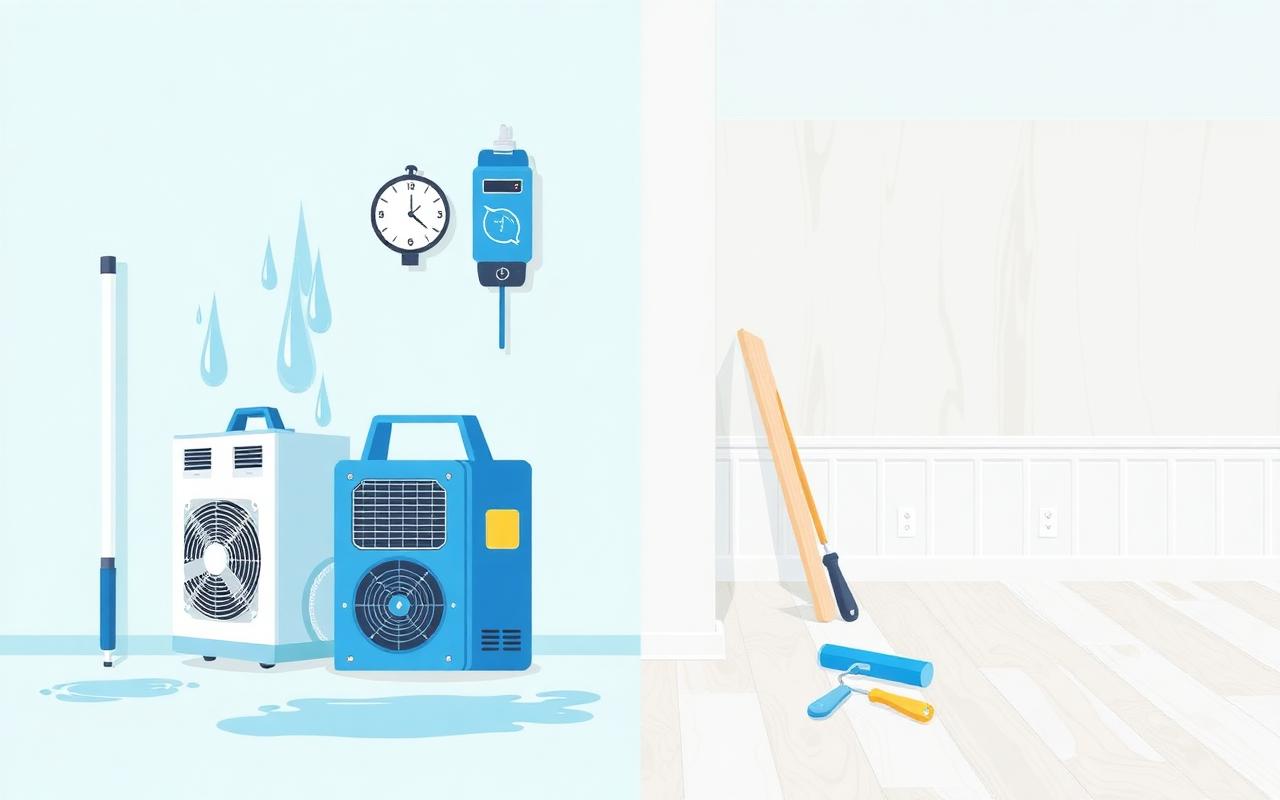
Mitigation and restoration are connected but different. Mitigation stops further damage and dries the structure. Restoration repairs or rebuilds damaged materials after drying is complete.
What this page is, and is not
What is the difference between water mitigation and restoration?
Water mitigation is the damage control phase after water enters a home. It usually includes extraction, moisture inspection, drying, dehumidification, monitoring, controlled demolition when needed, and documentation. Water restoration is the repair and rebuild phase that comes after the structure is dry. It may include drywall, flooring, paint, trim, cabinets, and finish work.
The two phases are connected. A good written scope keeps them clearly separated so the homeowner, the contractor, and the insurer all see the same line items.
Water Mitigation vs Restoration
The table below sets the two phases side by side. Use it as a reference when reviewing an estimate or comparing local companies.
| Topic | Water mitigation | Water restoration |
|---|---|---|
| Main goal | Stop further damage and dry the structure. | Repair and rebuild materials after drying. |
| When it happens | Right after water enters the home. | After the structure reaches a documented dry standard. |
| Common tasks | Inspection, extraction, drying, dehumidification, monitoring, controlled demolition, documentation. | Drywall, flooring, paint, trim, cabinets, finish work. |
| Main equipment | Extractors, air movers, dehumidifiers, moisture meters, sometimes thermal imaging. | Hand tools, saws, paint and finish tools, flooring tools. |
| Documentation | Photos, moisture logs, equipment days, scope of work, demolition notes. | Repair scope, material specs, change orders, completion photos. |
| Insurance review | Why drying, extraction, and demolition were needed. | Repair or replacement costs by line item. |
| Typical endpoint | Final moisture readings confirm the dry standard. | Rebuild is complete and the home is returned to a livable finish. |
| Who may perform it | A water damage company with mitigation training. | The same company, a restoration contractor, or a general contractor. |
| What homeowners should ask | What is the dry standard and how will it be documented? | What materials will be replaced and what is excluded? |
Which Comes First, Mitigation or Restoration?
Mitigation usually comes first because the home needs to be dry and stable before any repair work starts. Restoration before drying can trap moisture inside walls or under flooring and lead to future problems, including microbial growth. EPA mold and moisture guidance encourages drying wet materials quickly and controlling indoor moisture for this reason.
There are exceptions. A safety hazard, a structural concern, or a property-specific inspection can change the order of certain tasks. Those decisions belong in a written scope from a qualified local company, not a verbal agreement.
What Water Mitigation Usually Includes
Mitigation is everything done to stop further damage and return the structure to a documented dry standard. Industry training such as IICRC Water Damage Restoration Technician and IICRC Applied Structural Drying covers this kind of assessment and drying work.
- Inspection and safety check
- Water extraction
- Moisture mapping
- Structural drying
- Dehumidification
- Daily monitoring
- Controlled demolition when needed
- Photos and documentation
- Restoration handoff
For a step-by-step view, see the where mitigation ends and restoration begins guide, the water mitigation services page, and the emergency water mitigation guide.
What Water Restoration Usually Includes
Restoration is the repair and rebuild phase. It picks up after the structure is dry and brings the home back to a livable finish. Some water damage companies handle both mitigation and restoration. Others dry the structure and then hand off to a different restoration company or general contractor.
- Drywall repair
- Flooring replacement
- Painting
- Trim and baseboards
- Cabinet repair or replacement
- Contents repair when included
- Rebuild coordination
- Final finishing
Why the Written Scope Should Separate Mitigation and Restoration
A written scope should separate emergency mitigation, drying equipment, demolition, monitoring, documentation, and repair work. This helps homeowners compare estimates side by side and helps insurance review the line items on the claim. Bundling both phases under a single vague total makes both jobs harder.
- Mitigation scope
- Restoration scope
- Materials removed
- Materials repaired
- Equipment days
- Moisture logs
- Photos
- Exclusions
- Change orders
- Payment terms
How Insurance May View Mitigation and Restoration
Insurance may review both phases differently. Mitigation documentation can support why drying, extraction, and demolition were needed. Restoration estimates show repair or replacement costs by line item. National Association of Insurance Commissioners guidance for homeowners encourages documenting damaged property, taking photos and videos, and contacting the insurer with policy information.
Coverage depends on the policy, cause of loss, exclusions, deductible, and the insurer's review. Strong documentation supports the claim but does not guarantee coverage. For more on what to gather and review, see the insurance checklist, the water mitigation cost page, and our disclaimer.
Does Mitigation Cost Less Than Restoration?
Not always. Mitigation can be smaller than restoration on some losses, but drying equipment, demolition, contaminated water, and emergency response can raise the mitigation total. Restoration can grow quickly if flooring, cabinets, drywall, or finishes need replacement across multiple rooms.
| Situation | Which phase may cost more | Why |
|---|---|---|
| Small clean-water leak | Restoration may cost more | Drying can wrap quickly while drywall and paint still need labor. |
| Finished basement | Either phase can lead | Large drying load on mitigation, large rebuild load on restoration. |
| Hardwood floor damage | Restoration often costs more | Specialty drying helps in some cases, but replacement is often the larger line item. |
| Sewage backup | Mitigation often costs more | Containment, PPE, antimicrobials, and contaminated material disposal add scope. |
| Water inside walls | Either phase can lead | Hidden moisture extends drying and demolition; rebuild covers drywall and finish. |
| Multiple rooms affected | Either phase can lead | Equipment days grow on one side, square footage of repair grows on the other. |
Common Mistakes Homeowners Make With These Terms
The terms get mixed up often. The list below covers the confusion that shows up most in homeowner questions and in written scopes.
Assuming drying includes full repair
Mitigation ends when the structure is dry. Drywall, flooring, paint, and trim usually fall under the restoration scope.
Assuming restoration can start before drying
Closing walls or installing finishes before materials are dry can trap moisture and lead to future problems.
Signing one vague scope for both phases
A bundled scope makes it hard to compare estimates and harder for an adjuster to review line items.
Not asking who handles documentation
Photos, moisture logs, and a written scope often matter more than verbal updates during the claim review.
Not asking what is excluded
Exclusions are common in both phases. Knowing them upfront prevents surprise charges later.
Assuming insurance pays both phases automatically
Coverage depends on the policy, cause of loss, exclusions, deductible, and the insurer's review.
Confusing mold remediation with restoration
Mold remediation is its own scope with containment and HEPA cleaning. It is not the same as repair and rebuild work.
If water is near electricity, sewage, a gas smell, or visible structural damage, stay out of the area and contact emergency services or a qualified professional before any cleanup begins.
Questions to Ask Before Approving Mitigation or Restoration Work
Asking the same questions on every estimate is the simplest way to compare bids fairly. The list below works whether one company handles both phases or two companies divide the work.
| Question | Why it matters |
|---|---|
| Is this estimate for mitigation, restoration, or both? | Confirms how the scope is structured and what the price covers. |
| What is included in the mitigation scope? | Sets clear expectations for extraction, drying, monitoring, and documentation. |
| What is included in the restoration scope? | Lists the rebuild work, materials, and finishes that will be billed. |
| What materials will be removed? | Demolition decisions affect cost, timeline, and the rebuild plan. |
| What materials will be repaired or replaced? | Helps compare estimates fairly and supports the insurance review. |
| How will drying be documented? | Moisture logs and equipment days are common in claim reviews. |
| When does the mitigation phase end? | Defines the dry standard and the handoff point to restoration. |
| Who handles the rebuild estimate? | Some companies do both phases; others hand off to a contractor. |
| What is excluded from each scope? | Exclusions prevent surprise charges and clarify responsibility. |
| How are change orders approved? | Avoids unapproved work being added during the project. |
| Who communicates with insurance? | Sets expectations for documentation, calls, and scope sharing. |
For more on vetting a company, see the contractor checklist and the find local help guide.
Helpful References
These references are used for general education about water damage cleanup, drying, moisture control, restoration terminology, and claim preparation. They are not contractor recommendations or guarantees of coverage.
Frequently Asked Questions
Water mitigation vs restoration questions
- Water mitigation is the damage control phase that limits further damage and dries the structure. Water restoration is the repair and rebuild phase that follows after the structure reaches a documented dry standard.
- Almost always. Mitigation comes first because materials must be dry and stable before repairs can be completed safely. Exceptions depend on safety conditions and a property-specific inspection.
- Water extraction is part of mitigation. Standing water needs to be removed before drying equipment can work efficiently and before any repair work begins.
- No. Structural drying and dehumidification fall under the mitigation phase. Restoration begins after the structure reaches the dry standard documented during mitigation.
- Yes. Many water damage companies handle both phases and invoice them separately. Others stop at the dry standard and hand off to a different restoration company or general contractor.
- It can. Insurers commonly review mitigation documentation to support why drying and demolition were needed, and restoration estimates to review repair costs. Coverage depends on your policy, cause of loss, exclusions, deductible, and the insurer's review.
- A separated estimate makes it easier to compare bids, easier for an adjuster to review line items, and easier for the homeowner to see what each phase actually includes.
- No. Mold remediation is a separate scope that may include containment, HEPA cleaning, and material removal. It is sometimes needed alongside mitigation or restoration, but it is not the same as repair and rebuild work.
- No. Water Mitigation Hub is an independent online resource for homeowners. We do not perform mitigation, restoration, or emergency dispatch. We publish guidance you can use with any qualified local water damage company you choose.