Cost guide
Water Mitigation Cost: What Affects the Price?
Water mitigation cost depends on the water source, water category, affected area, material type, drying equipment, time water has been sitting, monitoring visits, documentation, and local labor rates. This guide explains each factor in plain language so you can review a written estimate with more confidence.
Updated September 21, 2026
New: Free Water Mitigation Cost Estimator
Try nowAnswer 9 questions for an educational cost-pressure tier and the scope questions to ask. This is not a quote or equipment plan.
Water Mitigation Cost Quick Answer
How much does water mitigation cost? There is no single trustworthy national mitigation-only price because scopes vary. Published water-damage restoration benchmarks provide context: Angi reports $450 to $16,000 and $3 to $7.50 per square foot, while HomeAdvisor reports $1,383 to $6,369 and $3.50 to $7.50 per square foot. These broader restoration figures are not house-specific mitigation quotes.
What this page is, and is not
Published Water Damage Cost Benchmarks
Published cost data can help a homeowner sense-check a written scope, but the sources below describe water damage restoration rather than a standardized mitigation-only job. Restoration can include cleanup, material removal, repair, or other work that may sit outside a mitigation scope.
| Source | Source date | Scope | Published figure | Methodology | Important caveat |
|---|---|---|---|---|---|
| Angi | Updated September 11, 2026 | Water damage restoration, including cleanup and repair scope | $450-$16,000 broad published range; $3-$7.50 per sq. ft. by size | Based on 1,500 verified projects reported by Angi Pros. | Restoration can include work beyond mitigation-only drying and damage control. This is context, not a mitigation quote. |
| HomeAdvisor | Updated June 17, 2026 | Water damage restoration | $1,383-$6,369 typical range; $3.50-$7.50 per sq. ft. depending on water category | The source page says it was updated using automation technology and reviewed for accuracy by a HomeAdvisor editor. | Restoration may include repairs beyond mitigation. Angi and HomeAdvisor figures should not be averaged as independent datasets. |
| Forbes Home | Audited & verified October 3, 2024 | Emergency home restoration when large areas are affected | Around $5 per sq. ft. | Contractor Q&A guidance in an audited and verified article. | Older reference. The article says this is for making the home livable and excludes rebuilding it to its former condition. It is not a mitigation-only quote. |
Sources: Angi, HomeAdvisor, and Forbes Home.
How to use published benchmarks
- Mitigation vs restoration: mitigation usually focuses on limiting further damage, extraction, moisture control, drying, monitoring, and documentation. Restoration can extend into repair or rebuild work, so a restoration benchmark should not be relabeled as a mitigation-only price.
- Why published figures differ: sources may use different project scopes, water categories, affected areas, labor markets, repair assumptions, and data collection methods. Angi and HomeAdvisor figures are also closely related and should not be averaged as if they were independent national datasets.
- What cost per square foot can tell you: it can provide a rough size reference. It cannot show hidden moisture, contamination, equipment days, controlled demolition, access difficulty, source repair, contents work, or reconstruction.
- Why an onsite written scope can differ: a qualified provider can inspect the actual rooms, materials, moisture conditions, equipment needs, exclusions, and local labor conditions. Those project-specific findings can move a written scope above or below a published national benchmark.
The cost-pressure estimator on this page does not calculate these published dollar ranges. It uses homeowner-selected scope factors to show relative cost pressure and questions to ask before reviewing an onsite written estimate.
What affects water mitigation cost the most?
A water mitigation estimate is not a single line item. It is the sum of many smaller decisions about safety, scope, equipment, and time. The factors that move the price the most are usually:
- Water category, including clean, gray, and contaminated water.
- Affected square footage across rooms and floors.
- How long the water has been sitting before extraction begins.
- Type of materials affected, including flooring, drywall, and cabinets.
- Drying equipment plan, including air movers and dehumidifiers.
- Controlled demolition needed to reach hidden moisture.
- Monitoring visits and the number of drying days.
- Sewage, mold, or contamination risk that adds containment and disposal.
- Local labor rates and current storm activity in the area.
- Insurance documentation requirements for your specific claim.
Water Mitigation Cost Factors
The table below shows the most common cost drivers in a water mitigation estimate, why each one affects price, and a clear question you can ask the company.
| Cost factor | Why it may affect cost | What to request in writing |
|---|---|---|
| Water source | Plumbing, appliance, roof, sewage, floodwater, or unknown sources may require different trades and precautions. | What source was identified, has it stopped, and is source repair separate? |
| Water category | Clean, gray, or contaminated water changes safety steps, PPE, disposal, and cleaning. | What category is this water and how was that decided? |
| Affected square footage | Larger areas mean more extraction, more equipment, and more drying days. | What rooms and how many square feet are included in the scope? |
| Rooms or drying zones | Several rooms, floors, or separated zones may add setup, monitoring, and documentation. | Which rooms and zones are included and how were boundaries measured? |
| Standing-water volume | Depth, surface type, access, and disposal may change extraction work. | What extraction method, area, and equipment are included? |
| Extraction requirements | Surface type, access, water volume, contamination, and disposal may change labor and equipment. | Which areas and materials will be extracted, by what method, and how will the work be documented? |
| Dwell time | Water that has been sitting longer saturates deeper and raises microbial risk. | When was the water first found and when did extraction begin? |
| Flooring materials | Carpet, pad, hardwood, laminate, tile, and concrete all dry or fail differently. | Which flooring will be dried in place and which will be removed? |
| Wall and ceiling materials | Drywall, plaster, and insulation hold moisture in ways that change the plan. | Will walls be flood cut, drilled for airflow, or dried in place? |
| Hidden moisture | Water behind finishes or inside cavities may add inspection, access, and monitoring. | Which concealed areas and unaffected comparison materials will be checked? |
| Drying equipment | Air mover count, dehumidifier size, and run time all affect the invoice. | How many air movers and dehumidifiers will be used and for how long? |
| Equipment count and days | Each documented unit and operating period may affect equipment charges. | Will the estimate list units, placement, setup dates, adjustments, and pickup dates? |
| Dehumidification | Larger or refrigerant versus desiccant units affect rental and energy cost. | What size and type of dehumidifier fits this loss? |
| Moisture inspection | Meters and thermal imaging guide the scope and protect against hidden moisture. | Will daily moisture readings and photos be shared with me? |
| Demolition and disposal | Removing wet materials, bagging, hauling, and dump fees add up. | What materials are scheduled for removal and how is disposal billed? |
| Containment | Isolation materials, air-control equipment, setup, and removal may be separate. | Why is containment proposed and which area and dates are included? |
| Cleaning where appropriate | Water condition and suitable remaining surfaces may affect cleaning labor and materials. | What surfaces, methods, and products are included? |
| Monitoring visits | Daily checks verify drying progress and adjust the equipment plan. | How often will a technician return and document readings? |
| Insurance documentation | Photos, moisture logs, and scope notes take time and may be itemized. | Will I receive a full documentation package for my claim? |
| Emergency response timing | After hours, weekend, and holiday dispatch can carry priority charges. | Are there after hours or emergency response fees in this estimate? |
| Local labor rates | Labor cost varies by region, demand, and storm activity. | Is this estimate based on standard rates or storm event rates? |
| Storm demand | Provider-specific labor, travel, and equipment availability may vary after widespread events. | Are any storm-event, travel, or demand-related charges included? |
Common Water Damage Situations and Cost Pressure
The table below uses simple cost pressure labels rather than dollar amounts. Real estimates depend on the specific scope, materials, and your location. Use this only to set expectations before a written estimate.
| Situation | Typical cost pressure | Why the scope may change | Important uncertainty |
|---|---|---|---|
| Small clean supply-line leak in one area | Lower | Limited visible area and simpler materials may narrow the scope | Hidden moisture or an unstopped source may change the tier |
| Burst pipe affecting one room | Moderate | Water volume and wall, floor, or cabinet spread may add extraction and drying | Pipe location, duration, and concealed spread require onsite findings |
| Appliance overflow | Moderate | Cabinets, toe kicks, flooring, pad, and subfloor may be involved | Water condition and appliance discharge path may be uncertain |
| Finished basement | Higher | Several finish layers, contents, utilities, and limited airflow may be involved | Source, water depth, contamination, and wall construction vary |
| Wet carpet and padding | Moderate | Extraction, lifting, cleaning, pad access, or removal may be considered | Water condition, adhesive, subfloor, and time wet affect decisions |
| Hardwood-floor water damage | Higher | Specialty drying, longer monitoring, or later repair evaluation may be considered | Species, installation, subfloor, saturation, and finish vary |
| Water inside walls | Higher | Moisture mapping and controlled access may be needed | Cavity construction and the water path are not visible from the surface |
| Ceiling cavity damage | Higher | Overhead safety, insulation, fixtures, and access can add scope | Sagging, electrical involvement, and source location change priorities |
| Wet insulation | Higher | Type, contamination, enclosure, and drying access affect decisions | Insulation may dry or require removal depending on onsite findings |
| Multiple rooms | Higher | More zones may add extraction, equipment, monitoring, and documentation | Affected boundaries and shared assemblies require measurements |
| Multiple floors | Highest | Vertical spread may involve ceilings, walls, flooring, and several access points | The source path and concealed cavities may be broader than visible damage |
| Sewage backup | Highest | Safety controls, containment, cleaning, disposal, and removal decisions may be added | Actual contamination and affected materials require professional evaluation |
| Outdoor floodwater | Highest | Floodwater may involve contamination, structure, utilities, and broad material exposure | Safe entry, water condition, and flood-insurance review vary |
| Water present for an extended period | Higher | Deeper saturation and microbial concerns may add monitoring and removal decisions | Time alone does not determine category, salvage, or drying duration |
Situation-specific scope may be easier to review alongside the burst pipe, appliance overflow, ceiling water damage, and hardwood floor water damage guides.
Why the Type of Water Changes the Scope
Water mitigation companies usually describe water in three broad groups. Water condition may affect safety steps, cleaning, containment, disposal, and material decisions. A homeowner selection in the estimator is not an onsite category determination, water condition can change over time, and appearance alone may not establish category.
- Clean water usually comes from a supply line, a sink overflow, or rainwater that has not contacted contaminated surfaces. The scope often focuses on extraction and drying.
- Gray water may contain some contamination, for example from an appliance discharge or a clean water source that has been sitting and changed. Cleaning, access, and removal decisions depend on the actual condition and materials.
- Sewage or contaminated water can carry pathogens or outdoor floodwater. Stronger precautions, containment, cleaning, disposal, or specialist evaluation may be needed depending on onsite findings.
See the water damage cleanup guide, sewage backup cleanup guide, and flooded basement cleanup guide for situation-specific safety context.
If water may contain sewage, chemicals, outdoor floodwater, or unsafe contamination, avoid contact and seek qualified help. Standing water near electricity is also a safety risk.
How Drying Equipment Affects the Estimate
Drying is rarely a single piece of equipment for a single day. The plan combines several tools and a monitoring schedule. Each one shows up in the estimate in different ways. More equipment is not automatically better, and fewer units are not automatically less expensive if drying takes longer. Selection depends on affected volume, materials, access, readings, ambient conditions, and drying goals.
- Air movers push airflow across wet materials to speed evaporation. Count and placement depend on room size and material type.
- Dehumidifiers pull moisture out of the air so it does not redeposit on surfaces. Size and type, including refrigerant or desiccant, affect rental cost.
- Air scrubbers may be used when there is microbial risk or when containment is in place.
- Moisture meters and, when appropriate, thermal imaging, help locate hidden moisture and confirm drying progress.
- Daily monitoring visits document readings, adjust equipment, and support decisions about relocation, continued use, or pickup.
- Equipment days are a real line item. Longer drying timelines mean more rental days. A written scope should explain why the equipment count and days fit your loss.
- Electricity use may affect household utility use, while circuit capacity and electrical safety may affect equipment placement.
Industry training such as IICRC Applied Structural Drying covers effective and timely drying of water damaged structures and contents. Asking a company about its drying plan is a fair question.
For a step-by-step guide to how drying fits into the full scope, see the cost factors throughout the mitigation process page. For how the drying phase differs from the rebuild phase on cost, see water mitigation vs restoration.
Equipment Days and Monitoring Visits
Equipment charges may be based on units, equipment days, setup, monitoring, adjustments, and pickup. The invoice and drying log should use consistent dates. Continued use may be reasonable when readings show progress is incomplete, but this page cannot determine equipment quantity or duration for a property.
| Line item | How it may be billed | Record to request |
|---|---|---|
| Air mover | Per unit and equipment day | Unit count, placement, setup date, removal date |
| Dehumidifier | Per unit and equipment day | Type, capacity, placement, dates, and readings |
| Air scrubber | Per unit and equipment day when appropriate | Reason used, containment area, and dates |
| Extraction equipment | Labor, setup, or equipment use | Areas extracted, method, and operating period |
| Specialty floor-drying system | Per panel, mat, system, or equipment day | Layout, affected material, readings, and dates |
| Containment equipment | Setup, material, labor, or equipment day | Area isolated, reason, and removal date |
| Initial setup | Labor and equipment placement | Equipment inventory and room-by-room placement |
| Monitoring visit | Per visit or labor period | Visit date, readings, observations, and changes |
| Moisture readings | Included or itemized inspection labor | Material, location, baseline, comparison, and target |
| Equipment adjustment | Included or separate labor | What moved or changed and which readings supported it |
| Equipment pickup | Included or separate labor or trip charge | Pickup date and final equipment inventory |
| Drying log | Usually part of documentation | Daily or visit-based readings aligned with invoice dates |
How Affected Materials May Change the Estimate
Materials absorb, conceal, and release moisture differently. Dry-in-place, access, and removal decisions depend on water condition, construction, damage, readings, and whether drying can be verified. No material is automatically salvageable or automatically a removal item based on this guide.
| Material | Why it matters | Possible scope | What to document |
|---|---|---|---|
| Carpet | May hold water across a broad area | May be extracted, lifted, dried, cleaned, or removed | Condition, water source, readings, and treatment |
| Carpet padding | Can retain water below the visible carpet | May require access or controlled removal | Saturation, contamination, removal reason, and disposal |
| Drywall | Can wick water and conceal cavity moisture | May dry in place or require controlled access | Readings, water line, cavity findings, and removal photos |
| Plaster | Construction and drying behavior vary | May need slower drying or specialist evaluation | Construction, cracks, attachment, readings, and plan |
| Insulation | Type and enclosure affect drying access | May dry, require verification, or require removal | Type, contamination, saturation, readings, and disposal |
| Hardwood | May cup, swell, or hold moisture below boards | May need specialty drying or later repair evaluation | Species if known, readings, floor system, and changes |
| Laminate | Core materials may swell after saturation | May require access or replacement evaluation | Water path, seams, substrate, and removal reason |
| Vinyl flooring | Can trap water over underlayment or subfloor | May require edge or floor access | Floor construction, readings above and below, and scope |
| Tile | Surface may appear dry while setting bed or subfloor remains wet | May dry in place or need targeted access | Grout, substrate, readings, and loose areas |
| Subfloor | Hidden saturation can affect flooring decisions | May require specialty drying, access, or repair review | Material type, readings, underside access, and target |
| Cabinets | Finished boxes and wall contact can restrict airflow | May need toe-kick access, drying, detachment, or repair review | Construction, readings, access, and removal photos |
| Cabinet toe kicks | Can conceal wet wall and flooring edges | May require controlled access | Before-and-after photos, readings, and reason |
| Framing | Wood moisture can remain after surfaces look dry | Usually monitored and dried when suitable | Baseline, comparison readings, target, and final record |
| Concrete | Porous slabs and walls release moisture slowly | May require dehumidification and longer monitoring | Location, ambient conditions, readings, and coatings |
| Ceilings and contents | Overhead cavities and belongings can add access or handling | May require stabilization, access, drying, cleaning, or separate contents work | Safety condition, inventory, photos, readings, and separate scope |
Controlled Demolition, Disposal, and Containment
Controlled access or removal may be proposed when contamination, physical damage, blocked airflow, or concealed moisture prevents reliable drying. Containment, bagging, hauling, cleaning, and disposal may appear as separate line items. Ask for the material, measured area, reason, photographs, authorization, and disposal basis in writing. Do not open unsafe cavities or disturb suspected contamination merely to compare costs.
What a Company or Professional May Check
A qualified company may inspect the source, conditions, materials, and moisture pattern before proposing a scope. Water Mitigation Hub does not inspect properties, take readings, classify water, or arrange this work. The water mitigation company guide and service engagement guide explain what to verify with the actual provider.
| Check | What may be documented |
|---|---|
| Source and source control | Cause, whether it has stopped, and whether repair is a separate scope |
| Water condition | Category or contamination concern, which may change over time |
| Safety hazards | Electricity, sewage, chemicals, unstable materials, and access |
| Affected area | Rooms, square footage, zones, water path, and unaffected comparisons |
| Standing water | Depth, extraction access, utilities, and affected surfaces |
| Building materials | Drywall, ceilings, flooring, subfloor, carpet, padding, cabinets, baseboards, and insulation |
| Concealed spaces | Wall and ceiling cavities, cabinets, floor systems, crawl spaces, basements, and attics |
| Moisture readings | Baseline readings, comparison materials, drying targets, and follow-up results |
| Ambient conditions | Temperature, relative humidity, and dehumidification progress |
| Equipment considerations | Affected volume, materials, access, evaporation load, and drying goals |
| Removal decisions | Contamination, damage, blocked access, construction, and ability to verify drying |
| Documentation | Moisture map, photographs, drying logs, equipment inventory, scope, and invoices |
Water Mitigation Cost vs Restoration Cost
Mitigation and restoration are often handled by the same company, but they are not the same line of work. Knowing the difference helps you read an estimate, talk to your insurer, and plan the rebuild.
- Water mitigation usually covers extraction, drying, monitoring, controlled demolition, antimicrobial treatment, and documentation. The goal is to stop further damage and dry the structure.
- Restoration covers the rebuild work that follows, including drywall replacement, flooring, paint, trim, cabinets, and finish carpentry. The goal is to return the home to its prior condition.
A written scope should clearly separate mitigation from restoration so you understand which company is doing what work and how each part is billed.
| Scope | General purpose | What to clarify |
|---|---|---|
| Water extraction | Removal of standing or absorbed water | Area, method, labor, equipment, and disposal |
| Water mitigation | Steps intended to limit additional damage | Safety, extraction, access, controlled removal, and documentation |
| Structural drying | Air movement, dehumidification, and moisture monitoring | Equipment plan, readings, adjustments, and pickup |
| Source repair | Repair of the pipe, roof, appliance, drain, or building source | Trade responsible, repair notes, and separate invoice |
| Restoration | Repair or replacement after mitigation | Drywall, paint, flooring, cabinets, trim, and finishes |
| Mold-related work | Evaluation or remediation when appropriate | Separate assessment, containment, removal, and clearance terms |
| Contents work | Moving, inventorying, cleaning, storing, or replacing belongings | Inventory, handling, storage, cleaning, and exclusions |
Compare the boundaries with the water damage restoration guide and restoration services guide.
Standard Timing vs Emergency Cost
Actual providers may price after-hours response, weekends, holidays, travel, or widespread storm demand differently. Urgent safety and source control come first, but the timing fee, minimum charge, and included work should still be written clearly. See the emergency water mitigation cost guide for a focused explanation.
Does Homeowners Insurance Affect Water Mitigation Cost?
Insurance does not make water mitigation cheaper. It shapes how the work is documented, reviewed, and paid for. Coverage depends on the policy, the cause of loss, exclusions, and the insurer's review.
Common items the claim process touches include your deductible, preferred vendor options if your carrier offers them, approval steps for larger scopes, and the documentation package the company submits. National Association of Insurance Commissioners guidance says homeowners should document damaged property, take photos and videos, and contact the insurer with policy information. A deductible is the policyholder's responsibility under the policy, not a discount from the contractor. A preferred-vendor option does not guarantee coverage, reimbursement, scope approval, or outcome.
Use the insurance checklist, water mitigation insurance claim guide, and water damage documentation guide to organize records without assuming a claim decision. The coverage questions guide, broader water damage claim guide, and adjuster inspection guide add policy and review context.
Insurance Documentation Checklist
Documentation may support insurer review, but it does not guarantee coverage or payment. Save copies of records supplied by the actual provider and insurer.
- Date and time discovered
- Suspected source
- Affected rooms and materials
- Initial photographs and useful videos
- Source-repair report
- Mitigation authorization and written scope
- Water-category explanation
- Baseline and follow-up moisture readings
- Drying logs
- Equipment list, placement, and dates
- Monitoring records
- Controlled-removal photographs
- Change orders
- Estimates and invoices
- Payment receipts
- Claim number and insurer communication notes
Water Mitigation Cost Estimator
Use this estimator to understand which factors may push a water mitigation project toward lower, medium, higher, or highest cost pressure. This is educational only and not a quote.
Water Mitigation Cost Estimator
Free toolAnswer 9 questions to see an educational cost-pressure tier, the factors behind it, and equipment questions to ask. This is not a quote or professional scope.
How This Estimator Works
The estimator uses nine homeowner-selected inputs to assign an educational cost-pressure tier. It explains which selections may increase or moderate scope and provides broad equipment-intensity and drying-duration considerations. It does not use a local pricing database, retrieve live labor rates, inspect materials, take moisture readings, classify water, calculate a price, select equipment, predict drying duration, or determine insurance coverage.
Compare the result with an onsite written estimate from a qualified provider. That scope should identify affected rooms and materials, readings, equipment and dates, monitoring, removal decisions, exclusions, and change-order terms. Changing an estimator answer updates the educational result, while Reset clears all answers and the result. See the water mitigation report guide for records that may accompany a completed scope.
Water Mitigation Estimate Review Checklist
A clear written estimate makes it easier to compare companies, understand what you are paying for, and support an insurance claim. The items below are reasonable to expect from a water mitigation services estimate.
- Source of water and how it was identified
- Water category and the reasoning behind it
- Affected rooms with approximate square footage
- Affected materials, including flooring, walls, ceiling, and contents
- Extraction plan and equipment used
- Drying equipment count, including air movers and dehumidifiers
- Drying target and how duration will be verified with moisture readings
- Monitoring schedule and who returns each day
- Demolition items and the reason each is scheduled
- Disposal method and dump or hauling fees
- Photos of conditions before and during work
- Moisture readings, baselines, and target values
- Documentation package for the insurance claim
- Exclusions and items that are not part of the scope
- Payment terms, deposit, and final invoice timing
- Change order process if more damage is found
How to Read Estimate Line Items
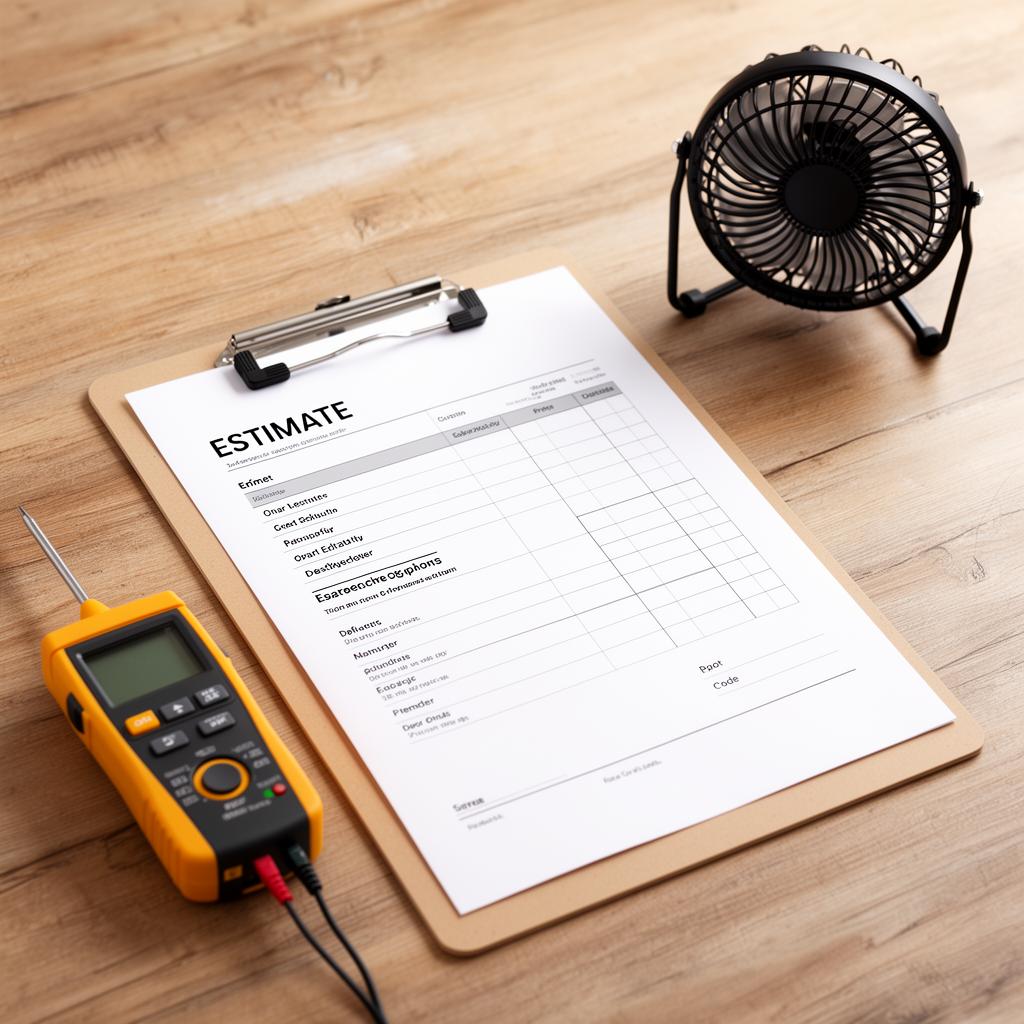
Compare estimates line by line rather than comparing only the total. Similar work may be grouped or itemized differently, so request the quantity basis, dates, room or material, and documentation behind each charge.
| Line item | Possible billing basis | What to verify |
|---|---|---|
| Inspection and moisture mapping | Initial labor or assessment | Rooms, materials, readings, and map included |
| Extraction | Labor, equipment, or area treated | Method, rooms, surfaces, and disposal |
| Equipment setup | Labor and placement | Inventory, placement, and setup date |
| Equipment days | Unit count multiplied by documented dates | Unit IDs or counts, start dates, end dates, and changes |
| Monitoring | Per visit or labor period | Readings, observations, adjustments, and visit dates |
| Controlled demolition | Labor and measured material removed | Material, area, reason, photographs, and authorization |
| Containment and cleaning | Materials, labor, equipment, or treated area | Reason, area, products or methods, and dates |
| Disposal | Bagging, hauling, weight, volume, or facility fee | Material removed, quantity basis, and receipts where available |
| Documentation | Included or itemized administrative labor | Photos, map, readings, logs, scope, and completion records |
| Source repair | Usually a separate trade or invoice | Plumbing, roofing, appliance, or building repair scope |
| Restoration | Separate repair or reconstruction estimate | Drywall, flooring, paint, trim, cabinets, and finish work |
| Change order | Added authorized work | Reason, price basis, approval, and revised scope |
What May Be Excluded From a Mitigation Estimate
A mitigation estimate may stop at water removal, controlled access, drying, and documentation. Ask the provider to mark exclusions clearly and identify any separate company or trade responsible.
- Repair of the plumbing, roofing, appliance, drain, or other water source
- Restoration, reconstruction, paint, flooring, cabinets, trim, and finish work
- Mold assessment, remediation, or post-remediation verification
- Contents packing, cleaning, storage, moving, or replacement
- Hazardous-material testing or abatement
- Permits, code upgrades, engineering, or specialty trade work
- Temporary housing or additional living expenses
- Insurance deductible, uncovered charges, or insurer reimbursement decisions
How Homeowners Can Limit Surprise Charges
Unclear scope, undocumented changes, and missing records can make an invoice harder to review. These steps can improve clarity, but they cannot guarantee a final cost.
- Document the loss early with photos and a written timeline.
- Stop the water source only when it is safe to do so.
- Seek qualified help promptly when conditions are unsafe or the scope is unclear.
- Ask for a written scope of work before any demolition begins.
- Ask for daily moisture readings and a copy of the drying log.
- Compare two written estimates when the situation allows time.
- Avoid signing an open ended authorization or unclear assignment of benefits.
- Confirm what is excluded so repair and rebuild scope are clear.
Cost Mistakes to Avoid
- Relying on one generic national price or treating this estimator as a quote
- Selecting a water category without professional confirmation
- Comparing only the bottom-line total instead of rooms, materials, and exclusions
- Ignoring equipment quantities, placement, dates, and documented adjustments
- Failing to request baseline readings, follow-up readings, and drying logs
- Approving verbal change orders or signing an open-ended authorization
- Assuming every charge will be covered or reimbursed
- Combining mitigation, source repair, and restoration without separate scopes
- Overlooking disposal, monitoring, pickup, and documentation charges
- Discarding signed records, receipts, photographs, and communications
Questions to Ask Before Approving the Estimate
The questions below help you compare estimates on more than just the bottom line. Ask each one and write down the answer.
| Question | Why it matters |
|---|---|
| What category of water is this? | Category drives safety steps, disposal, cleaning, and scope. |
| Which rooms and materials are affected? | Sets the size of the job and the materials in the plan. |
| What will be dried in place? | The decision may affect material removal and later repair scope. |
| What will be removed? | Controlled demolition is sometimes faster and safer than extended drying. |
| How many air movers and dehumidifiers will be used? | Equipment count and days drive a meaningful share of the invoice. |
| How often will readings be taken? | Comparable readings document progress toward the selected drying target. |
| Will I receive moisture logs? | Logs may support insurer review and document reported conditions over time. |
| What is excluded from the estimate? | Knowing exclusions prevents surprise charges or coverage gaps. |
| What happens if more damage is found? | A written change order records added work, price basis, and authorization. |
| Who communicates with insurance? | A clear point of contact clarifies documentation responsibility. |
| What is the legal business name? | The contract and insurance documents should identify the actual provider. |
| Can you provide current proof of insurance? | Current records help verify the party performing the work. |
| How was the affected square footage measured? | The measurement should match the rooms and materials in the scope. |
| What extraction work is included? | Extraction equipment, labor, disposal, and access may be separate line items. |
| How are equipment days billed? | The invoice should identify units, setup dates, removal dates, and adjustments. |
| Will I receive baseline and follow-up readings? | Comparable readings help explain progress and equipment changes. |
| What disposal charges are included? | Bagging, hauling, dump fees, and cleaning may be itemized separately. |
| Is source repair separate? | Plumbing, roofing, appliance, or building repair may require another scope. |
| Is restoration separate? | Rebuilding and finish work usually follows mitigation and may use a separate estimate. |
| How are change orders approved? | Written authorization should explain added work before it begins when practical. |
| What are the payment terms? | Clarify deposits, progress billing, deductibles, direct payments, and final invoicing. |
For deeper review, see the contractor checklist and find local help.
Sources used for general guidance
These references are used for general education about water damage, structural drying, mold prevention, and homeowners claim preparation. They are not price sources, contractor recommendations, or guarantees of coverage.
Frequently Asked Questions
Water mitigation cost questions
- There is no reliable flat price for every loss. Cost depends on the source, contamination concern, affected area, rooms, dwell time, materials, extraction, equipment days, monitoring, controlled demolition, disposal, emergency timing, documentation, and local labor. Review an itemized written scope from an actual provider.
- The largest scope differences often come from water condition, affected square footage, number of rooms, time wet, material construction, hidden moisture, equipment type and duration, monitoring, access, controlled removal, contamination controls, and local labor. No single factor produces a fixed price change.
- Extraction is often part of a mitigation scope when standing or absorbed water must be removed, but estimate structure varies. Ask whether extraction labor, equipment, disposal, floor or carpet work, and follow-up drying are included or billed separately.
- Providers may bill air movers and dehumidifiers by unit and equipment day, with setup, monitoring, adjustments, electricity, and pickup handled separately or within other line items. Request the equipment count, placement, start and removal dates, and readings supporting continued use.
- Monitoring may be included in a package or billed by visit, labor period, or mileage depending on the provider and scope. Each visit should identify moisture readings, ambient conditions, observations, equipment adjustments, and the date.
- Equipment-day billing usually reflects each documented unit and the period it remained onsite. The invoice dates should align with the equipment inventory and drying log. Extended use should have documented reasoning, but there is no universal number of equipment days.
- It may be included, excluded, or added through a written change order. Ask which material and measured area may be removed, why access or removal is proposed, how debris is handled, and whether rebuilding is a separate restoration scope.
- Actual providers may charge differently for after-hours work, weekends, holidays, storm demand, difficult access, contamination, or urgent extraction. This page keeps emergency intent brief; provider-specific timing fees should appear in writing and may vary.
- Usually. Mitigation limits additional damage, removes water, and supports drying. Restoration repairs or rebuilds after drying. Source repair, mold remediation, and contents work may also be separate, even when one company offers several scopes.
- Coverage depends on policy language, cause of loss, exclusions, endorsements, limits, deductible, documentation, and insurer review. The deductible is separate from the contractor invoice, and preferred-vendor options or contractor records do not guarantee reimbursement.
- No. It assigns an educational cost-pressure tier from selected inputs. It does not inspect the property, retrieve live labor rates, calculate a binding price, provide a professional scope, or replace a written onsite estimate.
- No. It shows broad duration and equipment-intensity considerations only. Actual drying duration and equipment selection depend on onsite moisture readings, affected volume, materials, access, ambient conditions, contamination concerns, and professional findings.
- When safety and active water conditions allow time, comparing more than one written scope may help. Compare affected rooms, materials, extraction, equipment, monitoring, removal decisions, exclusions, change orders, payment terms, and separate restoration work, not only the total.
- No. Water Mitigation Hub is an independent informational homeowner resource. It does not inspect properties, size equipment, provide estimates or quotes, dispatch crews, perform mitigation, rank contractors, or determine insurance coverage.