Burst pipe cleanup guide
Burst Pipe Water Damage: What to Do First and How Cleanup Works
Burst pipe water damage starts with safety, shutting off the water source when safe, documenting the damage, removing standing water, checking hidden moisture, drying affected materials, and preparing for insurance and restoration.
What this page is, and is not
What should you do first after burst pipe water damage?
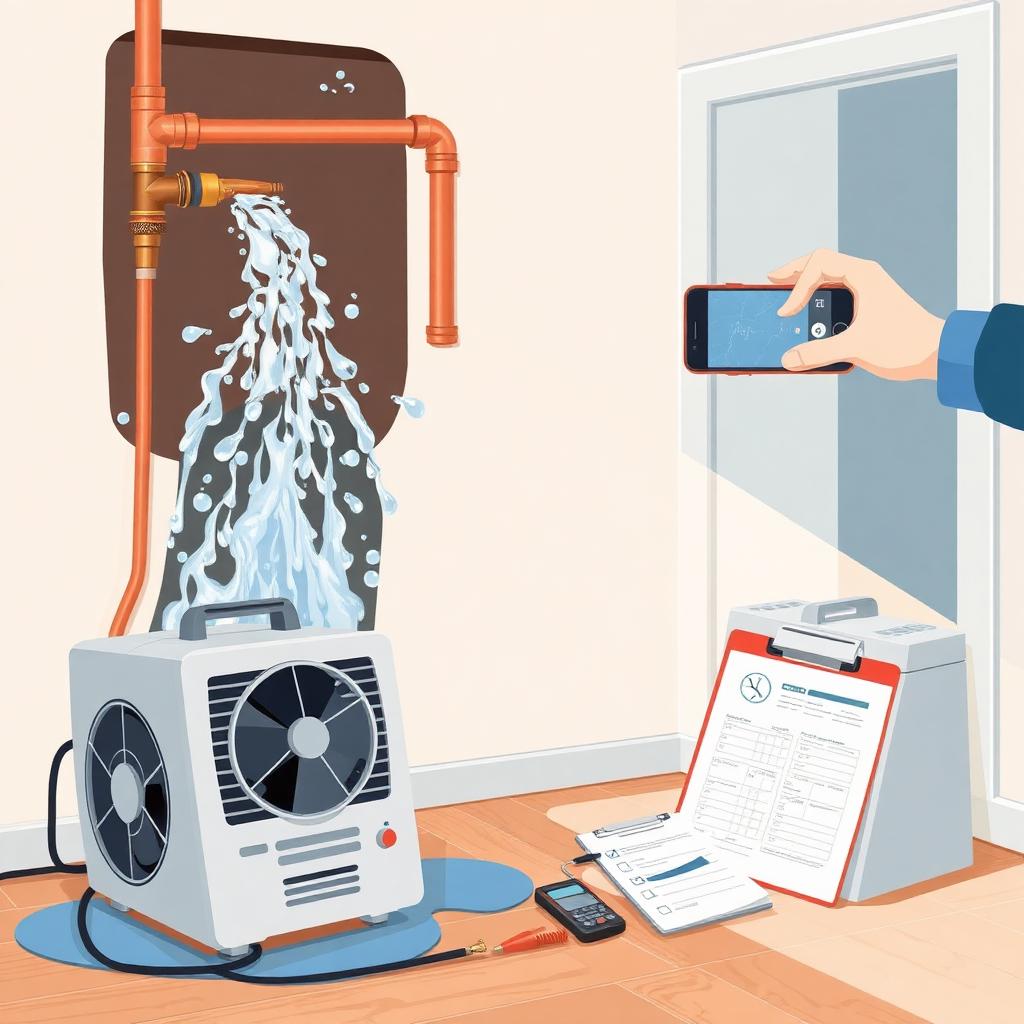
After burst pipe water damage, stay safe, shut off the main water valve if you can reach it safely, avoid water near electricity, and document the damage before cleanup starts. Standing water, wet drywall, wet flooring, water inside walls, ceiling leaks, or multiple affected rooms usually require a qualified local water damage company. Cleanup should include extraction, moisture inspection, drying, documentation, and a clear handoff to repair.
Key points
- Stop the water source if you can reach the shutoff safely.
- Avoid standing water near outlets, panels, or appliances.
- Photograph the pipe, water path, and affected rooms before cleanup if safe.
- Burst pipe water can travel into walls, ceilings, floors, and insulation.
- Moisture readings and drying logs support both cleanup and insurance review.
- Insurance may review documentation, but coverage is not guaranteed.
When Not to Enter the Affected Area
A burst pipe can put water near electrical components, weaken a ceiling, or hide its real path inside the structure. If any of the items below apply, leave the area and treat the loss as an emergency water mitigation situation. For what a fast response visit usually includes, see emergency water mitigation service.
Burst Pipe Water Damage Cleanup Steps
The steps below focus on safety, documentation, and ordered action. Skip any step that puts you at risk and move directly to calling a qualified company or emergency services.
Stay out of unsafe areas
Treat any room with water near electrical components as unsafe until power is confirmed off and the source is identified.
Shut off the main water valve if safe
Closing the main shutoff stops the leak at the source. Most US homes have a main valve where the supply enters the home, often near the front wall, basement, or utility area.
Cut power to the affected area only if the panel is dry and reachable
If the breaker panel is dry and you can reach it without crossing wet floors, switch off the breakers for the affected rooms. Otherwise leave power alone and call an electrician or your utility.
Photograph the pipe, water path, and damage
Take wide and close-up photos and a short video of the burst pipe, water trail, soaked drywall, wet flooring, and any damaged contents before cleanup begins.
Move valuables only if safe
If access is safe, lift documents, electronics, rugs, and small furniture off wet floors. Skip this step in unsafe conditions.
Call a plumber if the pipe is still active
A licensed plumber repairs the burst pipe itself. Mitigation crews typically need the leak stopped before extraction and drying can work.
Contact your insurer when damage looks significant
Ask what to document, how your deductible applies, and whether emergency mitigation may begin before an adjuster visits.
Call a qualified company for standing water, wet drywall, ceiling water, or hidden moisture
These situations usually need professional extraction, moisture inspection, drying, and a written scope.
Begin extraction and drying only when safe
Standing water typically needs removal before air movers and dehumidifiers can dry materials. Surface drying is not enough when wall, ceiling, or floor cavities are wet.
Keep moisture readings, photos, receipts, and repair notes
Daily readings, equipment counts, plumber invoices, and receipts for temporary repairs build the file insurers usually expect.
Burst Pipe Water Damage by Location
The table below pairs common burst pipe locations with a first safe step, why the situation matters, and a sense of when cleanup should move to a professional.
| Location | First safe step | Why it matters | When to call a professional |
|---|---|---|---|
| Pipe burst inside a wall | Shut off the main water valve and photograph the wall area. | Water spreads inside the cavity and soaks drywall and insulation. | Call when drywall is wet, soft, stained, or sounds hollow. |
| Pipe burst in a ceiling | Leave the room if the ceiling sags and shut off the water above. | Sagging ceilings can collapse and water may reach fixtures. | Always call when a ceiling is sagging or stained from above. |
| Basement pipe burst | Cut power to the basement at the breaker if the panel is dry. | Basement leaks may flood quickly and reach appliances and storage. | Call for standing water or when finished space is affected. |
| Kitchen supply line burst | Close the angle stop under the sink, then the main if needed. | Cabinets, flooring, and the subfloor can absorb water quickly. | Call when water reached cabinets, subfloor, or adjacent rooms. |
| Bathroom pipe burst | Close the toilet or vanity supply valve, then the main if needed. | Tile and grout hide moisture and bathrooms often share walls. | Call when adjoining walls, floors, or rooms below are affected. |
| Laundry room supply line burst | Close both hot and cold valves behind the washer. | Braided supply lines can fail suddenly and flood overnight. | Call when water reached drywall, subfloor, or the room below. |
| Water heater supply line failure | Close the cold inlet valve and shut off power or gas if safe. | Hot water damages flooring quickly and pans rarely contain a full failure. | Call when water spread beyond the pan or reached drywall. |
| Frozen pipe burst | Shut off the main water valve before thawing begins. | Frozen pipes often crack in multiple spots and leak when thawed. | Call when more than one area is wet or hidden pipes are involved. |
| Main water line leak inside the home | Shut off the main valve at the home, then the curb stop if needed. | Main line failures can flood multiple rooms in minutes. | Always call when a main line leak is suspected. |
| Pipe burst affecting multiple rooms | Shut off the main valve and document each room. | Multi-room damage usually involves hidden cavities and the room below. | Always call for inspection, extraction, and a written drying plan. |
What Burst Pipe Cleanup May Include
Scope varies by company and water category, but the items below are common parts of a burst pipe cleanup visit. Many overlap with water damage cleanup, water damage mitigation, water mitigation services, and the water mitigation process.
Why Burst Pipe Water Damage Can Hide Behind Walls
A pipe can burst inside a wall, ceiling, cabinet, basement, or utility area. Water may travel along framing, under flooring, behind baseboards, into insulation, and through ceilings into the room below. Surface drying is not enough when these cavities remain wet.
DIY Burst Pipe Cleanup vs Professional Help
Small clean water spills on hard surfaces may be manageable with documentation, water removal, airflow, and a dehumidifier. Water inside walls, ceilings, flooring, insulation, or multiple rooms usually needs professional moisture inspection.
| Topic | DIY may fit | Professional help is safer when |
|---|---|---|
| Water amount | A small clean spill from a slow drip on a hard surface. | Standing water, active spray, or water from a pressurized line. |
| Water location | Visible surface only, with no walls, ceilings, or cabinets involved. | Water inside walls, ceilings, cabinets, flooring, or insulation. |
| Electrical risk | No water near outlets, panels, appliances, or extension cords. | Water near any electrical component or a wet cord. |
| Materials affected | Sealed tile, sealed concrete, or a small area of finished hardwood. | Drywall, insulation, carpet pad, cabinets, subfloor, or ceiling. |
| Time water sat | Discovered immediately and dried within hours. | Water sat for more than a day or hidden moisture is suspected. |
| Insurance documentation | Photos and receipts you can keep on your own. | Claim likely needs moisture readings and drying logs. |
| Hidden moisture | No signs of moisture beyond the visible spill. | Soft drywall, stained ceiling, warped flooring, or musty smell. |
| Mold risk | Materials dried within 24 to 48 hours and no prior moisture history. | Wet materials, prior mold history, musty smell, or recurring leaks. |
Water Extraction, Drying, and Moisture Inspection
Standing water usually needs extraction before drying can work. After extraction, drying may involve air movers, dehumidifiers, moisture readings, and monitoring. Drywall, insulation, hardwood, carpet pad, cabinets, and ceilings behave differently when wet, which is why a professional water mitigation service visit usually plans equipment by material rather than by room. For how factors translate to cost, see water mitigation cost.
Does Homeowners Insurance Cover Burst Pipe Water Damage?
Homeowners insurance may review sudden and accidental burst pipe water damage differently from gradual leaks, poor maintenance, long term seepage, or excluded causes. Coverage depends on your policy language, the cause of loss, your deductible, exclusions, and insurer review. This page is not legal or insurance advice and coverage is not guaranteed. Review your policy and the disclaimer for the limits of this guide.
Documentation supports claim review. The list below mirrors what NAIC homeowner guidance suggests for recording the loss. Pair it with the insurance checklist before you start cleanup work.
What Affects Burst Pipe Water Damage Cost?
We do not publish guaranteed prices. Cost depends on water volume, affected area, pipe location, time water sat, materials, extraction needs, drying equipment, demolition, emergency timing, plumber repair, documentation, and local labor rates.
| Cost factor | Why it matters |
|---|---|
| Pipe location | Pipes in walls, ceilings, or below grade typically need more inspection and demolition. |
| Water volume | Higher volume means more extraction and more wet materials. |
| Affected rooms | More rooms typically mean more equipment and longer drying. |
| Time water sat | Longer dwell time often increases demolition and drying days. |
| Drywall and insulation | Wet drywall and insulation often need controlled removal. |
| Flooring and subfloor | Wood floors, carpet pad, and subfloor each dry differently. |
| Ceiling water damage | Ceilings often need cuts to inspect cavities and verify drying. |
| Extraction needs | Standing water requires portable or truck mounted extractors. |
| Drying equipment days | Air movers and dehumidifiers are typically billed per day. |
| Emergency timing | After hours, weekend, or storm demand can shift labor rates. |
| Plumber repair | Plumber repair for the burst pipe is usually a separate scope. |
| Insurance documentation | Detailed moisture logs and photos add labor time. |
For a deeper breakdown, see the water mitigation cost guide.
Questions to Ask Before Hiring Burst Pipe Cleanup Help
Use the questions below with the contractor checklist and the find local help guide. A confident company should be comfortable answering each one in plain language.
| Question | Why it matters | Good answer looks like |
|---|---|---|
| Is the water source stopped? | Mitigation cannot stabilize a space while a pipe is still leaking. | A clear yes with the shutoff confirmed before extraction begins. |
| Do I need a plumber before mitigation starts? | Pipe repair is a separate trade and usually has to happen first. | Coordination notes that name the plumber or referral if needed. |
| What areas are affected? | Defines the scope of extraction, drying, and documentation. | A room by room list with notes on hidden moisture checks. |
| Will you inspect inside walls or ceilings? | Surface drying alone leaves cavities wet after a burst pipe. | Use of moisture meters and sometimes thermal imaging on cavities. |
| What will be extracted? | Sets the boundary between extraction and demolition. | A specific extraction plan with what is removed for disposal. |
| What materials can be dried in place? | Drying in place saves cost when materials are still viable. | A list of materials that meet a dry standard with monitoring. |
| What materials may need removal? | Demolition affects cost, timeline, and rebuild later. | A written list of removals with photos when possible. |
| How many air movers and dehumidifiers will be used? | Equipment count drives drying time and daily charges. | A specific count tied to affected square footage and materials. |
| Will I receive moisture readings and drying logs? | Readings and logs show whether the home is actually drying. | Daily logs shared by email or a project portal. |
| What is excluded from the scope? | Exclusions are where surprise charges usually appear. | A short list of exclusions in plain language. |
| Who communicates with insurance? | Mixed communication slows the claim and confuses scope. | A named contact and a plan for what gets sent to your adjuster. |
| How are change orders approved? | Open authorizations can grow quickly without written approvals. | Written change orders that you sign before extra work begins. |
Burst Pipe Water Damage Mistakes to Avoid
None of the items below prove a bad outcome on their own, but two or three together usually mean the cleanup needs a reset and a written plan.

What this means for homeowners
If the burst pipe water stayed small, clean, and limited to a hard surface, quick documentation and safe drying may be enough. If water entered walls, ceilings, flooring, insulation, cabinets, or more than one room, a qualified local company should inspect the damage and provide a written scope. For local options, see water mitigation near me.
Helpful References
These references are used for general education about burst pipe water damage cleanup, safety, drying, moisture control, and claim preparation. They are not contractor recommendations, medical advice, legal advice, insurance advice, or guarantees of coverage.
Safety first guidance for cleanup after disasters and avoiding unsafe conditions.
Homeowner guidance on drying wet materials quickly and controlling moisture.
Safe cleanup practices for mold and damp building materials.
Industry training related to water damage cleanup, drying, and remediation.
Training in effective and timely drying of water damaged structures and contents.
Documenting damaged property, taking photos and videos, and contacting the insurer.
FAQs about Burst Pipe Water Damage
- Stay safe, shut off the main water valve if you can reach it without crossing unsafe water, and avoid water near electricity. Take photos and a short video of the pipe, water path, and affected rooms before cleanup begins if it is safe. Standing water, wet drywall, ceiling water, or hidden moisture usually calls for a qualified local water damage company.
- Yes, when you can reach the valve safely. Closing the main water valve stops the leak at the source and limits how far the water travels. If the valve is behind standing water near electrical components or in an unsafe area, leave the home and call your utility or emergency services.
- Small, clean spills on hard surfaces that you catch quickly may be manageable with documentation, water removal, airflow, and a dehumidifier. Burst pipes inside walls, ceilings, cabinets, flooring, or insulation usually need professional moisture inspection because cavities can stay wet long after the surface looks dry.
- Call when there is standing water, when drywall or insulation is wet, when a ceiling is stained or sagging, when more than one room is affected, when water has sat for hours, when electrical components are involved, or when you suspect hidden moisture behind walls or under flooring.
- Shut off the main water valve and photograph the wall before cutting into anything. Water inside a wall can soak drywall, insulation, and framing, and may reach adjacent rooms or the level below. A qualified company can use moisture meters and sometimes thermal imaging to map the affected cavities.
- Timelines vary by water volume, materials, and how quickly extraction starts. Extraction can take hours, while drying often runs a few days under monitoring. Hidden moisture, ceiling damage, or extensive demolition can extend the timeline. Daily moisture readings should confirm progress.
- Common equipment includes portable or truck mounted extractors for standing water, air movers for airflow, dehumidifiers for moisture in the air, and moisture meters or thermal imaging for inspection. Equipment counts depend on affected square footage, materials, and ceiling or cavity work.
- Many homeowners policies treat sudden and accidental burst pipe water damage differently from gradual leaks, poor maintenance, or excluded causes. Coverage depends on your policy language, the cause of loss, your deductible, exclusions, and insurer review. Coverage is not guaranteed and this page is not insurance advice.
- EPA and CDC guidance highlight drying wet materials quickly and controlling moisture. That usually means removing standing water, running air movers and dehumidifiers, checking moisture behind walls and under flooring, and removing materials that cannot be dried within a reasonable window.
- No. Water Mitigation Hub is an independent online resource for US homeowners. We do not perform burst pipe cleanup, dispatch crews, sell service, or guarantee contractors in any city or state.
Return to the Water Mitigation Hub homepage, review how we help, or browse the full sitemap. See our advertising disclosure and disclaimer for the limits of this guide.