Homeowner process guide
Water Mitigation Process: Step-by-Step Homeowner Guide
Updated August 10, 2026. Understand the usual sequence from safety and source control through extraction, moisture mapping, structural drying, monitoring, completion records, and the restoration handoff.
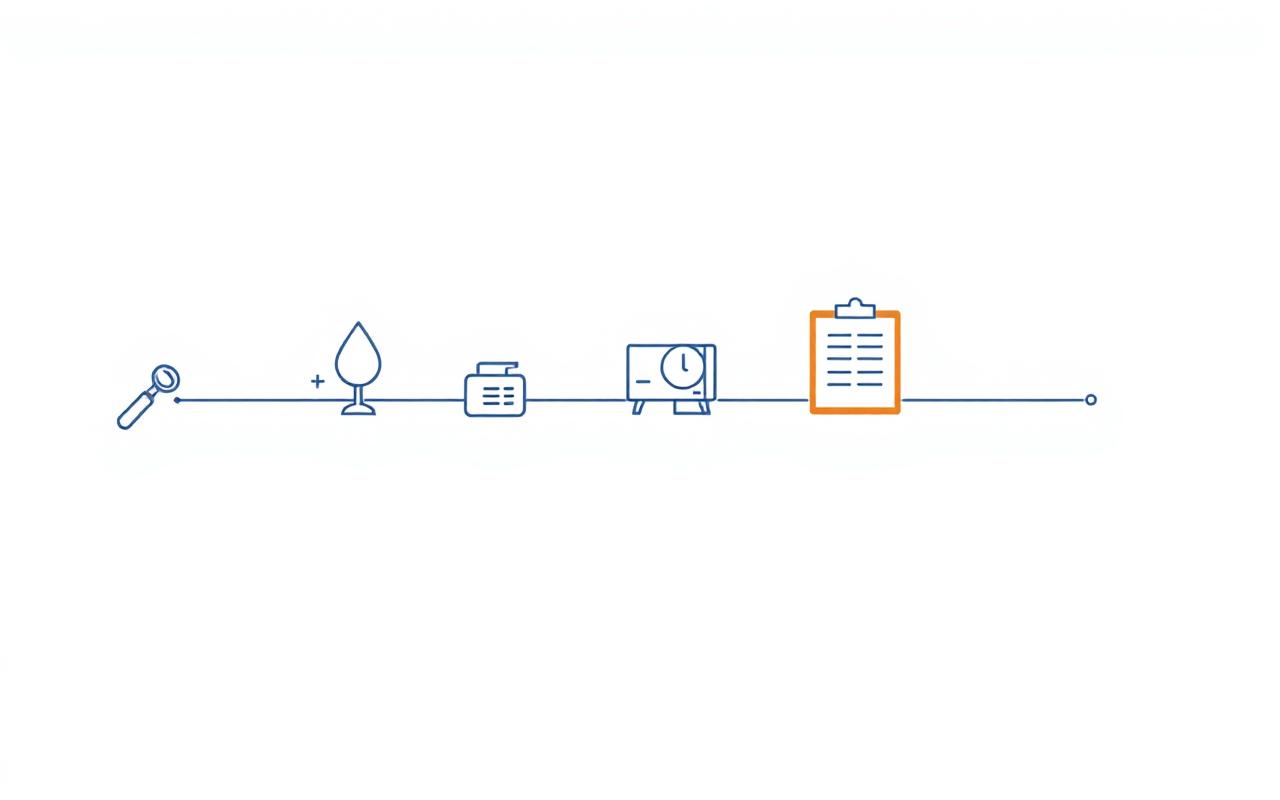
The water mitigation process usually starts with safety and source control, followed by initial documentation, water extraction, moisture mapping, evaluation of affected materials, structural drying, dehumidification, monitoring, drying records, and a documented handoff to restoration when mitigation is complete. The exact sequence can change based on contamination, materials, hidden moisture, utilities, access, and professional findings.
What this page is and is not
Water Mitigation Process Quick Answer
Water mitigation steps usually move from a safety review and source control to initial documentation, extraction, moisture mapping, material evaluation, drying, monitoring, completion records, and restoration handoff. Not every property follows the same order. Contamination, utilities, hidden moisture, access, and material conditions can pause or change the process. Water Mitigation Hub explains these stages but does not perform the work.
If you need the plain-English concept before the sequence, start with what water mitigation means. This guide then follows the process stage by stage.
Safety Before the Mitigation Process Starts
Do not enter or cross an unsafe area to shut off electricity, inspect damage, take photographs, or begin water removal. Contact emergency services, the utility provider, or qualified professional help as appropriate. The normal process may pause until a hazard is addressed.
| Condition | Why the normal process may pause | Safer next step |
|---|---|---|
| Standing water near electricity | Water may create shock or electrocution hazards. | Do not enter or cross the area. Contact emergency services, the utility provider, or qualified help as appropriate. |
| Wet electrical panel, outlet, appliance, light, or wiring | Energized equipment may be unsafe to approach or touch. | Keep away and have electrical safety addressed by the utility provider or a qualified electrician. |
| Sewage or wastewater | Contaminants can change access, cleanup, removal, and disposal decisions. | Avoid contact, keep others away, and seek qualified cleanup guidance. |
| Outdoor floodwater | Floodwater may hide debris, contamination, current, or structural damage. | Follow official instructions and do not enter until the area is considered safe. |
| Gas or fuel odor | A leak or damaged equipment may create fire, explosion, or exposure hazards. | Leave the area and contact emergency services or the utility provider from a safe location. |
| Chemical contamination | Unknown products may require specialized isolation and disposal. | Avoid disturbing the area and request qualified hazardous-material guidance. |
| Sagging ceiling | Wet ceiling materials may fall without warning. | Stay out from below and have the ceiling and source evaluated. |
| Unstable floor or stairs | Water can weaken materials or conceal openings and trip hazards. | Do not test the area by walking on it. Restrict access and seek structural guidance. |
| Structural movement | Cracking, shifting, or leaning may indicate an unsafe building condition. | Leave the affected area and contact emergency or structural professionals as appropriate. |
| Fire-related water damage | Fire, smoke, chemicals, utilities, and structural damage may overlap. | Follow fire-department access instructions and wait for qualified clearance. |
| Rapidly rising water | Conditions and exit routes can change quickly. | Move to safety and follow emergency-management instructions. |
| Unsafe attic or crawl-space access | Limited footing, wiring, insulation, contamination, or pests may make entry unsafe. | Document only from a safe access point and request qualified evaluation. |
The 12-Step Water Mitigation Process
This is a chronological homeowner overview, not a universal do-it-yourself procedure. Safety, contamination, construction, and professional findings may change the order.
- 1Review immediate safety hazards
- 2Stop or isolate the water source when safe
- 3Document initial conditions
- 4Identify the water source and contamination concerns
- 5Remove standing water
- 6Map moisture in affected and nearby materials
- 7Evaluate contents and building materials
- 8Open or remove materials when needed
- 9Set up structural drying and dehumidification
- 10Monitor moisture conditions and adjust the drying plan
- 11Document completion and final readings
- 12Hand the property off for restoration or repairs
Stage 1: Safety Review
A safety review may consider electrical exposure, contaminated water, sewage, structural instability, slip and fall hazards, ceiling collapse, gas or fuel concerns, chemical exposure, unsafe access, and affected utilities. Safety findings may change the order of every remaining stage.
Immediate conditions come before property documentation. The emergency water mitigation guide explains safety-first decisions without telling homeowners to approach wet electrical equipment, sewage, or unstable materials.
Stage 2: Source Control
Identifying the source, stopping or isolating it, repairing it, and beginning mitigation are different actions. A plumber, roofer, appliance technician, HVAC technician, utility provider, or another qualified specialist may address the cause. Mitigation and source repair may be separate scopes, authorizations, and invoices.
This guide does not provide plumbing, roofing, electrical, appliance, or HVAC repair instructions. The broad water damage mitigation guide explains how source control relates to limiting additional damage.
Stage 3: Initial Documentation
When safe, initial records may include wide room photographs, close photographs, the visible water level and path, affected rooms, damaged materials and contents, source notes, discovery date and time, emergency action records, and a source repair report. Documentation should never require unsafe entry.
Use the water damage documentation guide to organize photographs and event notes before materials are moved or removed when that can be done safely.
Stage 4: Water Source and Contamination Assessment
Water condition can change over time, and contact with building materials can affect conditions. Visual appearance alone may not establish water category. Qualified professionals may use industry standards and onsite findings to evaluate contamination and decide how access, cleaning, drying, removal, and disposal may differ.
| Possible source | Possible concern | How the process may differ | Record to save |
|---|---|---|---|
| Clean supply-line leak | Water may begin from a potable line, but conditions can change after contact with materials or time. | Source repair and mitigation may proceed as separate scopes. | Source photo and repair report |
| Burst pipe | Water can travel through walls, ceilings, insulation, and multiple rooms. | The process may require broad mapping before drying access is planned. | Break location and water path |
| Appliance supply leak | Cabinets, toe kicks, flooring, subfloor, and the ceiling below may be affected. | Appliance repair and mitigation may be separate scopes. | Appliance model and failed component |
| Appliance discharge | Discharge water may contain soil or residues depending on the appliance and event. | Contamination and porous-material decisions may require closer review. | Cycle, discharge path, and affected materials |
| Toilet overflow | The source and what was in the bowl or drain line affect contamination concerns. | Access, cleaning, and removal decisions may change with onsite findings. | Overflow source and rooms reached |
| Sewer backup | Sewage can affect safe entry, containment, porous materials, cleaning, and disposal. | Qualified sewage cleanup procedures may be needed before normal drying work. | Backup source and contamination boundary |
| Groundwater | Water entering through foundations or slabs may carry soil and other contaminants. | Basement or crawl-space access and material handling may change. | Entry point, water line, and exterior conditions |
| Outdoor floodwater | Floodwater may contain sewage, fuel, sediment, chemicals, or debris. | Official safety guidance and specialized cleanup may take priority. | Warnings, flood line, and safe-location photos |
| Roof leak | Attic insulation, sheathing, framing, ceiling cavities, and fixtures may be involved. | Roof repair and interior mitigation may be separate scopes. | Roof event and interior water path |
| Unknown or mixed water | Visual appearance alone may not establish source or water category. | The process may pause while qualified professionals evaluate source and conditions. | Observed conditions and unanswered source questions |
See the sewage backup cleanup guide for wastewater concerns and the flooded basement cleanup guide for basement access, utilities, and floodwater documentation.
Stage 5: Water Extraction
Accessible standing water may be removed before detailed drying begins. Extraction methods vary by surface, depth, contamination, and access. Carpet, pad, hard surfaces, cavities, and specialty flooring can require different professional approaches. Extraction records should identify the areas and equipment used.
Extraction does not mean the structure has met drying goals. Compare the focused water extraction services guide with emergency water removal for the distinction between bulk water removal and the stages that follow. The water damage cleanup guide covers the broader cleanup context.
Stage 6: Moisture Mapping
Visible wet areas may not show the full water path. Readings may be collected in affected materials, while similar unaffected areas may provide comparison context. Records should identify the material, location, date, meter or method, and result. Humidity and temperature may also be recorded.
| Record | What it may show | Important limitation |
|---|---|---|
| Pin moisture reading | A reading at specific probe locations within a material. | Interpretation depends on material, depth, meter settings, location, and project context. |
| Pinless moisture reading | A broader comparative scan without inserting pins. | Depth, density, salts, metal, and material layers may affect the result. |
| Relative material comparison | How one area compares with another area of similar material. | A relative scale is not a universal moisture percentage or pass-fail number. |
| Humidity | Moisture conditions in the air at the recorded location and time. | Humidity alone does not establish whether a building material has met a drying goal. |
| Temperature | Environmental context that can affect evaporation and equipment performance. | One temperature reading does not describe every cavity or material. |
| Thermal image | Temperature patterns that may help identify areas for further investigation. | Thermal imaging does not directly measure moisture and should not replace material readings. |
| Moisture map | The documented locations and materials where readings were collected. | A useful map needs clear room, material, location, date, and reading labels. |
| Unaffected comparison reading | Context from similar materials outside the known water path. | Comparison areas must be selected and interpreted for the specific property. |
Thermal imaging may help identify temperature patterns, but it does not directly measure moisture. The moisture readings guide explains why meters, materials, comparison areas, and professional interpretation matter.
Stage 7: Contents and Material Evaluation
Material decisions depend on contamination, saturation, construction, time wet, access, deterioration, and whether progress can be monitored. No list can guarantee that a material will be salvaged or replaced.
| Material or item | Common process question | Possible action | What to document |
|---|---|---|---|
| Carpet | Is the backing affected and what water condition is involved? | May be extracted, lifted, dried, cleaned, or removed. | Area, condition, backing, and readings |
| Carpet padding | Can it be accessed, cleaned, and monitored appropriately? | May require removal, especially when contaminated or deteriorated. | Area, contamination concern, and removal reason |
| Drywall | Is only the surface wet, or is the core or cavity affected? | May dry in place, require access, or require controlled removal. | Stains, softness, readings, and cavity findings |
| Plaster | How is the assembly built and is the bond or substrate affected? | May require specialist evaluation, access, drying, or removal. | Construction, cracking, readings, and condition |
| Insulation | What type is it, how saturated is it, and was water contaminated? | May dry, settle, lose performance, or require removal. | Type, location, condition, and contamination concern |
| Hardwood | Has moisture reached the boards, fasteners, or subfloor? | May require specialty drying, monitoring, repair, or replacement. | Board and subfloor readings, movement, and dates |
| Laminate | Has water reached the core, seams, or underlayment? | May swell or require removal depending on construction and saturation. | Affected area, seams, underside, and condition |
| Vinyl | Is moisture trapped beneath the floor or adhesive? | May stay in place, require access, or require removal. | Floor system, edges, subfloor readings, and access plan |
| Tile | Are grout, setting materials, underlayment, or subfloor affected? | The surface may remain while the assembly needs further evaluation. | Assembly layers, loose areas, and subfloor readings |
| Subfloor | How far did water travel and can the material be monitored? | May require access, specialty drying, repair, or replacement. | Material type, readings, swelling, and structural condition |
| Cabinets | Are toe kicks, backs, end panels, or wall cavities wet? | May require access panels, component removal, drying, or rebuilding. | Cabinet parts, water path, readings, and scope |
| Baseboards | Is moisture trapped behind trim or at the wall-floor joint? | May stay, be carefully removed for access, or be replaced. | Pre-removal photos, length, condition, and readings |
| Framing | Is the wood accessible and are readings changing over time? | May be dried and monitored or require structural evaluation. | Member locations, readings, damage, and comparison areas |
| Ceiling materials | Is sagging, contamination, insulation, or a wet fixture involved? | May require restricted access, drying, controlled removal, or repair. | Safe-location photos, source, fixtures, and cavity findings |
| Upholstered contents | What water condition, fabric, fill, and time wet apply? | May require contents specialists, cleaning, drying, or disposal. | Item photos, condition, treatment, and disposition |
| Stored contents | Can items be safely moved, documented, cleaned, or dried? | May be relocated, inventoried, treated, or discarded. | Inventory, photos, location, condition, and receipts |
Stage 8: Controlled Opening or Material Removal
A qualified professional may propose controlled access or removal because of contamination, trapped moisture, inaccessible cavities, saturated insulation, severe deterioration, structural concerns, source access, or an inability to monitor drying. Demolition is not automatically required for every wet material.
Records may include pre-removal photographs, the written scope, affected measurements, the reason for removal, a material list, disposal records, post-removal photographs, and a change order where required. This page does not provide homeowner demolition instructions. Review wall-specific concerns in the drywall water damage guide and insulation decisions in the wet insulation guide.
Stage 9: Structural Drying and Dehumidification
Structural drying may use air movement to support evaporation and dehumidification to remove moisture from the air. A professional plan may also include containment, air filtration where appropriate, and specialty drying systems for particular assemblies.
Equipment type, quantity, placement, and operating duration depend on affected volume, material type, contamination, access, temperature, humidity, moisture readings, and project-specific drying goals. This guide does not provide equipment quantities, placement distances, or universal sizing formulas. Read more in the structural drying guide.
Stage 10: Monitoring and Adjustments
Monitoring may include repeat material readings, humidity, temperature, equipment operation, equipment relocation, changed conditions, newly discovered wet areas, progress notes, and written scope changes. The monitoring schedule depends on the project and written scope.
| Monitoring record | What to request | Why it may matter |
|---|---|---|
| Material readings | Material, exact location, meter type, date, and result | Shows change at repeatable points when interpreted in context |
| Humidity | Location, date, time, and reading | Provides environmental context for drying conditions |
| Temperature | Location, date, time, and reading | Helps explain environmental and equipment conditions |
| Equipment count | Equipment type, identifier, and operating dates | Supports scope, invoice, and equipment-day review |
| Equipment placement | Room or zone and any documented relocation | Explains which areas the written plan addressed |
| Monitoring date | Visit date, time, areas reviewed, and person recording | Creates a sequence for comparing progress |
| Equipment adjustment | What changed and why | Connects professional adjustments to documented conditions |
| Changed scope | New finding, revised work, authorization, and date | Clarifies why cost or material decisions changed |
| Technician notes | Observations, access limits, homeowner communication, and next review | Preserves context not shown by a number alone |
The drying logs guide explains how readings, equipment dates, notes, and adjustments can be organized without assuming every project requires daily visits.
Stage 11: Completion and Final Documentation
Closeout records may include final and comparison readings, drying logs, equipment dates, an equipment removal record, completion photographs, removed-material and disposal records, source repair documentation, the final mitigation scope, an itemized invoice, and completion notes. These records document work against project-specific criteria. They do not guarantee no mold or certify that every possible condition is resolved.
The water mitigation report guide provides a closer look at the records homeowners may request at completion.
Stage 12: Restoration Handoff
Mitigation usually ends before drywall and insulation replacement, final flooring installation, cabinet rebuilding, finish carpentry, texture, painting, cosmetic repairs, or reconstruction. Restoration usually addresses those repairs through a separate written scope and estimate.
| Phase | Main goal | Typical records | Separate guide or professional |
|---|---|---|---|
| Source repair | Stop or repair the cause of water entry | Repair report, invoice, and photographs | Plumber, roofer, appliance, HVAC, utility, or other specialist |
| Water extraction | Remove accessible standing water | Area, equipment, dates, and extraction notes | Water extraction services |
| Mitigation | Limit additional damage and manage affected materials | Scope, photographs, material decisions, and authorizations | Water damage mitigation |
| Structural drying | Reduce moisture in affected building materials | Readings, environmental records, equipment dates, and drying logs | Structural drying after water damage |
| Restoration | Repair or rebuild after mitigation | Repair estimate, material list, change orders, invoices, and completion records | Water damage restoration |
| Mold remediation where required | Address mold-related conditions under a separate appropriate scope | Assessment, containment, material, cleaning, and completion records | Mold after water damage |
Compare water mitigation vs restoration, water damage restoration, and restoration service scopes before approving repair work.
Mitigation, remediation, and restoration terminology
Water remediation is sometimes used as a broader or overlapping term, and usage varies by company and context. Contamination or mold-related work may involve separate specialties. This page remains focused on the chronological water mitigation process. The mitigation vs remediation guide explains the terminology without treating every scope as identical.
What a Company or Professional May Check
A qualified company or specialist may review the following conditions based on the written scope. Water Mitigation Hub does not inspect homes, classify water onsite, measure moisture, select equipment, perform demolition, dry structures, or provide restoration.
- Water source and whether the source is controlled
- Contamination concerns
- Electrical and structural hazards
- Affected rooms and unaffected comparison areas
- Visible standing water and the observed water path
- Drywall, ceilings, flooring, and subfloor
- Carpet, carpet padding, cabinets, and baseboards
- Insulation and framing
- Crawl spaces and attics when access is safe
- Wall and ceiling cavities
- Baseline and comparison moisture readings
- Humidity and temperature
- Possible hidden moisture
- Extraction requirements
- Equipment and containment needs
- Materials that may require access or removal
- Drying progress and documentation
- Restoration and insurance documentation needs
Use the water mitigation company guide and contractor checklist to compare written scopes, records, exclusions, and authorizations without assuming one checklist proves provider quality.
What Happens on the First Visit?
A first visit may combine safety review, source confirmation, documentation, mapping, readings, preliminary material decisions, and an initial written scope. Not every project follows the same first-visit sequence, and extraction or equipment installation should not be promised for the same day without onsite findings and a written scope.
- Safety review
- Source confirmation
- Initial documentation
- Affected-area mapping
- Standing-water assessment
- Initial moisture readings
- Preliminary material assessment
- Written work authorization
- Initial scope
- Extraction or drying-equipment setup when appropriate
The water mitigation service guide and mitigation services overview explain how individual service categories may fit within the larger process.
What Happens During Follow-Up Monitoring?
Follow-up monitoring may compare progress, review newly exposed areas, document equipment operation, record changed conditions, and explain revised scope. The schedule depends on the project and written agreement.
- Review repeat readings and compare progress
- Inspect newly exposed or newly reported areas
- Adjust equipment where professionally appropriate
- Document equipment operating dates and relocation
- Record changed conditions and explain scope changes
- Update drying logs, photographs, and notes
- Keep the homeowner informed about findings and next steps
How Long Does the Water Mitigation Process Take?
Some projects may progress quickly, while others require a longer drying and monitoring period. Completion should be based on project-specific conditions and documented findings rather than a fixed calendar promise.
Timing may depend on water volume, contamination, time wet, affected materials, hidden cavities, temperature, humidity, equipment, access, material-removal decisions, monitoring results, and source repair timing. Structural drying and monitoring records provide better context than a universal number of days.
Water Mitigation Process by Damage Situation
The core sequence remains recognizable, but each source and material can shift safety, documentation, access, and drying decisions.
| Situation | Process issue that may change | Important record | Related guide |
|---|---|---|---|
| Burst pipe | A concealed water path or several levels may expand mapping and access. | Pipe repair report, discovery time, and room-by-room photos | Burst pipe water damage |
| Flooded basement | Utilities, contamination, depth, finished materials, and access can change the sequence. | Water line, source, utility status, and affected contents | Flooded basement cleanup |
| Sewage backup | Safe access, containment, porous materials, cleaning, and disposal may take priority. | Source, contamination boundary, removed materials, and disposal | Sewage backup cleanup |
| Appliance overflow | Cabinets, toe kicks, flooring, subfloor, and ceiling below may need review. | Appliance model, repair note, water path, and affected rooms | Appliance overflow water damage |
| Bathroom water damage | Water source and contamination can vary between supply, drain, tub, shower, and toilet events. | Fixture source, adjacent rooms, subfloor, and wall readings | Bathroom water damage |
| Kitchen water damage | Cabinets, built-ins, appliances, flooring, and supply or drain sources may overlap. | Source repair, cabinet parts, floor layers, and contents | Kitchen water damage |
| Ceiling water damage | Sagging, fixtures, insulation, and the source above may require restricted access. | Safe-location photos, source, ceiling condition, and cavity findings | Ceiling water damage |
| Hardwood floor water damage | Board construction, finish, subfloor, and time wet affect specialty drying decisions. | Board and subfloor readings, movement, and dates | Hardwood floor water damage |
| Carpet water damage | Water condition, backing, pad, subfloor, and seams affect cleaning and removal decisions. | Carpet area, pad condition, extraction, and floor readings | Carpet water damage |
| Crawl-space water | Access, wiring, pests, insulation, framing, and groundwater can change safety and scope. | Access-point photos, source, framing, insulation, and readings | Crawl-space water damage |
| Attic water damage | Footing, wiring, roof conditions, insulation, framing, and ceiling below affect entry and evaluation. | Safe-location attic, roof, insulation, and ceiling photos | Attic water damage |
| Wet drywall | Wall cavities, insulation, wiring, contamination, and ceiling sagging affect access decisions. | Stains, softness, readings, cavity findings, and removal reason | Drywall water damage |
| Wet insulation | Type, saturation, compression, contamination, and enclosure affect drying or removal decisions. | Insulation type, location, condition, and disposal record | Wet insulation water damage |
Cost Factors During Each Process Stage
Cost depends on the written scope, local labor, affected area, materials, equipment use, contamination, timing, access, and project conditions. No statewide or universal price applies to every water loss.
| Process stage | Possible cost factor | Record to request |
|---|---|---|
| Initial response | Timing, access, safety conditions, affected rooms, and provider terms | Authorization, hourly or service charges, and initial scope |
| Extraction | Water volume, depth, surface, contamination, and equipment used | Areas extracted, equipment, operating time, and line-item charge |
| Moisture inspection | Number of rooms, materials, cavities, and repeatable reading locations | Moisture map, baseline readings, and monitoring schedule |
| Equipment setup | Affected volume, materials, access, containment, and professional drying plan | Equipment list, identifiers, placement, and start dates |
| Air movers | Quantity and operating duration based on onsite conditions | Equipment type, count, location, and operating dates |
| Dehumidifiers | Equipment type and operating duration based on environmental and material conditions | Type, count, location, and operating dates |
| Monitoring | Visit schedule, number of areas, records, and changes in scope | Visit dates, readings, notes, and adjustments |
| Containment | Contamination, occupied areas, dust control, access, and project design | Containment scope, dates, and reason |
| Controlled removal and disposal | Material type, measurements, access, contamination, and disposal requirements | Pre-removal photos, measurements, authorization, and disposal records |
| Specialty drying | Flooring, cabinets, dense materials, cavities, and project-specific systems | Written specialty scope, equipment, readings, and duration |
| Documentation and restoration handoff | Reporting detail, estimate preparation, and separate repair scope | Final mitigation report, itemized invoice, and restoration estimate |
Review broader water mitigation cost factors and emergency timing and equipment charges before approving a scope. Provider terms and project conditions vary.
Insurance Documentation Checklist
These records may support insurer review, but they do not guarantee coverage, payment, or claim approval. Policy terms, cause of loss, exclusions, deductibles, endorsements, documentation, and insurer review vary.
- Initial photographs
- Source notes and source repair report
- Affected-room list
- Mitigation authorization and written scope
- Extraction record
- Baseline moisture readings and moisture map
- Comparison readings
- Drying logs
- Equipment type, quantity, and operating dates
- Monitoring records
- Material-removal photographs and disposal records
- Change orders
- Final readings and completion notes
- Itemized mitigation invoice
- Restoration estimate
- Payment receipts and insurer communication
Use the insurance checklist, mitigation insurance records guide, and adjuster inspection guide to organize questions without treating the site as insurance or claim advice.
Questions to Ask During the Water Mitigation Process
Questions should clarify the written scope and documentation. No single answer proves provider quality or insurance eligibility.
| Question | Why it may matter |
|---|---|
| What source was identified, and has it been controlled? | Separates source findings, temporary control, permanent repair, and mitigation. |
| What contamination concerns were identified? | Clarifies access, cleaning, containment, removal, and disposal considerations. |
| Which rooms, materials, and comparison areas are included? | Defines the documented affected area and reading context. |
| What standing water will be extracted? | Clarifies surfaces, areas, and extraction records. |
| What may dry in place, and what may require access or removal? | Connects material decisions to condition, contamination, and monitoring. |
| What initial readings and drying goals are being used? | Requests project-specific criteria without relying on a universal number. |
| What equipment may be used, and how will operating dates be recorded? | Connects the drying plan to equipment documentation and invoicing. |
| What monitoring schedule is in the written scope? | Clarifies when progress may be reviewed without assuming daily visits. |
| Will I receive drying logs and completion records? | Confirms access to stage-by-stage and closeout documentation. |
| What would change the scope, and how are change orders approved? | Clarifies authorization before added work or cost. |
| What work is excluded? | Identifies source repair, contents, mold-related work, restoration, or other separate scopes. |
| When does mitigation end, and is restoration separate? | Defines the handoff, records, estimate, and invoice separation. |
| What records may be provided to the insurer? | Helps organize documentation while recognizing insurer review and policy terms vary. |
Water Mitigation Process Mistakes to Avoid
- Entering unsafe water or crossing water to reach electrical equipment
- Assuming visible water is the full affected area
- Assuming extraction means the structure has met drying goals
- Relying only on thermal images or one moisture reading
- Using universal moisture-number claims
- Replacing materials before moisture conditions are evaluated
- Allowing unclear demolition without photographs and a written reason
- Failing to photograph materials before removal
- Failing to request drying logs or track equipment dates
- Approving verbal scope changes
- Combining mitigation and restoration invoices without clarity
- Assuming a fixed drying timeline
- Accepting mold-prevention, material-salvage, or insurance guarantees

When Qualified Help May Be Needed
Professional evaluation may be needed when safety, contamination, hidden assemblies, or monitoring requirements go beyond what can be observed safely from an accessible area.
- Electrical exposure, sewage, outdoor floodwater, or contamination concerns
- Structural instability, sagging ceilings, or unsafe access
- Multiple affected rooms or significant standing water
- Hidden moisture, wet insulation, wet subfloor, or wet cavities
- HVAC, appliance, roof, plumbing, or utility exposure
- Controlled material removal is proposed
- Professional moisture monitoring is needed or drying progress is unclear
Moisture control also matters when there is concern about mold after water damage. That guide provides general cleanup context without offering medical advice or a mold-prevention guarantee.
Helpful References
These public sources provide general context for professional training, moisture control, flood cleanup safety, claim documentation, and consumer protection. They are not contractor recommendations or insurance guarantees.
Frequently Asked Questions
Water mitigation process questions
- The water mitigation process is the sequence used to limit additional damage after water enters a property. It usually includes safety review, source control, initial documentation, water extraction, moisture mapping, material evaluation, structural drying, monitoring, completion records, and a handoff to restoration when repairs are needed. The exact sequence depends on contamination, access, utilities, materials, and onsite findings.
- The first step is reviewing immediate safety hazards. Standing water near electricity, sewage, floodwater, gas or fuel odor, sagging ceilings, unstable floors, and unsafe access can pause normal work. Source control and documentation should not require anyone to enter or cross an unsafe area.
- Accessible standing water is usually extracted before detailed structural drying begins because removing bulk water can reduce the amount that must evaporate from materials. The order may change when safety, contamination, access, source repair, or structural conditions require another step first.
- Extraction does not mean the structure has met drying goals. The next work may include moisture mapping, evaluating materials and cavities, controlled access or removal where needed, setting up a project-specific drying plan, and monitoring readings and environmental conditions over time.
- Moisture readings can help document affected materials, comparison areas, hidden water paths, and change over time. Each reading needs material, location, meter, date, and project context. A single number should not be treated as a universal pass-fail standard.
- Moisture mapping is the organized record of where readings were taken and which materials and rooms were evaluated. It can include affected and comparison areas, humidity, temperature, photographs, and thermal patterns. Thermal imaging may identify temperature differences, but it does not directly measure moisture.
- No. A decision may depend on water condition, time wet, softness or deterioration, wet insulation, cavity access, contamination, ceiling sagging, and whether drying can be monitored. Some drywall may dry in place, while other areas may require controlled opening or removal based on professional findings.
- A professional plan may use air movers, dehumidifiers, air filtration or air scrubbers where appropriate, containment, and specialty systems for certain assemblies. Equipment type, quantity, placement, and operating duration depend on affected volume, materials, contamination, access, temperature, humidity, readings, and drying goals.
- Monitoring may compare repeatable material readings, humidity, temperature, equipment operation, photographs, and newly discovered areas. Equipment may be adjusted when professionally appropriate. The monitoring schedule depends on the project and written scope, so daily visits should not be assumed for every project.
- There is no universal duration. Water volume, contamination, time wet, affected materials, hidden cavities, temperature, humidity, access, source repair, removal decisions, equipment, and monitoring results can all affect timing. Completion should be based on documented project conditions rather than a fixed calendar promise.
- Mitigation may end when the agreed mitigation scope is complete and project-specific completion records are assembled. Those records can include final and comparison readings, drying logs, equipment dates, photographs, removed-material records, the final scope, and an itemized invoice. They do not certify that every possible condition has been resolved.
- Restoration is usually a later and separately documented phase. Mitigation focuses on limiting additional damage, extraction, material decisions, and drying. Restoration may replace drywall, insulation, flooring, cabinets, trim, texture, paint, or other finishes after mitigation and source repair are addressed.
- Depending on the project, records may include the authorization, initial scope, source notes, photographs, moisture map, baseline and comparison readings, drying logs, equipment dates, removal and disposal records, change orders, completion notes, final mitigation scope, and itemized invoice. Ask which records are included before approving work.
- No. Water Mitigation Hub is an independent online homeowner resource. It does not inspect homes, classify water onsite, measure moisture, select equipment, provide mitigation or drying, perform demolition or restoration, dispatch crews, recommend a specific company, or determine insurance coverage.
Related Water Mitigation Guides
Start with the Water Mitigation Hub or use these focused guides to explore definitions, extraction, drying, records, cost, and the restoration handoff.
Continue with a focused guide
- What is water mitigation?
- Water damage mitigation
- Water extraction services
- Structural drying after water damage
- Moisture readings after water damage
- Drying logs after water damage
- Water mitigation report
- Water mitigation cost
- Water mitigation vs restoration
- Water mitigation vs remediation
- Contractor checklist
- Insurance checklist
- crawl space water damage
- emergency water extraction
- water damage repair and restoration
- mitigation and restoration services