Homeowner service guide
Water Mitigation Service: What to Expect Before You Hire
A water mitigation service visit usually starts with inspection, safety review, water extraction if needed, moisture readings, a drying plan, documentation, and a written scope before any major work begins.
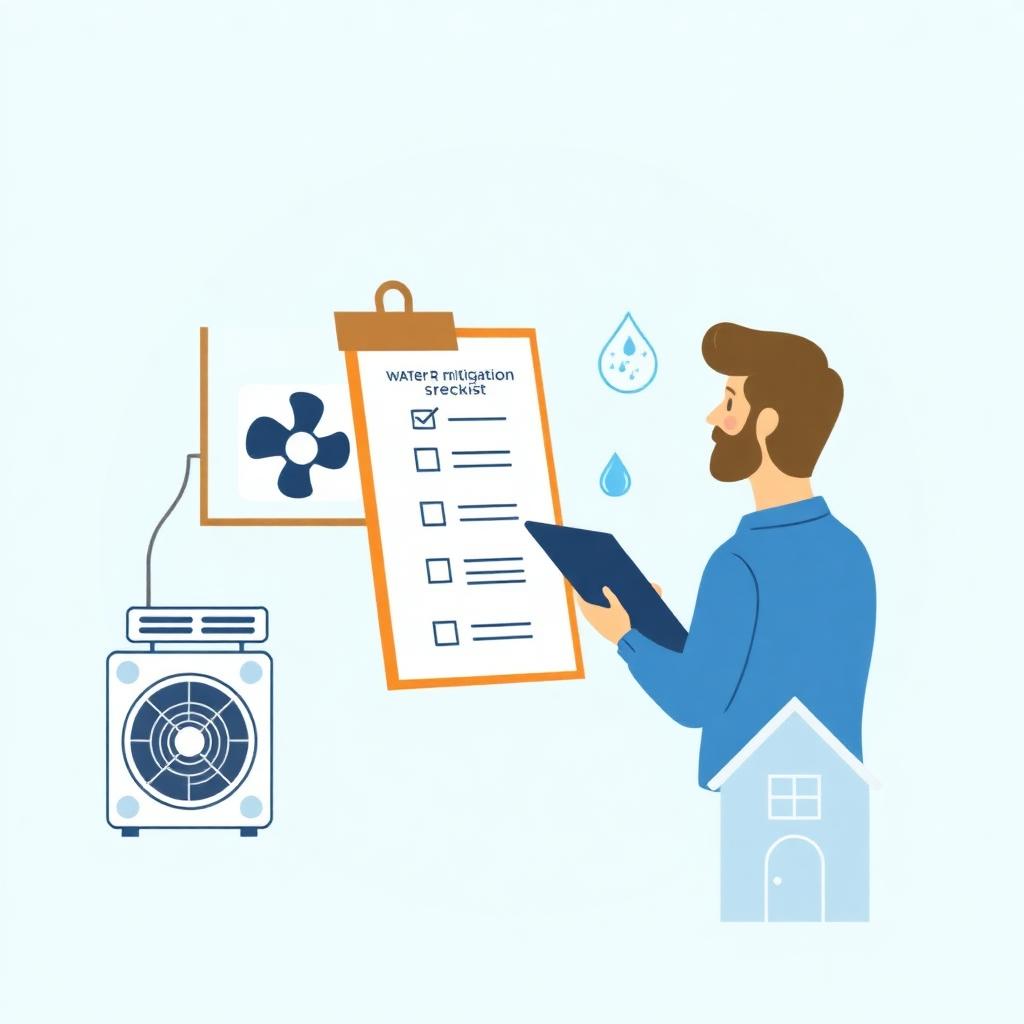
What this page is, and is not
Updated July 13, 2026
Water Mitigation Service Quick Answer
A water mitigation service visit usually starts with a safety review, source check, moisture inspection, water extraction when needed, drying equipment plan, written scope, and homeowner approval. Before signing, ask about water category, affected materials, equipment charges, monitoring, exclusions, and records. Mitigation limits further damage; it is different from repair or rebuilding.
What is a water mitigation service?
A water mitigation service is a professional visit focused on stopping further water damage, removing water, checking moisture, drying affected materials, documenting the loss, and preparing the home for restoration. It is not the same as a full repair or rebuild service. The company should explain the scope, equipment, documentation, exclusions, and payment terms before work begins.
Key points
- The first visit should start with safety and inspection.
- A written scope should explain what is included.
- Moisture readings and drying logs matter.
- Mitigation service is different from restoration work.
- Verify insurance, licensing, and documentation before signing.
What Happens During a Water Mitigation Service Visit?
Visits vary by company and water category, but the structure below is typical. Each step should produce something you can see in writing, whether that is a photo, a moisture reading, an equipment count, or a signed scope.
Initial information review
The company may review the source, timing, affected rooms, safety concerns, and whether an insurer or source-repair professional has been contacted.
Arrival and safety check
Electrical hazards, slip hazards, sewage exposure, gas concerns, and structural risks should be considered before anyone enters or places equipment.
Water source review
The source may be confirmed as stopped or contained. Active leaks should not be ignored while extraction or drying begins.
Water category assessment
The company may explain the water category and how source, dwell time, and contamination affect safety, equipment, and material decisions.
Affected-area inspection
Affected and comparison areas may be checked for wet drywall, ceilings, floors, carpet, padding, cabinets, insulation, and hidden moisture.
Moisture readings and mapping
Baseline moisture readings and a moisture map may show where water traveled and provide a reference for follow-up monitoring.
Water extraction when needed
Standing or absorbed water may be removed with equipment suited to the amount of water, material, access, and water category.
Drying equipment plan
Air movers and dehumidifiers may be placed based on affected square footage, materials, access, and moisture conditions.
Controlled material removal when needed
Wet drywall, insulation, baseboards, or flooring that may not dry in place can require a separate, documented removal decision.
Photographs and documentation
Photos, readings, equipment counts, placement, notes, and invoices may be captured for the homeowner and insurance file.
Written scope and homeowner approval
The homeowner should review the scope, exclusions, equipment charges, payment terms, and change-order process before extra work begins.
Follow-up monitoring and restoration handoff
Monitoring visits may adjust equipment and update logs. Repairs or rebuilding are usually a separate restoration handoff after drying decisions are complete.
What to Do Before the Service Visit
A few quick steps before the crew arrives protect your safety, support insurance documentation, and help the company arrive ready to work. Skip anything that requires entering an unsafe area.
For an active situation, read emergency water mitigation first, then prepare claim documentation with the insurance checklist.
What a Company or Professional May Check
A qualified professional may review the source, safety conditions, water category, affected materials, moisture readings, equipment needs, and documentation. Procedures vary by loss and access. Water Mitigation Hub does not perform inspections, moisture testing, extraction, drying, demolition, or restoration.
| Area | What may be checked |
|---|---|
| Water source | Whether the leak is stopped, contained, or still active. |
| Source containment | Whether the source is stopped or needs another qualified trade. |
| Water category | The source and dwell time that may affect safety and work scope. |
| Safety and structural concerns | Electrical hazards, unstable flooring, sagging ceilings, or other access risks. |
| Affected rooms and comparison areas | Where moisture is present and which nearby areas remain unaffected. |
| Walls, ceilings, and floors | Visible and hidden moisture in drywall, ceilings, flooring, and subfloor. |
| Carpet, padding, baseboards, cabinets, and insulation | Materials that may dry in place or require a documented removal decision. |
| Attic or crawl space | Access and moisture conditions where the source or affected materials are above or below the living area. |
| Moisture readings and equipment needs | Baseline readings, mapping, air movers, dehumidifiers, and monitoring needs. |
| Insurance documentation | Photos, written scope, readings, equipment records, removal notes, and invoices. |
Water Mitigation Service Visit Checklist
Use this single checklist to compare the written scope with the work discussed during the visit. If a company uses different terms, ask how its terms map to these steps.
What the Written Service Scope Should Include
A complete written scope keeps the visit measurable and helps an adjuster review the loss later. Use the list below as a reference when reading any scope before you sign.
See the water mitigation cost guide for what drives pricing and the contractor checklist for a longer review walkthrough.
Water Mitigation Service vs Related Terms
A water mitigation service can mean one service call or one company visit. Water mitigation services refers to the full range of tasks, such as extraction, drying, dehumidification, demolition, documentation, and restoration handoff. The table below shows how related terms differ and what to ask before approving work.
| Term | Main meaning | Best question to ask | Related guide |
|---|---|---|---|
| Water mitigation service | One visit or engagement focused on safety, moisture control, and drying decisions. | What will this visit include and what is separate? | Water mitigation services |
| Water mitigation services | The broader category of extraction, drying, monitoring, and documentation tasks. | Which tasks and visits are in the written scope? | Water mitigation services |
| Water mitigation company | The business that may perform or coordinate mitigation work. | What legal business name and proof of insurance apply? | Water mitigation company |
| Water extraction service | Removal of standing or absorbed water, which is one part of mitigation. | What will be extracted, and will drying follow? | Water extraction services |
| Emergency water mitigation service | Urgent work for active water, unsafe conditions, or rapidly spreading damage. | What safety issue makes this urgent, and what are the charges? | Emergency water mitigation service |
| Water mitigation process | The full sequence from source control through drying and restoration handoff. | Where is this visit in the overall process? | Water mitigation process |
| Water damage restoration | Repair, replacement, or rebuilding after mitigation and drying decisions. | Are repairs and rebuilding included or separately scoped? | Water damage restoration |
Compare the water mitigation services, the role of a water mitigation company, water extraction services, the emergency water mitigation service, the full water mitigation process, and water damage restoration.
When the Situation Is Urgent
Qualified or emergency assistance may be needed when water is near electricity, sewage, outside floodwater, a gas smell, sagging ceilings, unstable floors or stairs, rapidly spreading water, several affected rooms, wall or floor cavities, wet insulation, or an unclear source. Leave unsafe areas. Contact emergency services when there is an immediate threat to life or safety. Once conditions are safe, see the emergency water mitigation , emergency water mitigation service, and emergency water removal guides for general education.
When to Get Qualified Help
Professional evaluation may be needed when moisture may be hidden, materials remain wet, several building materials are affected, sewage or contaminated water is present, structural materials may be affected, professional moisture readings are needed, insurance documentation requires detailed records, or demolition decisions are unclear. Water Mitigation Hub is not a service provider and does not arrange this help.
For broader context, see the water mitigation process and water mitigation vs restoration guides.
What Affects the Cost of a Water Mitigation Service?
We do not publish fixed prices, and you should be cautious of any company that gives a firm number without seeing the property. The cost of a service visit depends on water category, affected area, dwell time, materials, emergency timing, local labor rates, drying equipment, demolition, documentation, and monitoring. Providers may bill these factors differently.
| Cost factor | Why it may matter | What homeowners should document |
|---|---|---|
| Affected square footage | More area can mean more equipment and labor. | Room measurements, affected materials, and the written scope. |
| Water category | Category 2 or 3 may require additional PPE, containment, or cleaning. | The source, category explanation, and safety steps. |
| Number of affected rooms | Separate rooms can increase setup, monitoring, and documentation. | A room-by-room list and affected-area map. |
| Dwell time | Longer wet time may increase drying or material removal needs. | When the loss started and first moisture readings. |
| Affected materials | Drywall, insulation, flooring, cabinets, and contents behave differently. | Material condition and what may dry in place. |
| Extraction requirements | Standing water and saturated materials may need specialized equipment. | What will be extracted and what is excluded. |
| Air mover and dehumidifier count | Equipment quantity and type can affect daily charges. | Equipment count, placement, type, and days. |
| Monitoring visits | Follow-up readings may change equipment and document progress. | Monitoring schedule and drying logs. |
| Emergency timing | After-hours work from actual providers may carry different charges. | Timing, fees, and written authorization. |
| Controlled demolition and disposal | Removal and disposal add scope when materials cannot dry in place. | Items removed, reasons, photos, and disposal terms. |
| Local labor | Rates vary by location, trade, access, and provider. | Line items, payment terms, and change orders. |
| Documentation requirements | Detailed photos, readings, and records may require additional labor. | What records will be provided and when. |
For a deeper breakdown, see the water mitigation cost guide and emergency water mitigation cost.
How the Service Visit Supports Insurance Documentation
A service visit may produce records such as photos, moisture readings, affected rooms, equipment counts, demolition notes, and a written scope. These records may help an insurer review the loss, but they do not guarantee coverage or payment. Coverage depends on policy terms, cause of loss, exclusions, deductible, and insurer review. Use the insurance checklist , water mitigation insurance claim guide, water damage insurance claim guide, how to document water damage, moisture readings guide, drying logs guide, and water mitigation report guide.
Questions to Ask Before Approving a Water Mitigation Service
The questions below help separate companies that can explain the scope from companies that rely on urgency to close a deal. A confident company should be comfortable answering each one in plain language.
| Question | Why it matters | Good answer looks like |
|---|---|---|
| What is included in this service visit? | Clarifies what you are paying for and what comes next. | A clear list of tasks the crew will complete today, in writing. |
| What is excluded? | Exclusions often hide where the real surprises happen. | A short list of exclusions written in plain language. |
| What is the legal business name? | The name on the scope, invoice, and insurance documents should be clear. | The legal name, business contact details, and matching written paperwork. |
| Can you provide current proof of insurance? | Insurance proof helps you understand who is responsible for the work. | A current certificate or other documentation from the actual provider. |
| What category of water is this? | Category 1, 2, and 3 each need different containment and equipment. | A category assignment based on the water source and dwell time. |
| Which rooms and materials are affected? | Defines the scope of drying and demolition. | A mapped list of affected rooms with materials and moisture readings. |
| What will be extracted? | Sets the boundary between extraction and demolition. | A specific extraction plan with what is removed for disposal. |
| What will be dried in place? | Drying in place saves materials and reduces demolition costs. | A specific plan for which materials stay and which need to come out. |
| What may need removal? | Demolition decisions affect cost, timeline, and rebuild work later. | A written list of what gets removed and why, with photos when possible. |
| How many air movers and dehumidifiers will be used? | Equipment counts drive both drying performance and daily charges. | A specific count tied to affected square footage and materials. |
| How are equipment days tracked? | Equipment charges may continue while items remain on site. | A count, placement record, start date, removal date, and daily log. |
| Will I receive daily moisture readings? | Daily readings show whether the structure is actually drying to standard. | Daily logs shared by email or a project portal. |
| How often will monitoring occur? | Follow-up readings show whether the drying plan is changing. | A monitoring schedule and copies of the readings or drying logs. |
| Are mitigation and restoration scopes separate? | Drying and repair work may be handled and billed separately. | A clear handoff between mitigation, repair, and rebuilding. |
| What payment terms apply? | Payment timing, deductibles, and deposits should be clear before work begins. | Written payment terms with no blank or open-ended authorization. |
| What work or charges are excluded? | Exclusions can affect extraction, demolition, monitoring, and restoration. | A complete exclusions list and a written change-order process. |
| Who communicates with insurance? | Mixed communication leads to scope confusion and slower claims. | A named contact and a clear plan for what gets sent to your adjuster. |
| How are change orders approved? | Open scope authorizations can grow quickly without written approvals. | Written change orders that you sign before any extra work begins. |
Warning Signs Before Hiring a Water Mitigation Service
None of the patterns below prove a company is bad on their own, but two or three together usually mean it is time to keep looking when the situation allows time.
What this means for homeowners
A good water mitigation service visit should leave you with a clearer picture of the source, affected materials, drying plan, documentation, and next step. If the company cannot explain those items in writing, compare another local option when the situation allows time. For local options, see water mitigation near me.
Helpful References
These references are used for general education about water damage cleanup, drying, moisture control, and claim preparation. They are not contractor recommendations, rankings, or guarantees of workmanship, pricing, availability, or coverage.
Industry training in water damage cleanup, drying, and remediation.
Training in effective and timely drying of water damaged structures.
Homeowner guidance on drying wet materials and controlling moisture.
Documenting damaged property, taking photos, and contacting your insurer.
FAQs about Water Mitigation Service
- A water mitigation service is a professional visit focused on stopping further water damage, removing water, checking moisture, drying affected materials, documenting the loss, and preparing the home for restoration. It is not the same as a full repair or rebuild service.
- A typical visit includes a safety check, source review, moisture mapping, water extraction if needed, drying equipment setup, controlled demolition when required, documentation, a written scope, and a plan for follow up monitoring until materials reach dry standard.
- No. Mitigation focuses on stopping damage and drying the structure. Restoration is the rebuild phase that follows, including drywall, paint, flooring, and finishes. Some companies do both, but they are separately scoped and often separately billed.
- A service may be needed after a leak, burst pipe, appliance overflow, roof leak, sewage backup, or another event that leaves building materials wet. If the area is unsafe, leave it and contact emergency services when there is an immediate threat to life or safety.
- It should identify the water source and category, affected rooms and materials, extraction, drying in place, equipment counts and charges, monitoring, controlled removal, documentation, exclusions, payment terms, and change-order process.
- Moisture readings and drying logs can document baseline conditions, equipment placement, follow-up readings, and progress toward a documented dry standard. Ask how copies will be shared and how often readings will be taken.
- Ask for the equipment type, count, placement, start date, removal date, and daily or visit-based records. Companies may bill equipment differently, so the written scope should explain how equipment days and changes are documented.
- Coverage depends on your policy and the cause of loss. Sudden and accidental water damage is often covered, while long term seepage or flood damage may not be. Good documentation supports a claim, but it does not guarantee coverage. Contact your insurer to confirm.
- The first visit may include safety review, readings, extraction, and equipment setup. Follow-up monitoring can continue for several days or longer, depending on water category, materials, access, moisture readings, and the written drying plan. No fixed timeline is guaranteed.
- No. Water Mitigation Hub is an independent online resource for US homeowners. We do not perform water mitigation, dispatch crews, sell emergency service, or guarantee contractors in any city or state.
Return to the Water Mitigation Hub homepage, review how we help, or browse the full sitemap. See our advertising disclosure and disclaimer for the limits of this guide.