1
Stay out if access is unsafe
Avoid attics, crawl spaces, ceiling areas, and wet rooms when footing, wiring, contamination, or ceiling strength is uncertain.
Wet insulation water damage guide
A safety-first homeowner guide to wet insulation, hidden wall and ceiling moisture, attic and crawl-space risks, mold concerns, documentation, and questions to ask before approving work.

Wet insulation after water damage needs source control, safe documentation, moisture evaluation, and caution before disturbing materials. Attic insulation, crawl-space insulation, wall cavities, ceiling cavities, wet drywall, and nearby framing can stay damp after the visible leak stops. Mold risk can increase when porous materials remain wet, especially if sewage or floodwater is involved. Different insulation types behave differently: fiberglass, cellulose, mineral wool, spray foam, blown insulation, and batts may not dry the same way. Photograph from a safe location, avoid electrical hazards, and do not assume insulation can be saved.
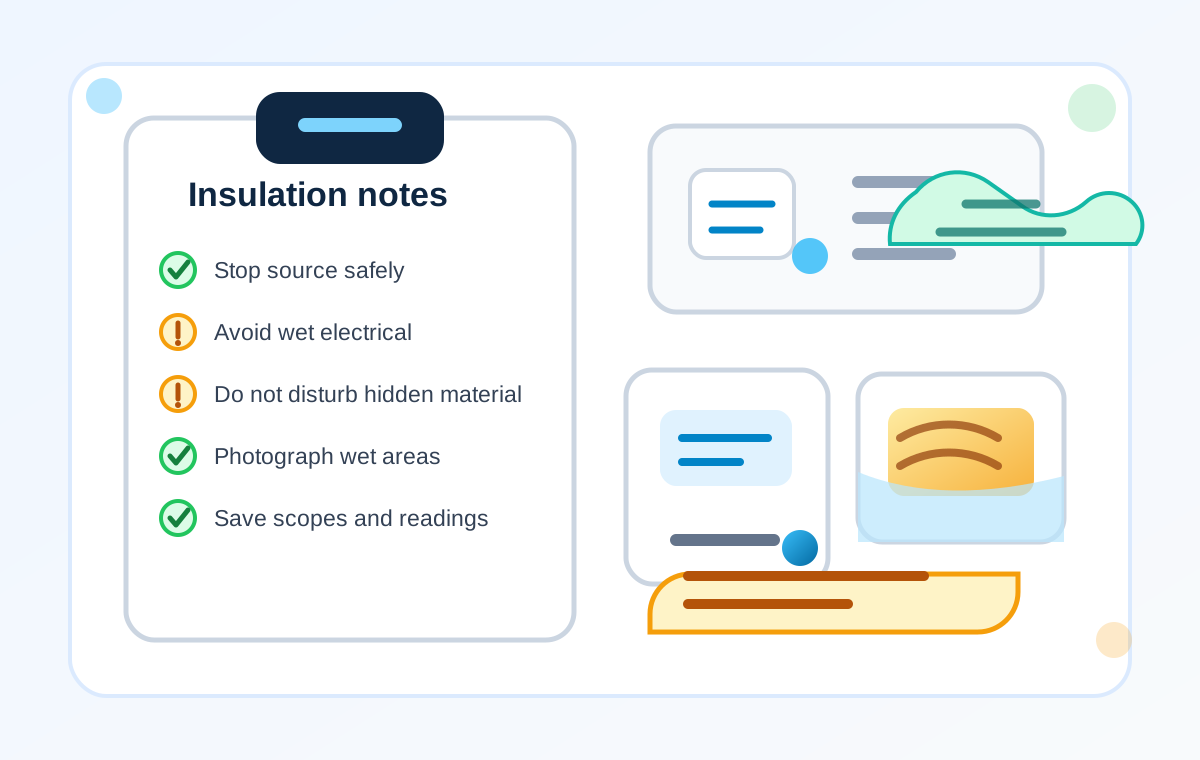
Start with safety and documentation. Skip any step that requires entering an unsafe attic or crawl space, touching wet electrical equipment, standing under a weak ceiling, opening hidden cavities, or disturbing potentially contaminated insulation.
Avoid attics, crawl spaces, ceiling areas, and wet rooms when footing, wiring, contamination, or ceiling strength is uncertain.
Shut a reachable valve, stop using the fixture, or protect the opening only when you can do so without entering unsafe conditions.
Do not touch wet outlets, cords, fixtures, breaker panels, fans, recessed lights, or sagging ceiling areas near wet insulation.
Document visible wet insulation, stains, water source, access area, nearby drywall, ceiling areas, flooring, and contents before major changes.
Look at rooms above, below, and beside the affected area, plus visible baseboards, ceilings, attic access, and crawl-space entry points.
Record when damage was discovered, recent storms, plumbing events, appliance leaks, roof leaks, HVAC condensation, or repeated moisture.
Dehumidification may help when electricity is safe, the source is stopped, and sewage, floodwater, suspected mold, or dust spread is not a concern.
Sewage, floodwater, wet wall cavities, attic access risk, crawl-space risk, mold odor, or widespread wet materials may need qualified evaluation.
Insulation type matters. Some materials may shed limited clean water better than others, while others can absorb water, mat down, trap moisture, or hide wet adjacent materials. The water source and surrounding assembly matter as much as the insulation itself.
| Insulation type | How water may affect it | Drying concern | More serious when | What to ask |
|---|---|---|---|---|
| fiberglass batt | May absorb water between fibers, lose loft, sag, or hold moisture against drywall or framing. | Drying depends on clean water, limited saturation, access, airflow, and verified moisture conditions. | More serious when compressed, dirty, sewage-contacted, mold-concern, hidden behind drywall, or above a ceiling. | Ask whether the batt is compressed, contaminated, dryable, and documented with moisture readings. |
| blown fiberglass | Loose fibers can settle, clump, or hold dampness in attic or wall cavities. | Air movement through the full depth can be difficult without disturbing hidden materials. | More serious when deep attic insulation is soaked, ceiling drywall is wet, or the leak was not found quickly. | Ask how depth, wet area, access, and drying verification will be handled. |
| cellulose | Paper-based material can absorb water, mat down, hold odor, and lose insulation value. | It is often harder to dry fully once saturated, especially in closed cavities. | More serious when soaked, long wet, musty, contaminated, or inside a wall or ceiling cavity. | Ask whether removal is recommended due to absorption, contamination, odor, or mold concern. |
| mineral wool | May shed water better than some materials but can still hold moisture in assemblies or against nearby materials. | The surrounding drywall, framing, sheathing, and vapor conditions still matter. | More serious when water is contaminated, insulation is trapped in a cavity, or adjacent materials stay wet. | Ask whether the insulation and surrounding materials are dry, clean, and still performing as intended. |
| spray foam | Behavior depends on open-cell or closed-cell foam, adhesion, water path, and whether water is trapped behind it. | Some foam may hide moisture against sheathing, framing, or drywall where readings are harder to confirm. | More serious when water is behind foam, roof sheathing is wet, odor appears, or the source is recurring. | Ask how hidden moisture behind or beside foam will be evaluated without unsafe disturbance. |
| rigid foam board | May resist some water absorption, but seams, edges, adhesive, framing, and adjacent materials can stay wet. | Drying concern is often trapped moisture behind or around the board. | More serious when floodwater, sewage, mold concern, or wall cavity moisture is present. | Ask whether the board, wall cavity, fasteners, and materials behind it were checked. |
Some insulation may dry when clean water is caught quickly, the source is stopped, access is safe, surrounding materials are not saturated, and moisture can be verified. This is more likely with limited exposure and clear drying access. It is less certain when insulation is hidden, compressed, or inside a wet wall or ceiling assembly.
Removal or replacement may be needed for cellulose, compressed batts, contaminated insulation, insulation behind wet drywall, soaked ceiling insulation, mold concerns, musty odor, long dwell time, repeated leaks, or insulation affected by sewage or floodwater. Decisions should depend on material type, water category, time wet, access, surrounding materials, safety, and documented moisture readings.
Wet insulation can keep nearby materials damp after visible water is gone. Do not cut, pull, or open hidden materials just to check when wiring, plumbing, weak ceilings, contamination, or suspected mold may be present. Document visible clues and ask how hidden moisture will be evaluated safely.
Mold risk can rise when materials stay wet, especially porous materials in enclosed wall, ceiling, attic, or crawl-space cavities. Timing depends on moisture, temperature, ventilation, material type, contamination, and how quickly the source is stopped. Public guidance often uses 24 to 48 hours as a caution window for wet materials, but exact timing should not be assumed in every home.
This page does not diagnose symptoms or provide medical advice. Keep children, pets, and health-sensitive people away from unsafe areas, avoid disturbing suspected mold, and do not use household fans on sewage, floodwater, unknown water, or suspected mold conditions.
Water Mitigation Hub does not arrange or provide services. If a homeowner contacts a water mitigation company or another qualified professional, the written scope should explain what was checked and why. The contractor checklist can help organize questions before approving work.
Wet insulation water damage can involve several scopes, but every project does not need every service. Source, water category, material condition, contamination, mold concern, access, and insurance documentation decide what is relevant.
| Scope | What it usually means |
|---|---|
| water mitigation | Work focused on limiting additional water damage, documenting conditions, extracting water where needed, and making early material decisions. |
| structural drying | Drying wet building materials with measured goals, dehumidification, controlled air movement, and monitoring where conditions allow. |
| insulation removal | Controlled removal of insulation that is contaminated, saturated, compressed, inaccessible for drying, or otherwise unlikely to remain serviceable. |
| mold remediation | Separate mold-focused work that may involve containment, PPE, removal, cleaning, disposal, and documentation when mold conditions are present. |
| drywall repair | Later work to repair or replace drywall, texture, paint, trim, and finishes after moisture or removal decisions are complete. |
| attic or crawl-space work | Special access, safety, insulation, ventilation, vapor barrier, joist, sheathing, or subfloor work that may involve different professionals. |
| restoration | Repair or rebuild after mitigation, drying, removal, or remediation. It may include insulation replacement, drywall, paint, flooring, or trim. |
| insurance documentation | Photos, dates, source notes, readings, written scopes, estimates, receipts, and adjuster instructions that support insurer review without guaranteeing coverage. |
There is no guaranteed price for wet insulation water damage. Cost may depend on the source, water category, material type, access, affected area, contamination, drying equipment, removal and disposal, replacement insulation, repairs, monitoring, and documentation.
| Factor | Why it matters |
|---|---|
| water source | Roof, plumbing, appliance, HVAC, groundwater, sewage, floodwater, or unknown water can change the scope. |
| water category | Clean water, gray water, contaminated water, and unknown water require different precautions and material decisions. |
| insulation type | Fiberglass, cellulose, mineral wool, spray foam, batt, blown, and board insulation behave differently when wet. |
| affected area | A small open area is different from multiple cavities, attics, crawl spaces, ceilings, or rooms below. |
| access difficulty | Tight attics, crawl spaces, finished walls, high ceilings, and low-clearance areas can add labor and safety planning. |
| wall or ceiling opening | Openings may be needed when wet insulation is hidden or drying cannot be verified from the surface. |
| contamination | Sewage, floodwater, pest contamination, or dirty water can change PPE, removal, disposal, and cleaning needs. |
| mold concern | Musty odor, visible growth, long dwell time, or recurring moisture can require containment or separate mold evaluation. |
| removal and disposal | Wet insulation, drywall, debris, and contaminated porous materials may require controlled removal and disposal. |
| drying equipment | Dehumidifiers, air movement, containment, and monitoring depend on water category, material, and access. |
| replacement insulation | Replacement type, R-value, access, and building assembly details can affect later repair scope. |
| drywall or finish repairs | Walls, ceilings, paint, trim, flooring, and texture matching may be part of restoration rather than mitigation. |
| monitoring and documentation | Moisture logs, photos, written scopes, estimates, and invoices take time but may support insurance review. |
Insurance may review documentation, but coverage is not guaranteed. Ask your insurer what to document before materials are removed when it is safe to wait and photograph first.
Ask clear questions before signing a work authorization, mitigation scope, removal scope, remediation agreement, or repair estimate. The answers should explain what is included, what is excluded, what will be documented, and which work is separate.
| Question | Why to ask |
|---|---|
| What caused the insulation to get wet? | The source affects safety, trade repair, drying access, material decisions, and documentation. |
| What type of insulation is affected? | Fiberglass, cellulose, mineral wool, spray foam, batt, blown, and board insulation behave differently. |
| What water category is involved? | Contamination changes PPE, removal, disposal, drying, and cleaning decisions. |
| How long may it have been wet? | Longer dwell time can increase saturation, odor, mold concern, and removal likelihood. |
| Is drywall, subfloor, attic, or crawl-space material also wet? | Adjacent materials often decide whether drying can be verified. |
| Is contamination suspected? | Sewage, floodwater, pests, dirty water, or unknown water can change the whole scope. |
| Can anything dry in place? | Ask what readings, access, water category, and material facts support that decision. |
| What may need removal? | Removal should be tied to contamination, saturation, damage, odor, mold concern, or drying access. |
| How will moisture readings be documented? | Logs and photos help show what was wet, where readings were taken, and what dried. |
| Is mold remediation separate from drying? | Separate scopes can affect timing, cost, containment, documentation, and responsibility. |
| What is excluded? | Clarify source repair, testing, mold remediation, electrical, HVAC, drywall, insulation replacement, and restoration. |
| What documentation goes to insurance? | Ask for copies of photos, readings, estimates, invoices, written scopes, and daily notes. |
These references are included for general homeowner education about moisture, insulation, cleanup safety, flood recovery, drying, mold prevention, and documentation. They are not advertisements, contractor recommendations, medical advice, legal advice, insurance advice, or guarantees.
For broad cleanup planning, start with the Water Mitigation Hub homepage, water damage cleanup, emergency water mitigation, and the water mitigation process. Compare cost, hiring, and claim preparation with water mitigation cost, water mitigation company, the contractor checklist, and the insurance checklist.
Wet insulation water damage often connects to drywall water damage, mold after water damage, attic water damage, crawl space water damage, ceiling water damage, flooded basement cleanup, bathroom water damage, kitchen water damage, burst pipe water damage, and sewage backup cleanup. Browse every published guide in the sitemap.