Insurance scope guide
Water Mitigation vs Restoration Insurance: What Is Separate
Understand how mitigation, drying, demolition, restoration, and repair records may be separated during a water damage insurance claim review.
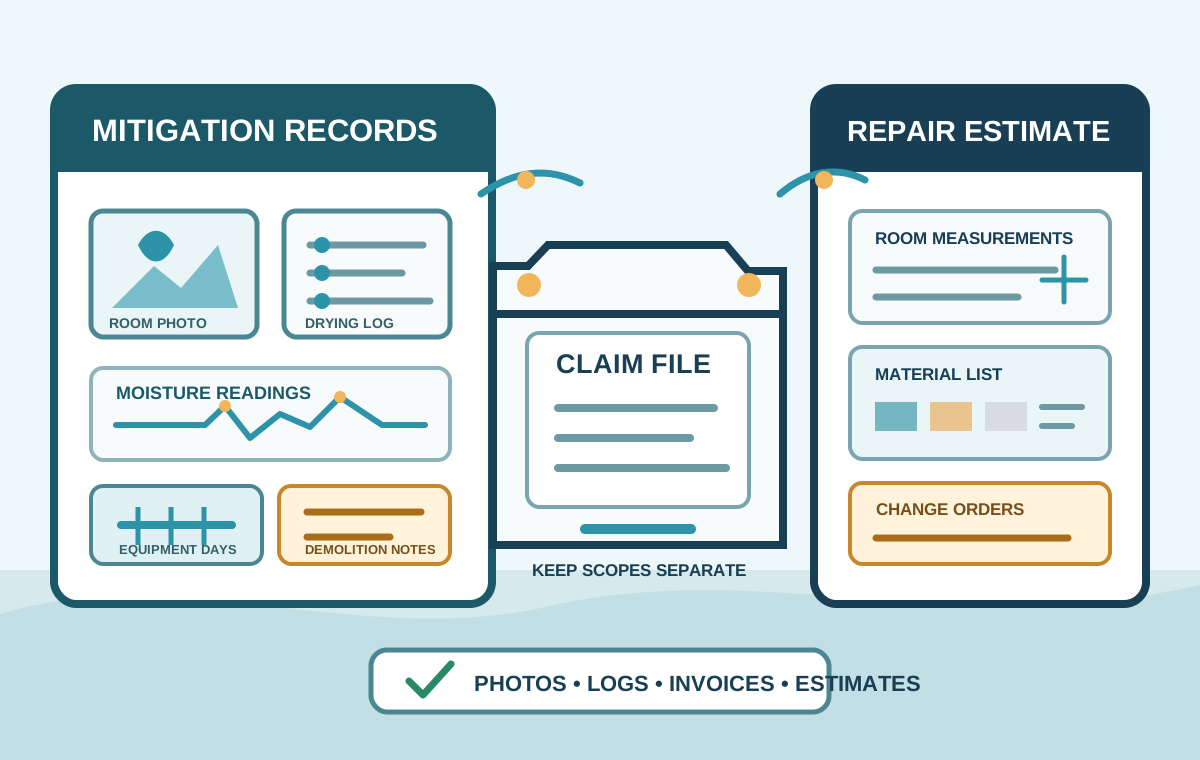
Water mitigation and restoration may be reviewed separately
Water mitigation and restoration may be reviewed as separate parts of a water damage insurance claim. Mitigation usually limits further damage through extraction, drying, dehumidification, monitoring, and limited demolition. Restoration usually repairs or rebuilds drywall, flooring, cabinets, trim, and other materials after drying. Separate records can help explain what happened during each phase. Insurance review depends on policy terms, cause of loss, documentation, scope, deductible, exclusions, endorsements, limits, and insurer review. There is no coverage or payment guarantee.
What this page is and is not
Quick comparison: mitigation vs restoration in insurance records
The general mitigation vs restoration guide explains the operational difference. The table below focuses on how those phases can appear in an insurance file.
| Topic | Mitigation record | Restoration record | Possible review question |
|---|---|---|---|
| Main purpose | Limit additional damage and dry affected materials. | Repair or rebuild damaged materials after drying. | Does each charge match its stated purpose? |
| Typical timing | Usually begins soon after discovery when the area is safe. | Usually follows documented drying or stabilization. | Was the work performed in a reasonable sequence? |
| Common work | Emergency steps, extraction, drying, monitoring, and limited demolition. | Drywall, flooring, paint, cabinets, trim, and rebuild work. | Which line items belong to each scope? |
| Cleanup overlap | May include cleaning needed during mitigation. | May include final cleaning connected to repairs. | Is overlapping work explained without duplicate billing? |
| Primary records | Moisture readings, drying logs, equipment days, photos, and demolition notes. | Measurements, material specifications, repair estimate, and change orders. | Is each charge supported by the appropriate record? |
| Typical endpoint | A documented drying goal or mitigation completion. | Completed repairs or reconstruction. | Is completion documented for each phase? |
Why insurers may separate mitigation and restoration
The two phases have different timing, purposes, invoices, records, and completion points. An insurer may review some work as reasonable while asking for more support on other line items. That is a review process, not a promise that either scope will be approved.
| Reason | How the scopes differ | Homeowner record step |
|---|---|---|
| Timing | Mitigation starts while materials are wet. Restoration generally follows drying. | Keep dated records from both periods. |
| Purpose | Mitigation limits damage. Restoration repairs the finished building materials. | Ask for a separate description of each purpose. |
| Invoices | Equipment and monitoring differ from repair labor and materials. | Request itemized invoices instead of one unexplained total. |
| Contractor roles | One company may do both phases, or separate companies may be involved. | Confirm responsibility, authorization, and exclusions for each scope. |
| Documentation | Mitigation relies on drying records. Restoration relies on measurements and repair details. | Save the complete project file, not only the final invoice. |
| Review questions | An insurer may ask why drying, equipment, demolition, or repair work was needed. | Answer with factual records rather than coverage assumptions. |
| Partial review | Some line items may be accepted while others need more information or remain disputed. | Approval or payment of one scope does not promise approval of another. |
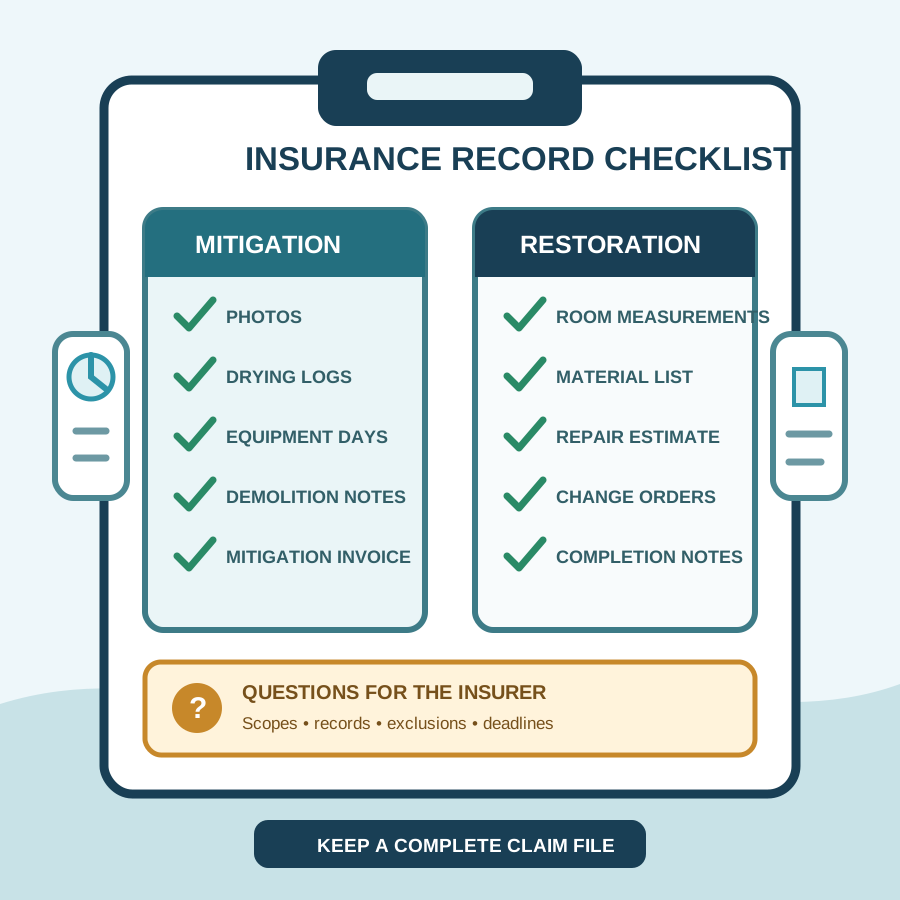
Mitigation records checklist
Keep one complete mitigation file. This exact visible checklist is used for the page ItemList schema.
Do not delay urgent safety or reasonable damage-limiting action solely to obtain perfect photographs. Document from a safe location when possible and follow the insurer's instructions for additional records.
Restoration records checklist
Restoration records should explain the repairs proposed after drying and show how quantities, materials, exclusions, and changes were determined.
- Itemized repair estimate
- Material list and specifications
- Room measurements
- Photos after drying
- Records of damaged or removed materials
- Contents list when relevant
- Written change orders
- Repair and restoration invoices
- Permits when relevant
- Completion notes and photographs
Before repairs start
- Confirm the known water source has been addressed.
- Ask whether drying is complete and documented.
- Save the mitigation scope, readings, logs, and invoice.
- Photograph exposed areas before they are closed.
- Ask whether another inspection or insurer review is pending.
- Separate necessary repair from optional upgrades.
- Confirm who approves change orders.
The water mitigation process and water damage documentation guide provide more detail on drying records and photographs before repairs conceal affected areas.
Invoice separation checklist
- Extraction, drying labor, and monitoring are identified.
- Equipment type, quantity, and operating days are shown.
- Demolition, disposal, and cleaning charges are explained.
- Repair labor is separate from mitigation labor.
- Repair materials include quantities or measurements.
- Like-kind repair is distinguishable from upgrades.
- Exclusions and change-order terms are written clearly.
What a company/professional may check
A qualified company or professional may evaluate the items below when they are relevant to the property. Water Mitigation Hub does not perform these checks, inspect homes, arrange services, dispatch providers, or prepare claim scopes.
| Check item | Why it can matter | Record to ask for |
|---|---|---|
| Water source | Where the water began and whether source repair is separate. | Source photos, diagnosis, and repair record. |
| Water category | Contamination can affect cleaning, removal, and disposal decisions. | Category notes and affected-material records. |
| Affected rooms | The visible and hidden boundaries of the water loss. | Room list, photographs, and moisture map. |
| Moisture readings | Whether materials contain moisture that is not visible at the surface. | Initial, progress, and final readings. |
| Flooring and carpet pad | Whether finish materials, pad, or subfloor may dry or need removal. | Readings, extraction notes, and material decisions. |
| Drywall and insulation | Whether cavities or absorbent materials remain wet. | Cavity readings, access photos, and removal notes. |
| Cabinets and ceiling cavities | Whether enclosed assemblies hold moisture. | Toe-kick, panel, ceiling, and cavity documentation. |
| Crawl space and attic | Whether water traveled into remote or concealed areas. | Safe access notes, photographs, and readings. |
| Drying equipment | What equipment was used, where it was placed, and for how long. | Equipment list, placement notes, and operating dates. |
| Material removal decisions | Why limited demolition or disposal was considered necessary. | Before-removal photos, authorization, and demolition notes. |
| Restoration scope | What repairs may be needed after drying. | Measurements, materials, exclusions, and repair estimate. |
| Documentation package | Whether the event and both scopes are explained consistently. | Photos, logs, invoices, estimates, and communication. |
The contractor checklist can help homeowners review written scopes without relying on a company to determine insurance coverage.
What an insurer or adjuster may review
Review practices vary by policy, insurer, state, and the facts of the loss. Photos, invoices, estimates, logs, and communication may help explain a scope, but no document guarantees coverage or approval.
| Review area | Possible question | Useful record |
|---|---|---|
| Cause of loss | What caused the water intrusion and whether the policy addresses that cause. | Source notes, photographs, and repair report. |
| Timing of mitigation | When the loss was found, reported, and addressed. | Timeline, claim notice, and communication log. |
| Drying documentation | Whether equipment and duration are supported by readings and progress. | Moisture readings, drying logs, and equipment days. |
| Demolition need | Why materials were opened or removed. | Pre-removal photos, readings, and demolition notes. |
| Repair scope | Whether proposed repairs correspond to documented damage. | Room measurements, photos, and itemized estimate. |
| Upgrades | Whether proposed materials exceed like-kind repair. | Material comparison and homeowner upgrade selection. |
| Deductible | Which deductible applies and how it affects payment. | Declarations and written claim calculation. |
| Exclusions and endorsements | Whether policy-specific terms affect a part of the loss. | Complete policy and applicable endorsements. |
| Limits | Whether a sublimit or coverage limit may apply. | Policy limits and written insurer explanation. |
| Claim records | Whether photos, invoices, estimates, and communication support the requested scope. | Organized claim file and submission confirmations. |
Questions to ask your insurer
| Question | Why ask |
|---|---|
| Is mitigation reviewed separately from restoration? | Clarifies how the insurer organizes the claim. |
| What mitigation records are needed? | Identifies required photos, readings, logs, or invoices. |
| What restoration estimates are needed? | Clarifies measurements, material details, and estimate format. |
| Should permanent repairs wait until drying is documented? | Helps avoid concealing wet or unreviewed areas. |
| How should invoices be separated? | Reduces confusion between drying and repair charges. |
| Are contents and additional living expenses reviewed separately? | These records may follow different policy terms or limits. |
| Are mold, sewer backup, or flood issues reviewed separately? | These causes or conditions may involve distinct terms or policies. |
| What deadlines apply? | Reporting and document deadlines vary by policy and location. |
| How should follow-up records be submitted? | Creates a clear path for estimates, change orders, and additional documentation. |
| Can outstanding requests be provided in writing? | Makes the next action easier to track. |
The adjuster inspection guide and insurance checklist can help organize the answers and follow-up records.
Questions to ask a mitigation or restoration company
| Question | Why ask |
|---|---|
| Is this mitigation, cleanup, restoration, or a combined scope? | Defines the purpose of the proposed work. |
| Will invoices separate drying from repairs? | Makes the two phases easier to review. |
| Will moisture readings and drying logs be provided? | Supports the drying record. |
| How are equipment days recorded? | Connects equipment charges to operating dates. |
| What demolition is proposed and who approves it? | Clarifies the reason and authorization for material removal. |
| What repair materials and quantities are included? | Supports comparison of restoration estimates. |
| What is excluded? | Identifies work, materials, trades, or documentation not included. |
| How are change orders handled? | Sets a written approval process for added work. |
| Can the homeowner receive all records? | Confirms access to photos, readings, logs, invoices, and estimates. |
| Does the company communicate with the insurer? | Clarifies what it will share without implying claim representation. |
Cost and claim review factors
Cost does not determine coverage by itself. The source, water category, affected area, drying time, demolition, repair materials, and supporting records may all affect the amount billed and the questions asked during claim review. See the water mitigation cost guide for a broader explanation without guaranteed prices.
| Factor | Why it can matter | Record to keep |
|---|---|---|
| Water source | Affects safety, source repair, and the initial response. | Source report and repair invoice. |
| Water category | Can change cleaning, containment, removal, and disposal needs. | Category notes and photographs. |
| Affected square footage | Changes extraction, drying, demolition, and repair quantities. | Room measurements and moisture map. |
| Dwell time | Longer exposure can increase moisture spread and material damage. | Discovery timeline and dated photos. |
| Extraction amount | Can affect extraction labor and equipment needs. | Extraction record and affected-area notes. |
| Drying equipment and duration | Equipment type, quantity, and days affect mitigation billing. | Equipment list and drying logs. |
| Demolition and disposal | Material access or contamination may add removal work. | Authorization, photos, and disposal notes. |
| Material repair cost | Drywall, flooring, cabinets, paint, and trim vary by scope. | Itemized restoration estimate. |
| Upgrades versus like-kind repair | Optional upgrades may be separated from comparable replacement. | Material selections and price comparison. |
| Sewage or mold concerns | Professional evaluation and separate controls may be needed. | Qualified reports and scope details. |
| Emergency timing from actual providers | Provider timing can affect labor or response charges. | Itemized invoice and work dates. |
| Documentation quality | Incomplete records can lead to follow-up questions. | Complete project file. |
| Local labor rates | Repair labor varies by location and trade. | Written estimates and line-item comparisons. |
Common mistakes to avoid
| Mistake | Why it creates confusion | Clearer step |
|---|---|---|
| Mixing mitigation and restoration invoices | A combined total can hide what work belongs to each phase. | Request separated, itemized scopes. |
| Starting repairs before drying is documented | Repairs can conceal moisture or remove evidence of the mitigation endpoint. | Confirm drying and documentation first. |
| Not asking for drying logs | The claim file may not explain equipment duration or progress. | Request the full reading and monitoring record. |
| Taking no photos before demolition | The original condition and reason for removal may be difficult to show later. | Photograph safely before materials are removed. |
| Assuming all repairs are covered | Coverage depends on policy terms and insurer review. | Ask specific policy and documentation questions. |
| Assuming mitigation approval means restoration approval | Each scope and line item may be reviewed differently. | Track decisions separately. |
| Signing unclear authorizations | A vague form can leave scope, rates, and exclusions uncertain. | Read the written scope and fill all blanks before signing. |
| Discarding materials without documentation | The damaged condition may no longer be available for review. | Document first when safe and follow insurer instructions. |
| Not asking what is excluded | Missing trades or materials can become surprise costs. | Request written exclusions. |
Claim follow-up checklist
- Record each submission date and keep upload confirmations.
- Save the adjuster or claim representative contact details.
- Ask for outstanding document requests in writing.
- Label photographs by date and room.
- Compare mitigation invoices and restoration estimates by scope.
- Keep receipts, payment records, and a communication log.
- Follow the insurer's stated process for additional records.
Mitigation and restoration scenario table
These examples show how the same loss can create separate mitigation and repair records. They are not coverage examples or approval predictions.
| Situation | Mitigation scope | Restoration scope | Insurance question | Documentation to save |
|---|---|---|---|---|
| Burst pipe | Extraction, drying, moisture monitoring, and limited wall access. | Drywall, paint, flooring, trim, and access repair. | Is pipe repair separate from resulting water damage? | Plumber note, source photos, readings, logs, invoices, and estimate. |
| Appliance overflow | Extraction and drying of flooring, cabinets, or the ceiling below. | Flooring, cabinet, trim, drywall, and finish repair. | Is appliance repair separate from resulting damage? | Appliance details, repair note, water path photos, and both scopes. |
| Ceiling leak | Moisture evaluation, containment, access, and drying. | Ceiling drywall, insulation, texture, and paint. | What caused the leak, and is source repair separate? | Source report, ceiling photos, readings, and estimate. |
| Flooded basement | Extraction, contamination precautions, material removal, and drying. | Walls, flooring, trim, contents, and finished basement repairs. | Is the event reviewed under homeowners or flood insurance? | Water-level photos, samples when requested, receipts, and flood records. |
| Sewage backup | Containment, contaminated material removal, cleaning, and drying. | Drywall, flooring, cabinets, trim, and finishes. | Does a sewer backup endorsement or limit apply? | Category notes, disposal records, photos, invoices, and repair estimate. |
| Wet carpet | Extraction, pad evaluation, cleaning, and drying. | Carpet, pad, baseboard, or subfloor repair or replacement. | Can materials dry in place, or is replacement supported? | Readings, carpet and pad photos, cleaning notes, and material details. |
| Wet drywall | Moisture mapping, controlled opening, and cavity drying. | Drywall, insulation, texture, paint, and trim. | Why was opening or removal needed? | Pre-removal photos, readings, demolition notes, and measurements. |
| Kitchen cabinet water damage | Toe-kick access, cavity evaluation, and cabinet or floor drying. | Cabinet panels, finish, countertop access, flooring, and trim. | Is repair possible, or is replacement supported? | Cabinet measurements, moisture records, photos, and itemized estimate. |
Helpful references
Water mitigation vs restoration insurance FAQ
Mitigation and restoration insurance FAQ
- Mitigation usually covers immediate work intended to limit additional damage, remove water, dry materials, monitor moisture, and perform necessary controlled demolition. Restoration usually covers repairing or replacing damaged materials after drying. An insurer may request separate invoices, estimates, photographs, and supporting records for each phase.
- It may be reviewed separately even when both phases are part of one claim. Whether either phase is covered depends on the policy, cause of loss, exclusions, deductible, endorsements, limits, documentation, and insurer review.
- Permanent repairs usually should not conceal areas that are still wet or prevent necessary inspection and documentation. The appropriate sequence depends on safety, the materials involved, drying progress, and instructions from qualified professionals and the insurer.
- Mitigation records can include photographs, moisture readings, drying logs, equipment days, demolition notes, monitoring records, and an itemized invoice. Restoration records can include room measurements, material specifications, repair estimates, change orders, invoices, and completion photographs.
- Yes. One company may perform both phases, or different companies may handle them. Homeowners can still ask for separate scopes, invoices, documentation, exclusions, and authorization terms for mitigation and restoration.
- A useful mitigation invoice may identify affected areas, extraction, labor, equipment type, equipment days, monitoring visits, controlled demolition, disposal, cleaning, and other documented tasks. The exact format and required detail can vary.
- A restoration estimate may include room measurements, damaged materials, repair methods, material quantities, labor, finishes, permits when relevant, exclusions, and separate reconstruction work. Optional upgrades should be distinguishable from like-kind repairs.
- Not necessarily. An insurer may accept some mitigation charges while requesting more information about demolition, repair quantities, materials, upgrades, or other restoration work. Each decision depends on the policy and claim review.
- Ask which line items or records need clarification. Compare the insurer's estimate with the contractor's scope, measurements, materials, photographs, and change orders. Keep communication in writing when possible and use appropriately licensed help when professional claim or legal guidance is needed.
- No. Water Mitigation Hub is an independent informational homeowner resource. It does not interpret policies, file or negotiate claims, inspect damage, provide mitigation or restoration work, recommend contractors, or decide whether a claim will be covered.
Related guides
More insurance, mitigation, and restoration guides
- Water mitigation vs restoration
- mitigation claim versus restoration claim
- Water damage insurance claim
- What to ask insurance after water damage
- Does homeowners insurance cover water mitigation?
- Does insurance cover water damage cleanup?
- How to document water damage
- Water damage adjuster inspection
- Insurance checklist
- Water mitigation cost
- Water mitigation process
- Water damage cleanup
- Water damage restoration
- Water damage restoration services
- Emergency water mitigation
- Emergency water removal
- Water extraction services
- Contractor checklist
- Burst pipe water damage
- Appliance overflow water damage
- Flooded basement cleanup
- Sewage backup cleanup
- Ceiling water damage
- Drywall water damage
- Sitemap